Pages

Friday, 1 May 2015

8 BEST PORTABLE SOLAR PANELS


wps899D.tmp
Sunburst: The 8 Best Portable Solar Panels
By M. W. Byrne,
Hi Consumption, 30 April 2015.

A dead battery in your phone when you’re on the subway and the guy next to you insists on humming “It’s a Small World” is irritating. A dead battery in your handheld GPS when you’re miles from anywhere on a trekking mission can be downright deadly. We believe in the power and majesty of getting away from it all, but we also believe in using good sense when we do it. That means, if you can spare the space in your backpack or roof mounted cargo box, you should pack some portable solar panels. They might literally save your life.

Unless you’re still in primary school, you remember the days when solar panels were bulky monstrosities that sat atop your house like drunk weather vanes. Now, you can get some serviceable panels that fit in your pocket. Even if you never pull them out, having the option of charging up a lantern or juicing up your phone to call for help should be part of every backpackers and every campers “To Pack” list. So that you aren’t stuck with an inferior panel when it matters most, we found the 8 best portable solar panels for every situation.

1. Poweradd Apollo 2

wpsB62E.tmp

Pro: Pocket sized
Con: Confusing and finicky LED display

Batteries Included: Perhaps it was that we didn’t expect much from the Apollo 2. It looks like a bulky iPhone 6 battery case rather than a real portable solar panel. Since we all know that more size means more sunshine hitting the cells, which creates that sweet electricity we crave, the little whippersnapper didn’t seem up to the task. Yes, it does take a long time to charge, but it has a 10,000 mAh limit (for those playing at home that’s about 3+ charges of the biggest smartphones out there) that dumps its load quickly. Easy to carry on a bag with a 5V USB interface, just keep it loading up at all times, and it will be there when the chips - and battery bars - are down. [Purchase: US$36]

2. ALLPOWERS™ Solar Panel Charger

wps5F30.tmp

Pro: Weighs less than a pound
Con: Requires direct sunlight for results

Apt Attachment: While the ALLPOWERS™ Solar Panel Charger seems a little awkward when spread out like a windshield sun blocker, the series of eyeholes around the body allow for this to be attached to backpacks, hung from branches, or dangled from your suspended tree tent. The small quadruple panels give it a unique flexibility while still also capable of pushing out 16 Watts at 2 amps when placed in direct sunlight. With a monocrystalline PET body, the entire device resists scratches and abuse for years of full-powered output. [Purchase: US$49]

3. Instapark Mercury 10

wps5A5B.tmp

Pro: Fast charging
Con: Does not have a battery

Blessed Balance: When folded up for stowing, the Mercury 10 is just about the size of a tablet with all the wires stowed, making it compact but not too small or underpowered. As the name implies, it pumps out 10 Watts worth of energy via the dual USB ports which work for most modern electronics. The feathery feel comes at the expense of a rechargeable battery, but get an external one and you’ll be ready to go. Three panels catch lots of light for quick power output. [Purchase: US$40]

4. Anker Dual-Port Solar Charger

wps3E93.tmp

Pro: Incorporated metal eyeholes
Con: Testing shows some units fall below benchmarks (made in China)

Auto-Detector: Portable solar chargers can be tricky when it comes to which devices they will recognize and which they will charge properly. Not so with the hyper-intelligent PowerIQ built right into this accordion-style folder-like Dual-Port Solar Charger from Anker. It automatically detects the right output to give your equipment enough juice and minimize charge time. The 4 panels combine to create a 14 watt monocrystalline solar array that gives you 2 amps when laid in direct sunlight. Wrapped up, it has a polyester canvas shell for fighting off weather or sharing a pack with a busted water bottle. Unfortunately, no battery backup (cue sad trombone). [Purchase: US$50]

5. EnerPlex Kickr II

wps3A4B.tmp

Pro: Hooks and buckles for multiple carrying options
Con: 0.6 amp output

Solar Flex: Rigidity is overrated. Go ahead and buy one of those stiff upper lip portable solar panels if you like, but the Kickr line is better for bending across your hiking backpack like a yoga instructor. You can literally drop it on the ground and stomp it or fold it completely in half without it breaking to pieces and destroying your chance of survival. Patented CIGS tech offers premium power density to weight ratio, making this a weather-resistant generator weighing only a pound. 3 watts of solar power is cranked out over the 5V micro and mini USB interface, or via the 30-pin Apple connector. [Purchase: US$62]

6. Goal Zero 11800 Nomad

wpsC17D.tmp

Pro: Weather resistant notebook casing
Con: Will not charge larger devices (tablets)

Slim Pickin’s: Ounces and girth count when you’re filling up your backpacking bag, and some chunky roll-up array or a hefty hunk of thick panels just won’t do. That’s when you snap up the ultra-rugged, one pound Goal Zero 11800 Nomad. It’s a self-contained system with storage space for all the cords that works with any USB device. If you need to, you can also snap on the cigarette lighter adapter for use with a second device, a 12V item, or a non-USB-compatible piece of hardware. It only grabs about 7 watts worth of sunshine, so the output isn’t astounding. You’ll need a battery if you pack around an iPad or similar bigger items. [Purchase: US$80]

7. Voltaic Amp

wpsA74B.tmp

Pro: Tough polyethylene terephthalate case
Con: No automated voltage switch

The Case For: Built like an iPad Mini Case you get a little protective storage along with your portable solar panels when you buy the Voltaic Amp. A zippered mesh pocket sits on the inside, along with a 4,000mAh, 15Wh removable battery pack. On the outside is a pair of monocrystalline solar panels that can kick out 4.4W worth of juice at either 6V or 12V depending on your needs. The battery alone can give you more than a full smartphone charge, but just hours in the light can get all your devices back up to full function. Compatible with just about everything from DSLR cameras to USB fitness trackers to the iPod you still have from 2001. [Purchase: US$94]

8. Poweradd 40W Foldable Solar Panel

wps2E5E.tmp

Pro: Plastic-faced solar panels
Con: Difficult to hang or mount anywhere

Computer Conduit: The Poweradd 40W Foldable Solar Panel might push the boundaries of what some would consider a truly portable solar panel, but we can pick it up, which means portable to us. You’re not going to want to try to carry this around with you, but rather load it up with your basecamp gear for working on your screenplay while everyone else pitches their little camping tents. It has a 5V port for charging up your typical gadgets via USB, but also offers an 18V 2+ amp DC power option for bigger products that chug power. Though it has 40 watts worth of energy, it is specifically designed to keep whatever you plug into it safe throughout the process, so no fried drives or boards. [Purchase: US$200]

[Source: Hi Consumption. Edited. Some links added.]

10 THINGS WE’VE LEARNED ABOUT DEEPWATER HORIZON OIL SPILL OVER THE LAST FIVE YEARS


wps4689.tmp
5 Years In: 10 Things We’ve Learned About Deepwater Horizon
By Merrill Cook,
Business Pundit, 30 April 2015.

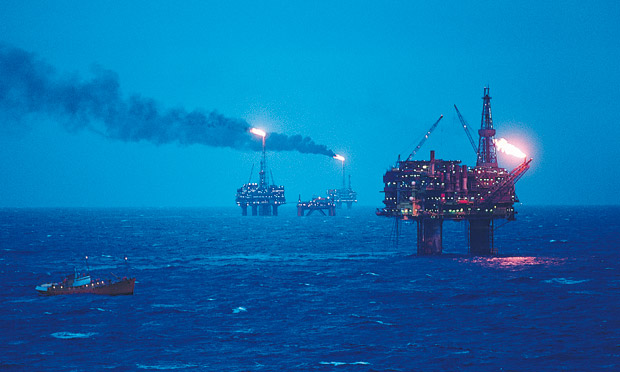
Close to five years and one week ago the Deepwater Horizon oil rig collapsed into the Gulf of Mexico, leading to a total of 87 days of oil slick expansion. At the time, 11 offshore workers were killed, 17 injured, and an oil slick covering 16,000 square miles began to form.

wpsB85A.tmp
Former BP CEO Tony Hayward (right) (Image Source)

As the clean-up effort commenced it became clear that the spill was the worst anthropogenic disaster in American history. While BP is slated to pay a record US$4 billion criminal penalty and has already paid close to US$30 billion in clean-up costs, the fallout is far from settled. Check out 10 things we’ve learned about Deepwater Horizon over the last five years.

10. BP May Be Paying for Medicine For Years

wpsF170.tmp

BP has already been served the largest criminal fine in history - $4 billion - for the 11 deaths ruled as manslaughter in connection with the Deepwater Horizon spill. They’ve also been found guilty of negligence for every other crew member who survived. For those living near the gulf who can prove their health issues are due to oil or toxic dispersal agents, BP had to food that bill too. While channels were opened in the immediate aftermath of the tragedy to pay for medical expenses related to the clean-up - largely rashes, breathing problems, and vision issues - a ruling also allowed for medical damages of a longer term nature to be brought back to court. More recently - five years after the event - a New Orleans Judge has ruled that future claimants arguing that cancer or chronic ailments are due to the spill and clean-up may be decided in a jury of their peers. This is an unusual decision for this type of case, but makes sense in a punitive lens. Jury trials take longer, which could potentially mean years of additional litigation time for BP in cases they don’t want to settle. Juries are also known to more readily side with individuals when their suit is against a corporation on medical matters, an additional burden for the oil giant.

9. BP Will Pay US$1,100-US$4,300 Per Barrel Spilled

wps13B.tmp

On top of the US$30 billion BP has already set aside for clean-up efforts and the US$4 billion in criminal penalties due to manslaughter and negligence, BP could face a record monetary penalty made on a per barrel basis under the Clean Water Act. With a Federal Court set to decide on the matter this summer, BP is currently slated to owe somewhere between US$1,100 and US$4,300 per barrel. And that’s for 3.19 million barrels of oil. This brings the total penalty under the Clean Water Act to somewhere between US$3.5 and US$13.7 billion dollars. Due to the current gross negligence charges, it is estimated BP could be charged with the maximum fine. BP argues that their initial payment of $30 billion in clean-up costs - offered even before court intervention - should act as mitigating circumstances in the decision on final penalties. Many Gulf residents and organizations believe that more money will be needed. Though clean-up has long been underway, sopping up the existing oil is not in any way synonymous with the restoration of the Gulf.

8. There Needed to be More Rapid Research On the Spill

wpsD64F.tmp

Obtaining funding for research can be a long and laborious process. But dealing with the repercussions of an oil spill that wasn’t researched soon enough after it happened can be even more laborious. According to panellists in the 2014 “Gulf of Mexico & Ecosystem Science Conference,” there were not enough funds for independent research during the immediate aftermath of the Deepwater Horizon incident. While this makes sense in light of the large amount of funds being diverted to clean-up efforts, the benefits of having research from the earliest stages of the disaster could have paid off big time in both measuring the effects of the spill and preventing future incidents. Jane Lubchenco, head of the National Oceanic and Atmospheric Administration - and marine ecologist at the time of the spill - noted that perhaps mechanisms designed in advance to quickly fund research, increase the speed of the peer review process during disasters, and increase communications between government and academic scientists could help greatly in a future incident. Other speakers put forward the idea that scientists should be built into the national response team in such situations, as well as emphasized the importance of both baseline and rapid access to new data can be in such situations.

7. Louisiana is Sinking Faster Because of the Oil Spill

wps4815.tmp

Louisiana loses about one football field’s worth of land an hour, or about 16 square miles of land a year. And that’s with tons of coastal work and regulation that’s slowed the rate from 50 square miles a year 30 years ago. In total, close to 2,000 square miles of land in Louisiana has sunk beneath the waves since the 1930’s. While the problem is partially due to the lack of sediment making it to the coast due to levees and canals, as well as the natural subsidence of a delta, anthropogenic reasons have greatly exacerbated the issue. With over 50,000 oil and gas wells in the coastal zone, over 10,000 miles of canals have been cut for easy access. While it would take longer to get to oil extraction sites without them, the already fragile environment just can’t hold up to being sliced into that many pieces. In some regions canal dredging for oil and gas has been linked to the loss of 36-60% of the land loss.

Now for the news that’s even worse. As oil spread along the coast, salt marsh plants located from 15-30 feet from the shoreline were rapidly killed off. With the resultant instability in the soil, shoreline loss was almost immediately elevated to a rate of 10 feet loss per year. This rate of close to double the normal erosion rate lasted for a total of 18 months causing miles and miles of shoreline loss directly attributable to the spill.

6. The Spill was the Worst Anthropogenic Disaster in US History

wpsC842.tmp

Don’t believe us? Let’s just start with the oil. Over 87 days 3.19 million barrels worth of oil were spilled. At 42 gallons per barrel that places the total spill at over 133 million gallons of oil. For comparison, the Exxon Valdez spill involved around 20 million gallons of oil, slightly over one-sixth of Deepwater Horizon. The Gulf War oil spill was of a comparable size, and covered 101 miles of land with oil some five inches thick in places. The main difference between the two being that the location of the Gulf War spill was largely unpopulated and desolate, while the Gulf of Mexico is one of the most diverse animal habitats in the world.

Next the human element. Of those publicly known, 11 crew members died - 3 in particularly horrific ways - while many of the escaping crew were gravely injured. During the clean-up effort 1.84 million gallons of Corexit, a dispersal agent were spread through the gulf. While the EPA would not present its files on how the agent interacts with the environment due to “potential sharing of business secrets,” it was later disclosed that Corexit is toxic. While Lisa Jackson, EPA administrator at the time insisted that BP switch to a less toxic alternative some two days later, BP responded that it hadn’t found any suitable alternatives. Corexit is known to cause liver and kidney damage. And it is still washing up in clumps on the Gulf Coast today. For those directly involved in the clean-up effort, the risk is even higher, with the mixture of crude oil and Corexit found to be more toxic than either on their own. If that isn’t enough, check out the status on animals below.

5. More than One Million Animals Have Been Killed

wps5A71.tmp

While apologists like to note that bacteria broke down oil rapidly after the spill (it did), this seems to be quite a convenient diversion from the fact that millions of gallons of oil made it to the coast. Oil which met with Corexit dispersed into smaller droplets and sank into the ocean. With a great deal of Corexit placed around the actual leak in the well, an untold amount of oil never rose to the surface but was nonetheless circulating in the water.

It’s estimated that 800,000 birds - including 12% of the pelican population - were killed by chemicals related to the spill. Since 2010, 1,000 bottle-nosed dolphins have been found dead on the shore, with those swimming in deeper waters routinely found underweight, anaemic, and showing signs of liver and lung disease. National Geographic notes that this means there’s a much larger problem going on. When top predators like the dolphins are ill in such numbers, it means that things are probably more dire farther down the food chain. Of the five species of sea turtles that live in the gulf, all are listed as threatened or endangered. Even with their populations so low, hundreds have been found on the coast. Looking farther down the food chain, large amounts of mutation has occurred. Through 2013 it was estimated that 50% of shrimp caught in Barataria Bay (a popular shrimping destination) were not only born missing eyes, but eye sockets. Crabs are being born in record numbers missing claws, shells, eyes, and with many growing only to a fifth their normal size.

4. More than 1,500 New Drilling Permits Have Been Granted In the Gulf

wpsCC18.tmp

Though there was a six month moratorium on new deep water drilling in the Gulf and approval for the first new rig after Deepwater Horizon was slow, new rigs have been off to the races ever since. On March 31st, 6 months after the well was closed completely, Shell became the first company to obtain a new well permit after Deepwater Horizon. Throughout the remainder of 2011, new well permits were granted at the fastest pace of the last five years for a total of 109 new wells. This accelerated to 179 in 2012, with both 2013 and 2014 hovering over 120. For every type of drilling - including reroutes, additions to existing wells, and so on - over 1,500 new drilling permits have been granted since the disaster at Deepwater Horizon.

3. No One Knows the Effects of Corexit Under Pressure

wps3FD2.tmp

We’ve previously mentioned a few of the larger problems with using Corexit, but the fact of the matter is that the problem of using Corexit could just be getting worse. In cleaning up the Deepwater Horizon spill, unprecedented levels of Corexit were used, and we learned a few things. Prolonged human exposure to Corexit can cause nervous system problems, or do damage to blood, kidneys, or livers. While Corexit helps to disperse oil so as to keep it from showing up in oil-soaked beach scenes, many scientists discredit it for breaking oil into small droplets that drop below the surface and are harder to collect. On top of large amounts of oil dropping below the surface to be pushed around the gulf, Corexit was also pumped to the source of the well head nearly a mile underwater. The effects of such high levels of cold and pressure are unknown on Corexit. All in all, while Corexit saved the nation from the site of oil-soaked beaches, we aren’t sure if it actually prevented more harm in the end. Only time will tell if it was a smart choice or simply a face saver on the PR front.

2. With Increased Drilling in the Arctic Comes Even MORE Risk

wpsA9B8.tmp

As of 2009, 13% of the world’s undiscovered oil, 30% of the world’s undiscovered gas, and 20% of the world’s undiscovered natural gas liquids are in the Arctic. While increased drilling in the arctic may makes economic sense, a number of complicating circumstances - exacerbated by the lack of high level technical expertise on the regulatory side - point to unlearned lessons from the Deepwater Horizon Spill. Extreme cold and lack of infrastructure would make containing any situation difficult. Meanwhile the same changes in weather patterns that are opening up the possibility of drilling are also increasing the fragile and unpredictable nature of the environment. Finally, there’s the fact that any spill of noteworthy size would inevitably threaten other regions due to the proximity of Europe, Asia, and North America in the far north, as well as strong weather patterns.

1. The Regulatory Agency Responsible Was Highly Profitable

wps5289.tmp

One final development spurred by the Deepwater Horizon spill was the dissolution of the Minerals Management Service (MMS), an agency within the Department of the Interior charged with managing the nation’s natural gas, oil, and other natural resources on the outer continental shelf. As of 2010, the MMS had a profit margin of 98% - the second highest profit rate in the Federal Government behind the IRS. Before the spill, MMS-released materials stated an aim of the agency was to “fund advanced scientific studies and enforces the highest safety and environmental standards.” Though the same materials listed the role of the MMS as being the “Nation’s leader in offshore energy development and the collection of royalties on behalf of the American Public,” it was found that this constituted a conflict of interest. While the MMS was supposed to enforce high safety and environmental standards, they only received royalties from leasing deep sea well sites to oil and gas companies. Needless to say, a lax regulatory climate was overlooked when the MMS became the second largest source of income to the U.S. Treasury in 2008. As to acknowledge these systemic problems, the Secretary of the Interior separated the MMS into three separate agencies - the Bureau of Ocean Energy Management, the Bureau of Safety and Environmental Enforcement, and the Office of Natural Resources Revenue - and fully dissolved the agency in 2010.

Top image: A ship floats amongst a sea of spilled oil in the Gulf of Mexico after the BP Deepwater Horizon oil spill disaster in 2010. Credit: kris krüg/Wikimedia Commons.

[Source: Business Pundit. Edited. Top image added.]

10 ATROCITIES COMMITTED AGAINST NATIVE AMERICANS IN RECENT HISTORY


wpsE82A.tmp
10 Atrocities Committed Against Native Americans In Recent History
By Debra Kelly,
Listverse, April 30, 2015.

The United States has always had something of an uncomfortable relationship with the people that lived within its borders well before European settlers made their way across the ocean. Today, it’s a relationship that’s better than it ever has been, but there’s still a long way to go and a lot to make up for. Even in roughly the last 100 years, there’s been an incredible amount of horror visited on America’s native tribes.

10. Hopi Sentenced To Alcatraz

wps9870.tmp

First discovered by the Portuguese and the Spanish in the 1540s, Alcatraz had already been inhabited for at least 10,000 years. By the time the Spanish came to the area, there were about 10,000 individuals settled in the Bay Area around the island. According to tradition, the island had long been used for exactly the same purposes it later was - isolating people who had broken a law.

In 1894, the Hopi were in the middle of a rebellion against government regulations, which stated that they needed to send their children away from home to attend government-run schools. In order to force the children to go, it was first suggested that the military and law enforcement be sent in to arrest anyone who wasn’t sending their children away. When bad weather and snows made that impossible, it was decided that they’d interrupt the supply of goods and food instead. It was a completely legitimate strategy, as far as the law was concerned. According to the Rules for Indian Schools of 1892, food and other necessities could be taken away to force compliance.

When that didn’t work and the Hopi still refused to send their children to government schools, 18 tribal leaders were arrested and put on trial for their refusal. Found guilty, they were sentenced to Alcatraz. Those left behind still refused to comply with government orders, and when the original leaders were released a year later, they continued their non-violent protests against the educational restrictions. With the resistance leaders unwilling to resort to violence, the government-sanctioned development of schools continued.

In the 1960s and 1970s, members of the Sioux and Mohawk, along with a group going by the name “Indians of All Tribes,” occupied Alcatraz in order to demand that the island be returned to those who had been there first. They didn’t win the island, but they did succeed in bringing attention to problems that had gone unaddressed for too long.

9. Black Mesa

wps3741.tmp

Black Mesa is in northern Arizona, and it’s huge. The coal fields cross both Hopi and Navajo reservations, and in 1909, an incredibly brief survey of the area would determine that there was a huge amount of potential resources that could be exploited. The area already had an operating mine, and the coal was being used on the reservation.

By the end of World War II, the country was looking for some ways to maximize use of their own resources, and that included coal. In 1943, the Navajo attempted to increase their mining operations in the area, recognizing what they were sitting on for what it was - cash. At the time, they were an extraordinarily poor nation, relying on an income from the Bureau of Indian Affairs for support, so they entered into an agreement with the Interior Department. Coal was selling for US$4.40 per ton, and in a typical deal, US$1.50 of that would be going to the owner of the land. That was the basic price, though it’s absolutely not what the government offered the Navajo and the Hopi; they got US$0.17 per ton.

There was also no provision in the contract to renegotiate prices should the price of coal go up, and it did. By the time the country was in the middle of the 1970s oil crisis, coal was US$15 a ton. The tribes whose lands were being mined were still receiving US$0.17. To add insult to injury, the tribes, who had seen little choice but to agree to the contracts and allow the government to come in and start mining, had their hands tied when it came to how the mining was done. In the early 1970s, the mine was putting out about 1 million tons of coal each year, and the process was likened to tearing down St. Peter’s Basilica for the marble. It wasn’t just environmental groups that leaped on the companies for their strip mining processes; the tribes absolutely weren’t happy with the complete destruction of ancient sites.

8. The Termination Of The Menominee

wpsA984.tmp
Photo credit: Royalbroil

A huge amount of US dealings with various tribes across the country has involved some absolutely audacious attempts to integrate them with what’s considered more mainstream American society. Beginning in the 1940s and continuing into the 1960s, there was a policy put in place that was ominously called Termination. In the 1930s, the Commissioner of Indian Affairs had been a man named John Collier, who had given the different tribes nothing less than the right to keep their own culture. When he left office in 1945, those that hadn’t agreed with him took the opportunity to reverse everything he’d done.

The Termination policy was touted as an emancipation process that would free tribes from the control of the government. What the policies were really doing was taking away the power for tribal governments to run themselves. Reservations were to be broken up and no longer receive any kind of government protection. In turn, groups that had previously been run by their own, generations-old system of governance would now be answering to the same rules and institutions that European Americans did.

The process was a long one, and it required legislation to be drawn up for each individual tribe. One of the first was Wisconsin’s Menominee Tribe. In 1954, they were officially terminated, and Congress declared that they would no longer be recognized as a tribe. The council was told that they would be terminated whether they liked it or not. Several extensions were granted, but eventually, in 1961, they were terminated.

The fallout was fast. Programs that had been supported by the federal government before, like schools and hospitals, didn’t have a funding base. The small population couldn’t afford to support things like utility services on its own, and termination, bizarrely, meant the removal of government funding that small towns all over the country rely on to survive. Hospitals and clinics closed, courts were shut down, police departments dissolved, utility services were shut down, and suddenly, the people needed to pay for hunting and fishing licenses for the land that had sustained them for thousands of years.

Termination was repealed in 1973, largely due to its disastrous results with the Menominee, but the damage was already done. The tribe had been living in the same area for more than 10,000 years and were so closely tied to the land that they took their name from the Menominee River, where their origins were set. Before termination, they were one of the wealthiest tribes in the country, completely self-sufficient with their own government, law enforcement, and schools. Fifty years later, the Menominee are reincorporated as a tribe, but they’re still picking up the pieces.

7. Lone Wolf vs. Hitchcock

wps95EA.tmp
Photo via Wikipedia

By the turn of the 20th century, many tribes had been forcefully removed from their ancestral lands and forced onto reservations. An 1867 treaty called the Medicine Lodge Treaty appeared to give tribes at least some sort of say in what happened to the lands that they had been forced onto. In theory, the treaty said that in order for reservation land to be made available for other uses, a three-fourths majority approval needed to be given by the tribe that was currently on the land.

In 1900, though, the government decided to parcel off the land that had been given to the Kiowa-Comanche tribe. Those that accepted a specific plot of land were also given citizenship with it, and the extra land was also parcelled off - to be sold to anyone, even though no approval was given. Kiowa leader Lone Wolf sued the government for breach of treaty, and he lost.

The verdict given was that Congress had the right to change absolutely any previous treaties as they saw fit, because as the government, they had complete control over everything that went on in a reservation. The case went all the way to the Supreme Court, where the verdict was upheld. Members of tribes were deemed “wards of the nation,” and not long after, 50,000 settlers moved into what had been dubbed surplus reservation land. The verdict has never been overturned and is still a valid precedent.

6. The Cherokee Strip

wps20B6.tmp
Photo via Wikipedia

When the Cherokee were forced to settle in an area that’s now Oklahoma, they were given about 7 million acres in three separate areas. By the 1880s, though, the country was expanding, and ranchers and settlers needed that land. The US government made an offer to the Cherokee, attempting to buy the land at US$3 an acre. The offer was refused, and in 1889, Congress ordered them to sell at US$1.25 an acre.

The Cherokee had been making a lot of their income from leasing their land to ranchers. In 1890, though, the president signed into effect a law that prohibited all grazing after October, cutting off a huge portion of their income. After several delays, during which the government agreed to enforce the boundaries on the land that the Cherokee had managed to keep, the Cherokee Strip was opened for land claims from settlers.

Somewhere around 135,000 people showed up to stand in line at the nine registration booths that were opened for registering land claims, and it went about as smoothly as you’d guess. Cavalry were called in to keep the peace, but it was a mass of fights (some drunken, some not), bribery, counterfeiting, and no small amount of heat stroke. Individual members of the Cherokee were allowed to make a run for a piece of the land that they’d previously called home, but an overwhelming majority of people who tried for land didn’t get it. And once the land had been handed out, those that did get it found that they were ill-equipped to handle it. A huge number of claims were abandoned before a year passed. Towns failed, and farms folded, adding insult to injury to those that had been forced to sell their land at a pittance.

5. The Indian Child Welfare Act Of 1978

wps76E.tmp
Photo via Wikipedia

It wasn’t until the 1970s that a big problem was brought to light, and it was a problem that people didn’t even see as a problem before that. Children were being taken from their families on a huge scale. From 1969-74, 25-34 percent of all Native American children were removed from their homes on a temporary or permanent basis and passed into the system of federal schooling, foster care, or adoption. Compare that with the non–Native American children removal rate of 5 percent.

Part of the problem was the idea of federally instituted boarding schools, and we’ll look at that more in a minute. The other problem was that laws didn’t take into account the differences in tribal conditions for raising children. Generally more communal in nature, it’s perfectly normal for extended family or even neighbours to take care of children a large amount of the time. In a system that was biased in favour of families made up of only parents and children, this was seen as a problem. In states like North Dakota, about 99 percent of children removed from families were because of cases like this, which were deemed neglect cases.

It wasn’t until 1978 that Congress established the Indian Child Welfare Act, which used a different set of guidelines for the removal of native children from their homes. It included a requirement for the tribal government to be involved in such rulings, added considerations for tribal customs, and, should a child still need to be removed from parent care, placement with a native family. For the first time, part of the guidelines definitely stated that maintaining family and cultural bonds was of the utmost importance.

4. The Burke Act And US Citizenship

wpsBAE.tmp

For decades, the question of citizenship for Native Americans has been something of a weird dilemma, and the government used it as a sort of blackmail. The Dawes Act of 1887 automatically granted citizenship to any member of any tribe that left their lands and voluntarily moved away...except for those belonging to the Cherokee, Choctaw, Creek, Chickasaw, and Seminole tribes. They weren’t included until a 1901 amendment, but it was the 1906 Burke Act that was really strange and very bizarrely worded.

According to the Burke Act, anyone who moved away from their tribe and accepted an allotment of land was granted citizenship, with a catch: That citizenship was withheld for 25 years or until they received special notice from government officials. Further notes in the law indicated that they not only needed to move away from their tribe but that they also needed to embrace the “habits of civilized life” before they were eligible for citizenship and all the benefits that went along with it. It was up to the Secretary of the Interior to decide if they had fulfilled their obligation to the so-called “civilized life.” Government officials were also the ones deciding whether or not people who wanted to take allotments were capable of running one. Those who received allotments and either did their 25 years or received their approval for citizenship early still weren’t in the clear; once they died, it was still up to the Secretary on whether or not their descendants were capable of running the land. If they weren’t, the land would be sold.

3. The Theft Of Geronimo’s Skull

wps3441.tmp
Photo via Wikipedia

According to the story, Yale’s secretive Skull and Bones society was responsible for robbing the grave of Geronimo and stealing his skull. For a long time, it seemed like the story would never be anything more than a rumour, until an author researching a book on Yale’s World War I veterans stumbled across a letter that seemed to prove that they had indeed stolen Geronimo’s skull.

Before the leader died, he had been very specific in his wishes: He wanted to be buried in New Mexico, on Apache land. He definitely did not say he wanted his bones to be in the hands of the rich, elite members of the secret society.

Yale still officially says that they don’t have the bones, but members of the society aren’t saying anything. With more than 800 of those members still around today, that makes things even more complicated. Geronimo’s great-grandson opened a lawsuit in 2009, suing both Skull and Bones and Yale for the return of the bones. The suit cites plenty of evidence, including the letter and testimony from Skull and Bones members, which confirms that inside their headquarters is a glass case containing bones that they were always told belonged to the Apache leader. The letter, dated 1918, also says that they have other bones, along with some of the tack from Geronimo’s horse. Why steal it? It’s something called crooking, a competition among the society members to see what important things they can steal for their “tomb.”

Still, Yale insists that they don’t have the bones and that they have no control over Skull and Bones, while the society itself isn’t saying anything. It was only in 1990 that a law was passed to protect the graves and remains of Native Americans and to give their families rights to preserve them.

In 2010, Geronimo’s family lost. According to the verdict, only thefts that occurred after 1990 are protected by the law, and the government will not force the society to return remains that had been stolen prior to that.

2. The Innocent Fun Of Grave Robbing

wpsAADA.tmp

For the citizens of Blanding, Utah, picking up arrowheads and pieces of pottery seemed like no big deal. It was all over the place, after all, and there was so much of it that it often ended up being used for target practice. Finally, Winston Hurst, a local boy turned archaeologist, realized just what it was that people were picking up, destroying, and in some cases selling - part of the history of an entire people.

In 2009, his information led to a 150-man FBI raid, along with a series of arrests. Jim Redd, a local doctor, was among those that were arrested for looting and selling antiquities; he killed himself the day after the raid. According to the townspeople, picking up artefacts was just a way of life, and according to Hurst, that’s the problem.

When the mayor pointed out that there was just so much of the stuff lying around that no one had seen what the big deal about collecting - and destroying - it was, the implications were horrifying. Archaeologists like Hurst were seeing the historical record of an entire culture wiped out, and as the relic-hunting operations got larger and larger, so did the destruction. Sites around town, which were roughly 12,000 years old, were badly, amateurishly excavated. By the time Hurst had assembled a case, a staggering amount of artefacts had been looted and sold, which were later seized by the FBI. Once home to the Anasazi, the area around the town has yielded incredible treasures, jewellery, pottery, baskets, feather blankets, and other items, once left in graves as tributes to the dead.

The fallout was incredible, with other suicides following the arrests, and the people who had once been his neighbours cursed Hurst as a traitor. Meanwhile, graffiti is scrawled across pueblo walls and ancient cave paintings, and offerings once left along burial sites are sold on the black market. The town, founded in 1900, was also the site of a recent sting operation in which a single agent spent US$335,000 purchasing illegal artefacts over the course of two and a half years. Meanwhile, the locals whose ancestors are buried in the caves won’t even enter them, simply out of respect for the dead.

1. Assimilation Via Boarding Schools

wpsFF73.tmp
Photo via Wikipedia

It started in the 1870s, and in 2015, there are still people who remember being sent away from their families to attend Native American boarding schools. The programs and the idea was based on a prison program, and statements made by the man who developed that program are horrific: “All the Indian there is in the race should be dead. Kill the Indian in him, and save the man.”

That was from a speech given in 1892 by Richard Pratt. Decades later, the practice was still in place and, in 2015, there are still people who remember their mothers crying as they were taken away, being beaten for speaking in their native language, being forced to cut their hair, and being given new, Americanized names. There were around 100 boarding schools operating in the United States, and even into the 1960s, teachers there were told that their first responsibility wasn’t to educate students but to “civilize” them.

The goal of the boarding schools was to take away everything that gave the students their identity. Schedules were so strict that in some cases, they were planned out in increments of five minutes, time that was precisely used for things like making beds and brushing teeth. From hairstyles and clothing to learning a new religion, they were taught everything they needed to know to not be Native American anymore.

Ironically, among those that have spoken out about their experiences in boarding schools, where they were discouraged from embracing their native culture, are the Navajo Code Talkers, whose language was of unprecedented importance throughout World War II - quite a difference from their experiences in school.

There are still a handful of these boarding schools in existence, but now, they have a different mission: to educate and to preserve culture. For those that still remember being torn from their families and forced to become something they absolutely weren’t, though, there’s still a lot that needs to be mended.

Top image: The Sand Creek Massacre painting by Robert Lindneaux, via Sand Creek Massacre National Historic Site.

[Source: Listverse. Edited. Top image added.]