Pages

Monday, 4 December 2017

10 INCREDIBLE TECHNOLOGIES YOU WON’T BELIEVE EXIST TODAY

wps6EEB.tmp
10 Incredible Technologies You Won’t Believe Exist Today
By Lyne Carolynah,
Toptenz, 3 December 2017.

Ten years ago, who would have foreseen a scene where an 11-year-old could tweet his followers to sleep? In the last two years, AI-powered drones, extroverted virtual reality, and augmented reality have become a thing. 2017 saw to it that a humanoid robot acquired the right to live as a legal citizen in the Kingdom of Saudi Arabia - it…ahem, she even gave an emotional speech to express her heartfelt gratitude in a keynote event.

The iPhone X can read your “eye print” to unlock the home screen. And, of course, Google completed first rounds of testing for their highly scrutinized self-driving cars. Let’s not even dig into how Qoobo Tail Therapy works. At this rate, the next three years could unbox insane surprises for a whole lot of us. But as these 10 cutting-edge technologies already demonstrate, we might not have to wait that long to realize stunning technological developments. The future is already here…

10. Of Cell Therapy and Nanochip Technology


Recently, scientists at the Ohio State University introduced a wearable tech gadget they dubbed Tissue Nanotransfection (TNT).

According to them, their invention will help bolster the race towards organ regeneration (probably the hack that finally introduces legit anti-aging, forever-young-therapies). Dr. Chandan Sen, who is the lead author of the published study, explained how it all works. To sum up…

Stamp the tiny sticker-like device on your arm. Zap a jolt of electricity through it. It will shoot a ray of pre-programmed DNA code through tiny skin pores underneath it, converting surrounding cells into reservoirs of DNA cells. The DNA cells then reprogram surrounding cells to convert to desired cells that can fight the targeted infection.

Scientists believe they can use this technology to reboot damaged brain and organ tissues - and, of course, rejuvenate aged tissues back to youth.

The cell therapy process takes time to work as cells convince each other how un-cool it is to be damaged goods. But clearly, the technology to heal on autopilot is here.

9. Floating Gardens By Barcelona-based Smart Floating Farms (SFF)


Food is a big deal. With the UN forecasting the global population to explode to around 9+ billion by 2050, demand for food will inevitably spike up to about 70% more. Then there’s the not-too-little problem of global warming and millions of fertile land converting to deserts. There’s hope, but you need to dig in to truly believe it.

Sundrop Farms already harvests 17,000 tons of tomatoes from its high-tech farm located smack in the middle of the Australian desert.

Forget the clever floating gardens of the Aztecs, there are frontier acres under construction - in the air and over huge rivers, lakes, and seas. Forward Thinking Technologies have already presented the design plans and laid the groundwork to manifest the most astonishing agri-tech ever in the form of solar-powered Smart floating farms.

These are lightweight modules that span over 200 meters by 350 meters, interconnected with other modules to form clusters - complete with research centers, and built-in walkways. SFF reports that when complete, the high-tech farms will be able to produce over 8,100 tons of veggies and 1,700 tons of fish into the world’s food grid.

The “land” is aptly located to slash down food lags, carbon footprint (transportation), and of course, offer organic food fit for human nutrition needs.

8. 3D Printing Personalized Food


Speaking of food and food recipes…

Imagine walking into a restaurant, and instead of the usual, “what will you have?”, the waiter asks you, “How would you like your food printed?” And then you respond, “Let’s see…the 3D Printed Pizza, please.”

While start-ups such as BeeHex have already tested this insane technology and squeezed some success out of it, a pair of Israel-based scientists announced 3D printed food on another level. Here’s how it works:

After years of research, scientists Oded Shoseyov and Ido Braslavsky discovered nano-cellulose, which is a natural fiber they claim the human gut can digest with ease. They plan to add select proteins, antioxidants, vitamins, supplements, carbs, and fats into cartridges containing their nano-cellulose material.

Nano-cellulose contains zero calories as well, which is wonderful news for weight loss managers and perhaps crushing for weight loss pill manufacturers - if they haven’t already jumped on it.

At the moment, their 3D food printing technology only applies to dough, but they promise to expand the variety of food you can make with their futuristic tech.

7. CaloRieco Calories Scanner


And speaking of calories…

Consumer electronics giant Panasonic has come up with a cool tech gadget to help you figure how much damage that portion of Buffalo wings will pile on your waistline and blood tunnels. But there are dozens of calorie scanners out there, what’s special here?

Unlike existing technology, which takes between 60 and 120 seconds, CaloRieco cranks out the calories count within 10 seconds. It leverages proprietary infrared technology to measure the nutrition level of a meal before you can comfortably chunk it down - or dunk it in a bin.

This has made it possible to ramp up accuracy levels by up to 20% compared to prior calorie count tech.

6. Gene Therapy 2.0

wpsD878.tmp

Today, for a whopping US$1,000 you can have your entire genome sequenced in an equally unreal hospital. In just months, you will be free to walk into a ‘normal’ hospital and have yours sequenced for a mere US$100 - and down to less than $20 by 2022.

Why should this interest you? Here’s why:

With advancements in genome sequencing and engineering, scientists have come up with nanotechnology-based nanosensors that can detect cancerous cells before the latter becomes a problem.

These ultra-smart microscopic robots, a couple of thousand times tinier than a single human hair, will be introduced into people’s blood systems using syringes. They can then crawl around your system and use a pre-programmed algorithm to identify cancerous tumors from the enzymes that cause them.

That way the war is won before it even begins.

5. 3D Printed Blood Vessels


Meanwhile, at Harvard Medical School…

Scientists have figured out how to leverage bioprinting technology to manufacture body organs and cut down on the need for human-to-human organ transplants - making it less sacrificial to save lives. This is a giant leap towards developing functional, living human tissue. Here’s how it works:

In a recent study published in the Biomicrofluidics, the multinational team explains how they fit different pieces of the 3D printing puzzle to print blood vessels for a 3D printed “vascularized liver” tissue. They used a gel-based ink to print out the hollow channels that become vessels. Once the vessels are set they then wash away the ink.

But the 3D set is incomplete without the lining of endothelial cells that human blood vessels have on the inner layers, which offer a protective barrier against foreign chemicals and infectants. So they use human endothelial cells or primary cells to make up the semi-permeable layer.

Combined with other nanotechnology systems under development, it means doctors can, in the near-future, administer drugs directly to affected tissues, observe how the drugs absorb into the liver, and take an informed course of actions without ever having to conduct extensive studies on patients - which in many occasions rely on trial and error analysis.

Now this is much closer to a home run than talk about accomplishing human head transplants, isn’t it?

4. The Sunscreen Pill


Six years back, British scientists dove into the Great Barrier Reef in Australia and came out with a ground-breaking discovery. They had figured out how the blossoming coral reef at GBR makes its anti-sun compound to protect itself from harmful ultraviolet rays, and instead absorb vitamin D to bolster growth.

Fast-forward to October 2017 and a New Zealand firm made the first-ever sunscreen pill. According to the seller, GO Sun UV Protect can help reduce skin cell oxidation and improve resistance to sunburn. A GO Healthy technical support manager was, however, quick to clarify that they recommend people use their product as a complement to sunscreen rather than the latter’s replacement. That echoes what the Cancer Society recommends.

For each capsule of GO Sun UV Protect you get 250 milligrams of grape seed, an anti-inflammatory, and an additional 6 milligrams of astaxanthin. Astaxanthin is a carotenoid that scientists and skin care industry insiders claim to offer UV exposure protection.

GO Healthy is not alone. Sunsafe RX and Heliocare have introduced similar sunscreen pills that work the same way as GO Sun, by protecting partakers from both UVA and UVB sun rays.

While none of the brands of sunscreen pills divulge wisdom to point out how they connected the dots between coral reef UV protection secrets and on-demand sunscreen pills to pop, it did happen in the end.

3. ORB Sleep Complex


The Sleep Foundation reports scary statistics: shocking cases of more people missing out on rejuvenating down times asleep. The main causes of sleepless nights happen to be stress, gadgets, and, well…lack of sleep.

ORB Sleep Complex is a US$50 capsule that combines multiple vitamins to help users call on sleep, fall asleep faster, and stay asleep. The company behind it claims to have patented the multivitamins’ 2-in-1 time-release delivery system.

Basically how the system works is it releases the rainbow of calming essential oils (including B12 vitamins and 5 HTP) into your blood system when it’s time to kick it, and all the way until it’s time to rise and shine. ORB says this is just one of a selection of innovative vitamins and delivery system, saying they have a line of tailored solutions including heart health and mental clarity vitamins to pop on the go.

But while ORB is counting on multivitamin innovation, the Nox Smart Sleep Light is bringing enlightenment to sleep on another level. It uses a spectrum of over 16 million colors that stimulate your body to produce more of the sleep hormone, melatonin. You can set it up to produce calming sounds to soothe you to sleep, too.

Unlike similar existing technologies, it can wake you up come morning. It glows a bevy of colors reminiscent of the glowing early-morning sunlight until you are fully awake. There are a bunch of buttons, too, so you can tinker with settings and derive a truly personalized sleep experience - every time, hopefully.

Now you can ditch your jerky, abrupt alarm clock for a more soothing technology that should ease you into new work/life routines, especially handy for Monday mornings.

2. Out With Fingerprints, In With Earprints

wps8DEE.tmp

Fingerprint scanners are quickly becoming old news, especially after Michigan State University researchers proved just how easy it is to hack your fingerprint-protected gadget.

However, apparently the geometry of your ear is so unique, you can earprint-protect your device from every other person trying to log into it. You’d need to first download Descartes Biometrics’ ERGO software to your smartphone, and then fire it up. Follow up by lifting the device to your head and press the touchscreen against your ear.

The software will pop a sound into your ear. The echo that scrambles back is influenced by the unique geometry of your ear, supposedly as unique as your fingerprint. The ERGO suite will record that sound and store it in its biometric database for future use. You do not need extra hardware to pull this off. And they claim the software stores up to ten scans of your ear…just in case.

In China, though, Face++ is causing a massive disruption with pioneering face-recognition technology that’s actually working. Once a user’s registered and uploaded their face scan to the system, they can use their face to gain restricted entry into buildings, authorize e-payments, and track criminals.

While it’s kind of creepy to see your face on multiple screens on the go, this is an indisputably remarkable tech in play.

1. Breathalyzer Cars Are Real


Towards the end of last year, the US National Highway Traffic Safety Administration unveiled a technology - the Driver Alcohol Detection System for Safety (DADSS) - that could be integrated into a device in a car with the ability to sniff whether the driver was too drunk to drive safely.

The software could also be connected to the steering wheel, and scan the blood flowing underneath the driver’s fingertips to detect how much alcohol they had in their blood. If the software figured the driver was too drunk to drive it would lock down the vehicle’s system. Sorry, no one’s going anywhere with you while driving under the influence, buddy.

Now carmaker SEAT just integrated the tech into their Leon Cristobol, their latest family hatchback. The driver has to pass the breathalyzer test before the auto can bolt off. There’s no escaping it. There’s a camera on the dash that uses face-detection technology and records the test taker’s face, so you won’t be getting a sober passenger to take the test on your behalf. That’s quite something.

The only real constant in technology is change. And as this selection of top 10 awesome technologies in existence today clearly illustrates, there’s a whole lot going on in several industries. In fact, the most stunning thing that could ever happen is if nothing was happening to bring the future even closer to home.

Top image: Tissue Nanotransfection. Credit: Video screenshot MedXclusive Learning/YouTube.

[Source: Toptenz. Top image and some links added.]

Sunday, 3 December 2017

INFOGRAPHIC: 10 MOST HILARIOUS PRE-EXAM SUPERSTITIONS

wps32D1.tmp
Students view exams as a source of great stress and try to find the secret to alleviate it. Some students insist that there's no secret to passing exams, while for others the secret is to indulge in pre-exam rituals and superstitions. The following infographic by Essay Geeks outlines the 10 most hilarious and strange pre-exam superstitions around the world.

https://www.essaygeeks.co.uk/app/uploads/2017/11/Infographic-10-Most-Hilarious-Pre-Exam-Superstitions.jpg


[Post Source: Essay Geeks.]

Saturday, 2 December 2017

10 HORRIFYING WEIGHT LOSS TECHNIQUES

wps8151.tmp
10 Horrifying Weight Loss Techniques
By Samuel Theodros,
Toptenz, 1 December 2017.

This year, the French began to enforce a law that bans unhealthily thin models, with said models needing a doctor’s certificate in order to be hired for work. In addition the law stipulates that digitally altered images, that make models appear even skinnier than they are, will need to be labeled as such. It’s a dramatic step to tackle the growing epidemic of eating disorders that continues to perpetuate in the Western world.

With more and more individuals attempting to reach unattainable beauty standards, it’s no surprise that weight loss gimmicks and scams have reached epic proportions. However, to our surprise, radical and misguided attempts weight loss have been prevalent throughout history. Here are 10 such methods more horrifying than you probably imagined…

10. Victorians Ate Live Tapeworms

wps8907.tmp

The Victorian Era, which took place roughly between the 1830s to 1900, was known for its particular beauty standards. Most notably, women of wealth wore extravagant, multi-layered skirts which had a beehive shape. For women in the Victorian period, getting into those tightly worn outfits was a struggle in itself. Most women of the Victorian Era were pushed into fastening corsets around themselves, with the goal of achieving the esteemed 16 inch waist. Internal organs weren’t deemed to be of that much importance. And while corsets are not in great use today, a Victorian Era practice still is: tapeworms.

The concept is as terrifying as it is disgusting. Ingest a pill containing a tapeworm egg? Sounds more like a science fiction movie than a diet routine. We wish that were true. Apparently, once hatched, “the parasite grows inside of the host, ingesting part of whatever the host eats.” What makes the tapeworm diet so appealing to many is the belief that the dieter will not have to change their lifestyle or eating habits at all. The theory holds that ingesting the tapeworm allows hosts to lose weight and eat without worrying about calorie intake. There is little to no evidence that supports these claims, but somehow, the theory still exists with even “celebrities” like Khloe Kardashian suggesting their merits.

It’s our hope that the tapeworm will join the rest of Victorian fashion in the dustbins of history.

9. Vinegar to Keep Thin

wps61D4.tmp

Khloe Kardashian won’t be the first or the last celebrity to use their status to promote an unhealthy weight loss method. Celebrities have long used their platform to either shape or inadvertently promote an unwise weight loss diet. Enter Lord Byron. The Romantic era poet and politician, Byron was greatly concerned about his figure and popularized a vinegar-based diet. Although side effects included vomiting and diarrhea, Byron would drink vinegar daily and eat potatoes soaked in the pungent liquid. It was meant to cleanse his body, as Byron believed that he had a “morbid propensity to fatten.”

Soon after his habit became known, it became a craze with one critic noting, “Our young ladies live all their growing girlhood in semi-starvation.” The youth of the period were so influenced by Byron that they began diets consisting of vinegar and rice to emulate their idol’s thin and pale look. The need to be perceived as thin was so great during the time that even Queen Victoria worried about gaining weight. It seems that even as times change, some things do not.

8. Poisoned Themselves With Arsenic

wpsFE72.tmp

A precursor to the “wonder pills” that are currently advertised were the drugs, pills, and potions that became a part of the big business of weight loss in the 19th century. However, without the FDA, the 19th century drug makers were liable to include much more dangerous ingredients - including arsenic. For those unaware, arsenic is a rat-killing poison that will kill humans if consumed in large amounts. Studies have also linked prolonged exposure or use with cancer, diabetes, and liver disease. It remains unclear why exactly dieters believed that those ingredients would help in weight loss, but some experts believe that it “was advertised as speeding up the metabolism, much like amphetamines.”

The amount of arsenic used in these drugs and pills was small, but it was still extremely dangerous for users; especially because many would consume more than the prescribed amount with the belief that they would lose weight sooner.

7.  Dieters Would Chew And Spit Out Food

wpsB04F.tmp

Some of the greatest artists in history have had their names used to characterize other works. Works resembling Shakespeare have become Shakespearean, works similar to Kafka have become Kafkaesque. It’s not much of a leap to believe that William Fletcher must have believed his name would join the great men in history with his radical Fletcherism diet.

In the early 20th century, Horace Fletcher came up with a new weight loss program. He argued that a lot of chewing and spitting was the most effective way to lose weight. It began to be known as Fletcherism, and as it became more nuanced, Fletcher stipulated that one must chew a mouthful of food until the “goodness” was extracted, then spit out the remaining material that was left. Fletcherism became immensely popular, with proponents including the likes of Henry James and even Franz Kafka. Items such as shallots were said to be chewed more than 700 times, and dinner parties soon began to include members timing one another’s chews.

As a result of the diet, participants only defecated once every several weeks. Fletcher seemed to take this as a positive, even arguing that one’s feces would smell like “warm biscuits.” It was said that William Fletcher even carried around a bag of his own feces to demonstrate the great smell.

6. Women Tried to Wash the Fat Away With Soap

wps894C.tmp

If advertisements now seem deceptive, imagine seeing an ad that claimed that with just a little of soap, you could wash away fat. A 1920 newspaper advertisement did just that, claiming the La - Mar  brand could, “wash away fat and years of age.” The promotional material makes a lot of ridiculous claims, promising users that there was no need for “dieting or exercise. Be as slim as you wish.” In a lot of ways, what the La-Mar soap promises isn’t that outrageous in comparison to many of the current dieting plans. However, the La-Mar brand did make some claims that even the most ambitious scam artists wouldn’t make.

Here are a few: acts like magic removing double chin, results quick and amazing, and reduce any parts of the body desired without affecting other parts.

The amazing and terrifying thing is La-Mar wasn’t alone: La Parle existed in the United States with the same promises of their competitors, and undoubtedly the same “results.”

5. Breatharian Diet was Like a Cult


Probably the most terrifying diet on our list is more than just a diet, and is considered a philosophy and even a spiritual movement. Proponents believe that all one needs to survive is…sunlight. That’s it. Advocates claim that human beings who demonstrate spiritual purity can live solely on water, sunlight, and the life force (Prana). While it may seem to be an ancient hoax, “breatharianism” is currently practiced in the United States.

Leaders of the American movement, Wiley Brookes and their founder Jasmuheen (born Ellen Greve), have led its growth and resurging popularity. Jasmuheen claimed to be able to survive without any more than the occasional cup of tea for months on end. However, after an interview with 60 Minutes where she consented to stay in a hotel room to demonstrate her abilities, she was unable to stay for a single day without demonstrating signs of dehydration.

Actress Michelle Pfeiffer, who admitted to participating in the movement early in her career, has called it a cult with adherents who are very controlling and manipulative.

4. Anklets Were Another Form of Corsets

wpsD9C0.tmp

It’s hard to beat the crudeness and restrictiveness of the corset, but the anklet certainly made its best effort. A rubber device that appeared like a modern ankle brace, the anklet promised to “reduce your flesh.” The advertisement claimed that weight would be lost without diet or exercise, simply by dissolving fat as a result of perspiration that will be caused by wearing the anklet.

Promotional material claimed the anklet was deemed effective by a Dr. Jeanne P.H. Walter. And we don’t think it takes Holden Caulfield to tell us that the woman’s middle initials must have stood for phony.

3. Spot Reducer Has a Familiar Advertising Slogan

wps6A1.tmp

The Spot reducer makes the list because of its demonstration of the parallels between ad campaigns. The great similarity between advertisement for the Spot Reducer and La- Mar soap is quite fascinating and terrifying. A one page promotional piece placed in the 1950 Milwaukee Sentinel for the Spot Reducer encouraged readers to not to stay fat, but to “lose pounds and inches safely.” A small gadget made of aluminum and rubber, the Spot Reducer was nothing more than a small vibrator. That didn’t stop advertisers.

Wherever the reader has extra weight, the Spot Reducer will erase it “like a magic wand,” they said. Similar to earlier ad campaigns, they told consumers that they did not have to worry about diet or exercise, all the work would be done by the Spot Reducer. It’s sad that people not only believed those words then, but continue to believe them now.

2. Tongue Patch Test


A “modern” iteration of the tapeworm diet, the tongue patch test consists of a doctor sewing a patch of mesh into patients’ tongues. As a result of the patch, swallowing or eating, in general, becomes difficult - even causing pain. The tongue patch test is most prevalent in Venezuela but has also been documented in the United States.

A cosmetic surgeon in California who has begun to administer the patch charges US$2,000 for the procedure while promising it will lead to 18 to 20 pounds of weight loss in 30 days.


1. Last Chance Diet Took Lives

wps995.tmp

Like Mr. Fletcher, the Prolinn diet also bears the name of its creator: Robert Linn. The Prolinn diet was created in the 1970s as a precursor to the wonder drinks of the 1990s. Linn’s special drink was said to contain “400 calories of liquid protein.” However, after some investigation, the “protein” in Linn’s drink began to be questioned. Soon after, it was revealed that the “protein” was nothing more than the leftover of slaughterhouse by-products like crushed animal horns, hooves, hides, tendons and bones.

Linn then used artificial flavors, enzymes, and colors to make the drinks more appealing to consumers. And it became more than appealing to consumers: they actually bought it. Millions did. In total, two to four million people used the Prolinn diet to lose weight and, sadly enough, 58 people died from heart attacks while on it.

Top image credit: TeroVesalainen/Pixabay.

[Source: Toptenz. Top image added.]

Friday, 1 December 2017

10 MAJOR SPACE SCIENCE STORIES OF 2017

wps1411.tmp
10 Major Space Science Stories Of 2017
By Radu Alexander,
Listverse, 1 December 2017.

Another year has almost gone by, and still no aliens. That’s all right, though, as there were plenty of other space stories to make scientists scratch their heads in puzzlement or scream with excitement. The cosmos is a gift that keeps on giving.

There’s always more to learn about space, and this year was no exception. We’ve made a few discoveries, solved a few mysteries, and corrected a few mistakes. Now it’s time to take a look back at some of the biggest breakthroughs of 2017.

10. Uncovering A Moon Cave Suitable For A Lunar Base

wpsB00E.tmp

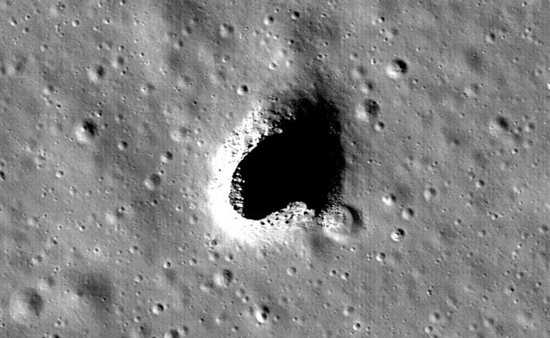
A recent discovery by Japanese scientists has renewed interest in a human colony on the Moon. In October, the Japan Aerospace Exploration Agency (JAXA) announced that they’d found a cave on the Moon measuring 100 meters (328 feet) wide and over 50 kilometers (31 miles) long.

The cave was found by the Selenological and Engineering Explorer (SELENE) probe beneath a region of volcanic domes called Marius Hills. Current thinking says that the subterranean hollow is a lava tube formed by volcanic activity 3.5 billion years ago. The existence of these lava tubes has long been inferred, but this is the first official confirmation.

The main reason why scientists are excited about this new discovery is that they feel lava tubes would make ideal candidates for future lunar bases. They are thermally stable, which would protect astronauts from the extreme temperatures on the surface, which range from –153 to 107 degrees Celsius (–243 to 225 °F). Furthermore, the underground tubes would also shield colonists and their instruments from cosmic rays and micrometeorites. It’s even possible that they have ice or water deposits, which could be repurposed.

9. Finding The Missing Link Of Planet Formation

wps180E.tmp
Photo credit: European Space Agency

Back in 2014, one of the biggest space-related news stories of the year was when the Rosetta spacecraft successfully landed the Philae module on a comet for the first time in history. It carried on with its mission until 2016, when Rosetta crash-landed on comet 67P/Churyumov–Gerasimenko. During that time, the spacecraft sent a treasure trove of information back to the European Space Agency (ESA), and it seems that, even a year later, we are still finding out new things.

According to a study published by the Royal Astronomical Society, data from the Rosetta spacecraft revealed the missing link of planet formation. The research team concluded that the 4.5-billion-year-old comet is made up of millimeter-sized dust pebbles on the outside layers, which mix with ice pebbles inside the comet. Currently, only one model used for the formation of large bodies in the young solar system could account for this composition: the solar nebula model.

As per this line of thinking, the dust pebbles were initially formed in the solar nebula and constantly combined through collision to form a larger body with an increased gravitational attraction. According to this theory, these pebbles concentrate so strongly that their joint gravitational force eventually leads to a collapse. However, comet 67P is small enough that it hasn’t reached that point yet, allowing scientists to confirm the notion for the first time. The process acts as “middleman” between two well-established operations: the formation of minute dust pebbles, which represent the “planetary building blocks,” and the gravitational accretion of planetesimals to form giant planets.

8. Solving The Mystery Of The Disappearing Star

wpsBAA9.tmp
Photo credit: Casey Reed/NASA

In 1437, Korean astronomers recorded a new star appearing in the sky in a previously described constellation. Although puzzling, what happened later was even more curious. After 14 days, the star disappeared. It took almost six centuries, but scientists finally found the source of this odd phenomenon.

According to a team led by Dr. Michael Shara of the American Museum of Natural History, the mysterious star is part of a cataclysmic variable. This formation typically consists of a white dwarf and a regular, mass-transferring star called a donor star. When the temperature and density reach high enough levels to ignite nuclear fusion reactions, the white dwarf unleashes a burst of energy called a nova. This astronomical event is incredibly bright and represents what the Korean astronomers saw. After a few weeks, the nova faded away, and the “new” star disappeared once again.

The discovery was made possible thanks to the accuracy of the Koreans, who recorded their sighting in Seoul on March 11, 1437, between the second and third star of the sixth lunar mansion. Even so, Shara had to consult with historians and cross-examine Chinese astronomical maps to pinpoint the location of the white dwarf.

More importantly, Shara believes the discovery validates a hypothesis of his stating that two types of binary stars are actually two stages of the same type of star. According to him, the nova-like binary star, which typically consists of a white dwarf and a red dwarf, eventually cools down and becomes a dwarf nova.

7. Determining The Chances For Life On Enceladus

wps412F.tmp
Photo credit: NASA/JPL-Caltech

A study published in the journal Science indicates that the same kind of chemical reactions which are responsible for sustaining life on Earth near deep-sea hydrothermal vents could also be happening in the subsurface ocean of Saturn’s moon, Enceladus. This conclusion comes as the result of a 2015 flyby of the Cassini probe, which passed through an ice plume and detected molecular hydrogen (H2) using its on-board mass spectrometer.

The team behind the study opines that the H2 is most likely being produced continuously by reactions between hot water and rock in and around the moon’s core. This is backed up by an earlier 2016 study, which found that silica grains detected by Cassini on Enceladus were likely produced in hot water at significant depths.

On Earth, microbes in deep-sea hydrothermal vents engage in a primitive metabolic process called methanogenesis. Cassini’s measurements suggest that Enceladus’s ocean has the resources necessary to sustain this action. However, researchers stress that these new findings do not suggest a detection of life, but rather an increase in habitability.

Enceladus has become one of the main targets for potential extraterrestrial life ever since we found out it has underground water in 2005. Both private and government space agencies are considering missions in the 2020s to send probes equipped with life-detection equipment through the moon’s geyser eruptions.

6. Finding The Truth Behind The Weird! Signal

wps8058.tmp

Back in 1977, astronomers at Ohio State University were casually monitoring the skies for extraterrestrial intelligence when they picked up an anomalous radio transmission which appeared to be alien in origin. The scientists were so astounded that one of them couldn’t help but write “Wow!” on the printout of the readings, and it became known as the Wow! signal. This year, we had the Weird! signal.

Researchers first picked up this strange transmission on May 12 at the Arecibo Observatory in Puerto Rico. The source appeared to be Ross 128, a red dwarf star with no known planets located 11 light-years away from Earth. For ten minutes, the signal was observed to be “almost periodic,” after which it disappeared forever.

Obviously, when the announcement was made, the first reaction of many people was to think of aliens. However, while admitting that the signals were “very peculiar,” the Arecibo team opined that they were more likely the result of radio interference from human satellites or a stellar flare. Subsequently, a joint effort between the Puerto Rican astronomers and multiple SETI institutions confirmed that the Weird! signal came from geostationary satellites orbiting the Earth.

That wasn’t the last we heard of Ross 128, though. In November, astronomers announced that the red dwarf does, actually, have a planet orbiting it. Not only that, but it’s an Earth-like planet with a slow rotation, and at a distance of 11 light-years, it is the second-closest candidate for alien life outside our solar system. It’s also got an advantage over Proxima Centauri b, the closest exoplanet, because it orbits a much less volatile red dwarf, which doesn’t emit as many radiation bursts that could potentially destroy its atmosphere.

5. Observing Two Neutron Stars Colliding


Representing the collapsed cores of giant stars gone supernova, neutron stars are a rare and mysterious sight. This year, we had a front-row seat to an even rarer event: the collision of two neutron stars.

Both the LIGO and VIRGO detectors operated during the merger and observed, for the first time ever, both light and gravitational waves from a single cosmic event. Dozens of other telescopes were aimed at the collision, and the resulting data helped us elucidate an impressive number of astrophysical and astronomical conundrums.

For starters, we confirmed that a merger between two neutron stars (called a kilonova) will produce a short gamma-ray burst (GRB). Moreover, the Fermi Space Telescope showed that, as predicted, gravitational waves travel at the speed of light or incredibly close to it.

NASA’s Spitzer telescope captured the longest-wavelength infrared light resulting from the event, which showed the forging of gold, asserting that kilonovas are the main source of heavy elements which can’t form in supernovas.

Of course, this kind of scarce event is bound to raise some questions, not just answer them. Astronomers described the short gamma-ray burst as “odd.” Although it had the brightness of a typical burst, it was, in fact, less than one-tenth as far away as any other recorded GRB. This means that it was incredibly faint, and we’re not sure why. More revelations and speculations will come as scientists unravel the data provided by this unique event.

4. Arguing Between Martian Water and Sand

wps6B55.tmp

Back in 2015, the announcement of flowing, liquid water found on Mars became one of the biggest headlines of the year. However, new research suggests that the announcement was erroneous, as the flows were probably made of sand, not water.

Since their first observation, these Martian features, called “recurring slope lineae” (RSL), have been found in over 50 areas. They appear as seasonal dark streaks which extend downhill gradually in warm seasons, disappear during winter, and then return the next year. Only seeping water does this on Earth, so we thought the same applied to Mars. However, a new report from the Astrogeology Science Center in Flagstaff, Arizona, suggests that the behavior of the streaks resembles that of granular flows. Specifically, scientists argue that Martian RSL are only found on slopes steeper than 27 degrees, where the angle of repose matches that of Earth sand dunes. If they consisted of flowing water, they should have extended to shallower slopes.

The matter is far from settled. Flowing sand cannot completely account for certain traits of RSL, such as the seasonal appearance, gradual growth, presence of hydrated salts, and their rapid fading when inactive. Some experts believe that RSL could form through a mechanism unique to Mars, which would require on-site investigation to fully understand.

3. Determining The Fate Of The Zombie Star

wpsA1C4.tmp

Back in September 2014, the automated wide-field survey known as the Palomar Transient Factory (PTF) discovered a new star. It was supposed to be a run-of-the-mill star, so it was given the unremarkable name iPTF14hls. Even when it exploded, it still looked like a standard Type II-P supernova, which would have faded away after 100 days or so.

And it did...at first. However, within a few months, the star inexplicably started to grow brighter. From then until now, iPTF14hls has fluctuated between dim and bright at least five times. Once astronomers realized they had an unusual star on their hands, they went through the archive and found something even more surprising: Another supernova was detected in the exact same location in 1954.

It would appear that the star went supernova, survived for 60 years, and then did it again. It could be what some people have dubbed a “zombie” star. One idea put forward claims that the star is the first confirmed example of a pulsational pair-instability supernova - a star so massive and hot that it generates antimatter in its core. This would make it incredibly unstable and lead to repeated eruptions before a final explosion and collapse into a black hole.

Not everyone is on board with this theory, arguing that it doesn’t line up with all the facts. Astronomer Andy Howell says such explosions were only expected during the early universe and compares it to finding a dinosaur alive today.

2. Welcoming Our First Interstellar Visitor

wps2C81.tmp

Earlier this year, we discovered the first confirmed interstellar visitor to pass through our solar system. The reddish, cigar-shaped interloper was first thought to be a comet, although closer inspection using the Very Large Telescope (VLT) revealed the lack of a coma. Subsequently, it was reclassified as an asteroid and given the Hawaiian name ‘Oumuamua, meaning “a messenger from afar arriving first.”

The rocky object is highly elongated, measuring over 400 meters (1300 ft) long but less than 40 meters (130 ft) wide, which is an aspect ratio not seen in any other comet or asteroid observed in the solar system. ‘Oumuamua also varies in brightness by a factor of ten as it spins on its axis every 7.3 hours, which, again, is not a phenomenon we have ever observed in other rocky celestial bodies from our galactic neighborhood.

Our current best guess suggests that ‘Oumuamua came from the direction of the star Vega from the constellation Lyra, although the journey took so long that the star was not actually near that position at the same time as the asteroid.

Although ‘Oumuamua is a first, astronomers remain hopeful that more interstellar objects will be found thanks to new, powerful survey telescopes like the Pan-STARRS. In the meantime, scientists are debating whether it is feasible or not to send a probe to the asteroid. The biggest problem is that ‘Oumuamua is currently speeding through our Solar System at 138,000 kilometers per hour (86,000 mph), more than twice as fast as any man-made object sent into space. Even so, some believe it is possible to catch up and might attempt to do so as part of the newly launched Project Lyra.

1. Identifying The First White Dwarf Pulsar

wpsC92F.tmp
Photo credit: University of Warwick

In February, the University of Warwick announced the identification of a white dwarf pulsar - the first of its kind in the known universe.

Typically, pulsars are made from neutron stars which emit beams of electromagnetic radiation at regular intervals. Since the radiation can only be observed when the beam is pointing toward our planet, this creates the pulsing appearance of the emission. People have long speculated that pulsars can also be created from white dwarfs, and this year, we finally received confirmation.

The stellar remnant in question is called AR Scorpii and is located 380 light-years away from Earth in the constellation Scorpius. Like all white dwarfs, this one is incredibly dense. Although it is roughly the same size as our planet, its mass is 200,000 times greater. AR Scorpii is part of a binary system along with a red dwarf, which gets lashed by beams of radiation approximately once a minute - 1.97 minutes for a full rotation.

The recent discovery has already presented a new mystery to scientists. They were expecting the binary system’s brightness to vary on timescales of minutes and hours - minutes due to the movement of the radiation beam and hours due to the orbital periods of the stars. But when they compared their findings with archival data going back to 2004, they found variability that stretches across decades. This is almost certainly due to interaction between the two stars, and scientists are now working on a model which can predict these long-term variations.

Top image: Artist’s impression of the exotic binary star system AR Scorpii. Credit: Video screenshot HubbleESA/YouTube.

[Source: Listverse. Top image added.]