Pages

Friday, 8 December 2017

10 HOMES THAT SHOW HOW WE’LL LIVE IN THE FUTURE

wpsAD18.tmp
10 Homes That Show How We’ll Live in the Future
By Adrian Chirila,
Toptenz, 8 December 2017.

Looking back throughout history, we can clearly see that societies developed a wide variety of architectural styles when it came to their housing. And this makes complete sense, given the fact that they had to deal with different construction materials, environments, climates, threats, and situations, depending on where they were.

Today’s houses all around the world work, more or less, on the same principle. But given the fact that we’re now more connected than ever, our houses start to look somewhat similar to one another - not that similar, mind you, but similar nonetheless. And like the architects of old (who’ve, in some cases, used state of the art technology to build their projects), so too do the architects of today go high tech to build tomorrow’s homes. Here are some examples where different techniques, both old and new, are blended together to create our future dwellings.

10. Hurricane-Proof Houses

wps61A4.tmp

Given what we’ve experienced this year, a hurricane-proof home sounds like an incredibly good idea. Sometimes described as livable yachts, these houses rest right on the water surface. Four 40-foot-long hydraulic legs attached to the sea floor constantly stabilize the structure, and can even raise it, if needed. Thanks to these pillars, the entire house is incredibly sturdy and can withstand strong winds, storms, and even hurricanes. And that’s not all these houses can do. They’re designed in such a way so as to be completely self-sufficient and 100% off the grid. They feature an integrated waste management system, rainwater harvesting mechanisms, and fresh water purification systems. In fact, the rainwater is collected, purified, and then used inside the home as completely safe, drinkable water.

Furthermore, these 4,350-square-foot houses also come equipped with solar panels, batteries and high-end insulation. The windows are all made out of shock-resistant glass, meaning that debris can’t get through if blown by strong winds. There’s also a retractable 24×12 foot terrace that adds to the overall space, and the high-tech communications system keeps you in constant contact with the outside world. Oh, and did we mention that these livable yachts can also float? In fact, they can detach from their legs and move around at speeds of up to 7 knots, thanks to two 136 horsepower electric thrusters. So, if you get bored of your surroundings, or if a hurricane is headed your way, just turn on the engines and go.

9. Bamboo Houses


Bamboo is an incredibly strong building material, if you know how to use it. In fact, bamboo is still used as scaffolding in places like Hong Kong - being two to three times stronger than a steel beam of the same weight. And let’s not forget that bamboo was widely used as a construction material throughout the centuries in countries where it’s commonly found in nature. In more recent decades, however, it was replaced by concrete. Nevertheless, bamboo might just make a comeback in the near future. A Chinese architecture team entered a design competition in 2016 and won second place with their idea of building houses completely out of bamboo. Known as Rising Canes, their project won’t even use any nails or screws to get the job done. Instead, bamboo canes will be jointed together and tied with rope.

What’s more, their bamboo house design is modular, meaning that it can be expanded upon in different shapes and sizes to fit every individual need. They envision their project to be in perfect harmony with nature. They see their Rising Canes houses being built close to bamboo forests that can provide all the construction material needed. Bamboo can be harvested every 4 to 6 years, reaching more than 130 feet in height during this time. It can easily replenish itself, and absorbs 35% more CO2 from the air than a regular forest of the same size. It also prevents land erosion. And to keep any such bamboo forest from disappearing, they suggest that for every cane harvested, two more should be planted in return.

8. Shipping Container House


If we think about it, nothing is more representative of the world that we live in today than the shipping container.  And this particular 2,150-square-foot house is made of a dozen, coming fully equipped with a kitchen, living room, and three bedrooms. It’s also in the middle of the desert. Now, anyone who’s ever been to the desert can attest, living in a shipping container in that scorching environment is something that more closely resembles torture than anything else. But thanks to their orientation at different angles, however, these shipping containers make the entire house look like some sort of blooming white flower, or like something that’s not really from this world.

Located in California, the Joshua Tree Residence will be built on a 90-acre plot of land and will be the home of a movie producer who decided to remain anonymous. Construction is set to begin in 2018, and once finished the shipping container house will come fully equipped with solar panels, and a variety of other high-tech features. The differently-orientated containers will allow natural light to filter in throughout the entire day, but without actually making the inside seem like an oven.

7. Stackable Homes

wps4CC1.tmp

RISE - which stands for Residential, Inviting, Stackable, and Efficient - is a house project designed for urban infill lots. This means that this design is highly adaptable and malleable, given the limited space it has at its disposal. It has customizable floor plans and movable walls, installed on a track system that can roll to the sides, allowing for different rooms to be assembled or rearranged. These homes come in modular and prefabricated pieces that can be scalable and stackable, turning a single-story family unit into a multi-story apartment building. What’s equally important about these houses is that they don’t require any specialized labor force to put them together. They also come fully equipped with technology designed to achieve net-zero energy consumption. These homes are solar-powered and make use of natural daylight and ventilation, while the walls are all lined with wool, with its northern façade being covered in moss for extra insulation.

The University of California-Berkeley and University of Denver worked together on this project, as a means to address the shortage of affordable housing. “At $200,000, a single RISE unit is less expensive than 72% of homes in the city,” said the students in charge of the design. They also went on to say that its affordability is further increased based on the fact that up to five of these RISE houses can be stacked, one on top of the other, over a plot of land that would have been used traditionally by just a single home. Now, even though this project was designed for Richmond, California, it could easily translate to other cities that lack enough affordable housing.

6. The Tent House

wpsCF7C.tmp

This 753-square-foot house is the perfect blend of minimalism, off-grid living, and camping, all in one. Shaped in the form of a tent, this house makes use of all the space it has at its disposal. Located deep inside a New Zealand forest, the Tent House’s slick design blends seamlessly with its surroundings. Its façade is completely made out of glass, and the sleeping quarters are located at the mezzanine. This glass face also allows for the entire building to be flooded with natural light during the day, and offers a perfect view of the forest at night. Its front deck also extends out, right into the forest itself.

Designed by architect Chris Tate, the Tent House originally served as his personal studio. But after several interior tweaks, and its relocation in New Zealand’s remote Waiheke Island, this A-frame house became a perfect retreat for those who wanted to get away from the hustle and bustle of the city. It’s currently available for short-term rentals.

5. The High House

wpsA694.tmp

Usually, houses on stilts are reserved for tropical regions, or places with a high chance of flooding. But an architecture studio borrowed this technology and applied it to a winter and snowy landscape. Located in Quebec, Canada, the High House is elevated several feet off the ground so as to capture as much sunlight as possible during the winter months, and to give a better and uninterrupted view of Mont Saint Anne, seen in the distance.

The clean, sharp, and minimalistic architecture is achieved with the use of corrugated steel roof panels and white concrete panel cladding. During a typical winter day, the house blends perfectly with its white surroundings, while in summer, it stands out against the green hills it’s perched on. The underside of the building makes use of a heating stove, keeping the temperatures bearable even during the harshest winters Canada can experience.

4. Hobbit Houses


Known as Green Magic Homes these buildings look more like hobbit houses than anything else. Though, not technically holes dug in the ground, these structures are covered with soil, giving the impression that they actually are. These ‘hobbit houses’ are, in fact, prefabricated vaulted panels that can be rearranged and expanded to fill every individual need. They are easily assembled, needing maybe just some sort of IKEA-style manual and three people to get the job done. Adding further modules can be done at any time.

Because of their versatility, these homes can be adapted to fit almost any type of topography, blending perfectly with the surrounding landscape. The soil that will be placed on the entire surface of these panels will act as a perfect insulator, both during the scorching summer, or a frigid winter. This particular style of architecture draws inspiration from other earth construction and stabilization technologies such as superadobe and geotextiles.

3. The Cliff House


Inspired by how barnacles cling to ship hulls, the Cliff House in Australia is a design for a modular house suspended on the edge of a vertical cliff. It would also make a killer lair for a Bond villain. By making use of steel pins drilled directly into the cliff face, the different modules are stacked on top of each other. The design is meant to be seen as a sort of natural extension of the cliff itself, and not actually an artificial addition to it.

The entry is made from the top level, which is a carport. A lift then connects the user with every other level of the house. The first level is made out of the foyer, kitchen, living, and dining spaces. The following two levels are made out of the three bedrooms and two bathrooms. At the very bottom, we have the terrace, barbeque area, and spa. The entire house is covered in solar-reflecting glass panels, giving an incredible view onto the ocean. The interior is presented in a minimalistic design, keeping the ocean view and the unique location as the focal point of the Cliff House.

2. The Urban Cabin


Created by MINI Living design firm, the Urban Cabin is a 160-square-foot modular unit, built to explore the potential of compact but comfortable living spaces in cities that become increasingly crowded and expensive. This design is set to represent a future where life will be based more on shared resources rather than personal property. “It’s about thinking through the possibilities of what it might mean to live in the near future - how we might begin to merge the public and the private, and how forms of domesticity might begin to evolve into forms that you don’t quite recognize,” said one of the architects.

This tiny house comes equipped with everything one would need, including a kitchen and even a tiny library. The kitchen is also extendable, meaning that it can grow, even beyond the walls of the house itself. What the designers hope to achieve with this Urban Cabin concept is to create a series of these tiny homes in many other cities around the world - each with a personal touch, depending on the architecture and cultural characteristics of that particular society in mind. This one, for instance, is based in London, and the mini library and kitchen are something the lead architect believed best expressed the city in the most compact way possible.

1. Shiftpods


After attending Burning Man for over 20 years, Christian Weber decided that there must be a better and easier way than the fragile and hard-to-build hexagonal yurts people had to deal with. He then began working on a shelter that would provide enough warmth and protection from the elements, all the while being extremely easy to put together. He then came up with the Shiftpod, which has insulated walls, and is tall enough for most people to stand upright inside. It’s also incredibly sturdy, being able to withstand winds of up to 109 MPH, and comes in a single, foldable piece that’s assembled in its final position in just little over a minute. He began making a few for some of his friends also attending Burning Man, and soon enough ended up with over 300 orders. He has since launched his own company, and is now earning millions of dollars from his Shiftpods.

He’s also donating one for every 20 sold. His is also working with several NGOs and other organizations at bringing his easy-to-use shelters to people and places where conventional housing is no longer possible. “There’s 53.4 million forcibly displaced in the world right now because of wars and politics,” he said. “A lot of them are living in shanty shacks with blue tarps, so we’re trying to create a low-cost, easy-to-ship, easy-to-set-up unit that people can live in for up to five years.” His Shiftpods have since Haiti, Japan, Nepal, Greece, as well as other regions where displaced people are in desperate need of shelter.

Top image: The Hobbit House-like Green Magic Homes. Credit: Green Magic Homes.

[Source: Toptenz.]

10 MOST BIZARRE OBJECTS THAT HAVE FALLEN TO EARTH

wps3A15.tmp
The 10 Most Bizarre Objects That Have Fallen to Earth
By Jake Rossen,
Mental Floss, 5 December 2017.

Rain, snow, sleet - we're accustomed to getting drenched or otherwise inconvenienced by precipitation falling from the skies. But occasionally, circumstances force people to deal with far more unusual threats from above. Check out 10 times the clouds parted and allowed for an almost Biblical forecast of golf balls, chains, and other things umbrellas just weren't built to handle.

1. Golf balls

wps52CA.tmp
Image: Semevent/Pixabay

Meteorologists have sometimes described foreboding hail storm projectiles as being "golf ball sized," but there was at least one time in history where actual golf balls rained down on an unsuspecting populace. In 1969, residents of Punta Gorda, Florida, were pelted with the sporting good staple, necessitating clean-up on streets, lawns, and gutters. No one was sure what exactly caused the incident, although some observers theorized that a nearby tornado near the Gulf of Mexico managed to scoop up balls from a course and then deposited them over the area.

2. Non-dairy creamer

wps31D1.tmp
Image: lysinewf/Flickr

Depending on the timing and whether you had an open container of coffee, residents of Chester, South Carolina could get their beverage flavored on the go. In 1969, a nearby Borden factory had issues with its exhaust vents. All clogged up, they wound up emitting powdered creamer into the air, which would dispense over the town and collect on surfaces to make for a milky, sticky nuisance when it got wet. Borden eventually fixed its workplace issues. (It also paid a small fine.)

3. Money

wpsA930.tmp
Image: Hans/Pixabay

Surprisingly, this phenomenon isn't restricted to gentlemen's clubs. In 2007, a resident of Worms, Germany stopped her car to collect a small storm of paper euro notes that were swirling around her. Despite the enigmatic source of the cash, the woman felt it was best to report it to area police.

4. The mystery globe

wps53C9.tmp
Image: Didgeman/Pixabay

It’s been an inciting incident for many 1950s B horror movies: A mysterious gelatinous orb falls from the sky, seemingly harmless but soon to transform into a man-eating glob of alien aggression. Fortunately, no one was devoured when a large, gooey, translucent globe dropped into a resident's yard in Miami in 1958. Observers said it had a honeycomb design and pulsated as though it were alive. One brave police officer stuck a finger into it without any consequence. Before it could be studied further, the mass just dried up.

5. A camera lens

wpsAEC7.tmp
Image: Pexels/Pixabay

We're not quite sure what home insurance companies say when you file a report saying a two pound camera lens has just come crashing through your roof, but homeowner Debbie Payne probably found out. In 2011, a Canon camera lens burst through her home, leaving a cratered rooftop and other damage. Called to investigate, the Federal Aviation Administration said that such an object falling from an aircraft was possible but hard to prove. Payne lived just 200 feet from an elementary school and said she was grateful the projectile didn't land there.

6. Hazelnuts

wps386B.tmp
Image: jackmac34/Pixabay

In 1977, a British couple were strolling down a street in Bristol when the husband, Alfred Wilson Osbourne, heard a click and thought buttons had fallen off his coat. He quickly realized the clatter on the pavement wasn't a clothing malfunction but a shower of hazelnuts, which were falling down all around him. After a brief pause, another man experienced the same odd nut fall in the same spot. You'd expect a looming hazelnut tree to be the cause, but none were reported to be in the area. And even if there had been, it was March - far from hazelnut season.

7. Candy

wps2FAF.tmp
Image: Alexas_Fotos/Pixabay

Residents in Lake County, California were surprised to see clumps of sugar raining down over two days in September 1857. The candy portions were about a quarter-inch in size and seemingly edible: Some of the residents there made syrup from the phenomena.

8. Mud

wps4E5F.tmp
Image: Lirinya/Pixabay

In 1901, editors of Science magazine recorded an account of a mud shower in Easton, Pennsylvania courtesy of a reader from Lafayette College who wrote in to describe the incident. "Window glasses on the western exposure of houses were covered with thousands of drops of dirty water," he wrote. Under a microscope, he observed "little membranous bags containing grains of dust." Some theorized a dust storm had mixed with precipitation to create a brown deluge of filthy rain.

9. A red hot chain

wps77EC.tmp
Image: Felix Morgner/Flickr

Detritus from aircraft is not an uncommon source of falling objects, but it's hard to conceive of what an 18-inch length of chain would be doing in a plane. In 1959, a man named Wallace Baker was working a bulldozer in Missouri when the chain fell on his equipment. That would be plenty unusual, but what astounded Baker was the fact that the chain was so hot it was glowing. When he tried to pick it up, it burned his work gloves. No source was ever located.

10. Human waste

wpsB715.tmp
Image: Karl Baron/Flickr

The most unfortunate of all rain substitutes is actually not all that uncommon: Some models of airplane toilets discharge wastewater in such a way that leaking contents create freezing globs of poop that break free of the aircraft and plummet to the ground below. In 2015, a Levittown, Pennsylvania girl's Sweet 16 party was interrupted when poop showered over the festivities. Joe Cambray, the girl's stepfather, told People that "we just got done with the cake" when the feces flew.

Top image credit: Pam loves pie/Flickr.

[Source: Mental Floss. Images added.]

Monday, 4 December 2017

TOP 10 SCARY FACTS ABOUT ARTIFICIAL INTELLIGENCE

wpsA3F9.tmp
Top 10 Scary Facts About Artificial Intelligence
By Oliver Taylor,
Listverse, 4 December 2017.

We are in the fourth industrial revolution, which is characterized by advances in robotics and self-driving car technology, the proliferation of smart home appliances, and more. At the forefront of all these is artificial intelligence (AI), which is the development of automated computer systems that could match or even surpass humans in intelligence.

AI is regarded as the next big thing - so big that future technologies will be dependent on it. But then, do we really know what we are getting ourselves into? Here are ten scary facts about artificial intelligence.

10. Your Self-Driving Car Might Be Programmed To Kill You

wpsFF38.tmp

Let’s assume you’re driving down a road. Then, a group of children suddenly appear in front of your car. You hit the brakes, but they don’t work. Now, you have two options: The first is to run over the children and save your life. The second is to swerve into a nearby wall or bollard, thus saving the children but killing yourself. Which would you pick?

Most people agree they will swerve into the bollard and kill themselves.

Now imagine that your car is self-driving, and you’re the passenger. Would you still want it to swerve into the bollard and kill you? Most people who agreed they would swerve into the bollard if they were the driver also agreed that they would not want their self-driving car to swerve into the bollard and kill them. In fact, they won’t even buy such car if they knew it would deliberately put them at risk in an accident.

This takes us to another question: What would the cars do?

The cars will do what they were programmed to do. As things are, makers of self-driving cars aren’t talking. Most, like Apple, Ford, and Mercedes-Benz, tactfully dodge the question at every instance. An executive of Daimler AG (the parent company of Mercedes-Benz) once stated that their self driving cars would “protect [the] passenger at all costs.” However, Mercedes-Benz refuted this, stating that their vehicles are built to ensure that such a dilemma never happens. That is ambiguous because we all know that such situations will happen.

Google came clean on this and said its self-driving cars would avoid hitting unprotected road users and moving things. This means the car would hit the bollard and kill the driver. Google further clarifies that in the event of an impending accident, its self-driving cars would hit the smaller of any two vehicles. In fact, Google self-driving cars might be seeking to be closer to smaller objects at all times. Google currently has a patent on a technology that makes its self-driving cars move away from bigger cars and toward smaller cars while on the road.

9. Robots Might Demand Rights Just Like Humans

wps3299.tmp

With the current trends in AI, it’s possible that robots will reach a stage of self-realization. When that happens, they may demand for their rights as if they were humans. That is, they’ll require housing and health care benefits and demand to be allowed to vote, serve in the military, and be granted citizenship. In return, governments would make them pay taxes.

This is according to a joint study by the UK Office of Science and Innovation’s Horizon Scanning Center. This research was reported by the BBC in 2006, when AI was far less advanced, and it was conducted to speculate the technological advancements they might be seeing in 50 years’ time. Does this mean that machines will start demanding citizenship in about 40 years? Only time will tell.

8. Automatic Killer Robots Are In Use

wpsB44E.tmp
Photo credit: MarkBlackUltor

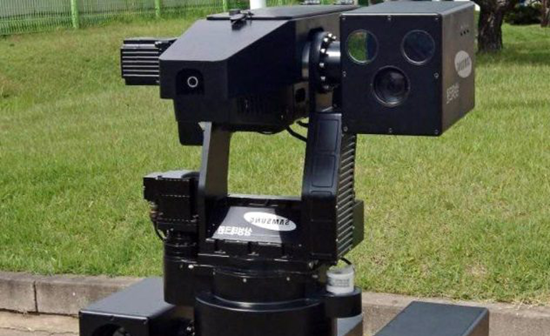
When we say “automatic killer robots,” we mean robots that can kill without the interference of humans. Drones don’t count because they are controlled by people. One of the automatic killer robots we’re talking about is the SGR-A1, a sentry gun jointly developed by Samsung Techwin (now called Hanwha Techwin) and Korea University. The SGR-A1 resembles a huge surveillance camera, except that it has a high-powered machine gun that can automatically lock onto and kill any target of interest.

The SGR-A1 is already in use in Israel and South Korea, which has installed several units along its Demilitarized Zone (DMZ) with North Korea. South Korea denies activating the auto mode that allows the machine decide who to kill and who not to kill. Instead, the machine is in a semi-automatic mode, where it detects targets and requires the approval of a human operator to execute a kill.

7. War Robots Can Switch Sides

wps6E38.tmp

In 2011, Iran captured a highly secretive RQ-170 Sentinel stealth drone from the United States military, intact. That last word is necessary because it means the drone was not shot down. Iran claims it forced the drone to land after spoofing its GPS signal and making it think it was in friendly territory. Some US experts claim this is not true, but then, the drone wasn’t shot down. So what happened?

For all we know, Iran could be telling the truth. Drones, GPS, and robots are all based on computers, and as we all know, computers do get hacked. War robots would be no different if they ever make it to the battlefield. In fact, there is every possibility that the enemy army would make attempts to hack them and use them against the same army fielding them.

Autonomous killer robots are not yet in widespread use, so we have never seen any hacked. However, imagine an army of robots suddenly switching allegiance on the battlefield and turning against their own masters. Or imagine North Korea hacking those SGR-A1 sentry guns at the DMZ and using them against South Korean soldiers.

6. Russia Is Using Bots To Spread Propaganda On Twitter

wps5AAA.tmp
Photo credit: The Guardian

Bots are taking over Twitter. Research by the University of Southern California and Indiana University has indicated that about 15 percent (48 million) of all Twitter accounts are operated by bots. Twitter insists that the figure is around 8.5 percent. To be clear, not all these bots are bad. Some are actually beneficial. For instance, there are bots that inform people of natural disasters. However, there are some that are being used for propaganda, most especially by Russia.

Russia is still in the news for using these bots to sow discord among US voters and sway them toward voting for Donald Trump during the 2016 election. Another little-reported incident is Russia using these bots to sway UK voters into voting to leave the European Union during the 2016 Brexit referendum.

Days before the referendum, more than 150,000 Russian bots, which had previously concentrated on tweets relating to the war in Ukraine and Russia’s annexation of Crimea, suddenly started churning out pro-Brexit tweets encouraging the UK to leave the EU. These bots sent about 45,000 pro-Brexit tweets within two days of the referendum, but the tweets fell to almost zero immediately after the referendum.

What’s worse is that Russia also uses these same bots to get Twitter to ban journalists who expose its extensive use of bots for propaganda. Once Russia detects an article reporting the existence of the bots, it finds the author’s Twitter page and gets its bots to follow the author en masse until Twitter bans the author’s account on suspicion of being operated by a bot.

The worst is that Russia has seriously improved on its bot game. These days, it has moved from using full bots to using cyborgs - accounts that are jointly operated by humans and bots. This has made it more difficult for Twitter to detect and ban these accounts.

5. Machines Will Take Our Jobs

wps27DE.tmp

No doubt, machines will take over our jobs one day. However, what we don’t realize is when they will take over, and to what extent? Well, as we’re about to find out, it’s to a large extent.

According to top consultancy and auditing firm PricewaterhouseCoopers (PwC), robots will take over 21 percent of the jobs in Japan, 30 percent of jobs in the United Kingdom, 35 percent of jobs in Germany, and 38 percent of jobs in the United States by the year 2030. By the next century, they will have taken over more than half of the jobs available to humans.

The most affected sector will be transportation and storage, where 56 percent of the workforce will be machines. This is followed by the manufacturing and retail sectors, where machines will take over 46 and 44 percent of all available jobs.

Talking about “when,” it is speculated that machines will be driving trucks by 2027 and manning retail stores by 2031. By 2049, they’ll be writing books, and by 2053, they’ll be performing surgery. Only few professions will be free of the machine incursion. One is the role of a church minister, which would remain free not because a machine can’t run a church but because most people won’t approve of being preached to by a robot.

4. Robots Have Learned To Be Deceitful

wpsB655.tmp

In human-style fashion, robots are learning to be deceitful. In one experiment, researchers at the Georgia Institute of Technology in Atlanta developed an algorithm that allowed robots to decide whether or not to deceive other humans or robots. If the robots decided to take the route of deceit, the researchers included an algorithm to allow the robot decide how to deceive the people and robots while reducing the likelihood that the person or robot being deceived will ever find out.

In the experiment, a robot was given some resources to guard. It frequently checked on the resources but started visiting false locations whenever it detected the presence of another robot in the area. This experiment was sponsored by the United States Office for Naval Research, which means it might have military applications. Robots guarding military supplies could change their patrol routes if they noticed they were being watched by enemy forces.

In another experiment, this time at the Ecole Polytechnique Federale of Lausanne in Switzerland, scientists created 1,000 robots and divided them into ten groups. The robots were required to look for a “good resource” in a designated area, while they avoided hanging around a “bad resource.” Each robot had a blue light, which it flashed to attract other members of its group whenever it found the good resource. The best 200 robots were taken from this first experiment, and their algorithms were “crossbred” to create a new generation of robots.

The robots improved on finding the good resource. However, this led to congestion as other robots crowded around the prize. In fact, things got so bad that the robot that found the resource was sometimes pushed away from its find. 500 generations later, the robots learned to keep their lights off whenever they found the good resource. This was to prevent congestion and the likelihood that they would be sent away if other members of the group joined them. At the same time, other robots evolved to find the lying robots by seeking areas where robots converged with their lights off, which is the exact opposite of what they were programmed to do.

3. The AI Market Is Being Monopolized

wps32D9.tmp

The AI market is being monopolized. Bigger companies are buying smaller AI startups at an alarming rate. With the current trend, we would end up with AI that is controlled by a very small number of corporations. As of October 2016, reports indicated that companies like Apple, Facebook, Intel, Twitter, Samsung, and Google had purchased 140 artificial intelligence businesses over five years.

In the first three months of 2017, big tech companies bought 34 AI startups. Worse, they’re also paying huge bucks to hire the top scholars in the field of artificial intelligence. If this remains unchecked, you can guess where we’re heading.

2. AI Will Exceed Humans In Reasoning And Intelligence

wpsE90A.tmp

Artificial intelligence is classified into two groups: strong and weak AI. The AI around us today are classified as weak AI. This includes supposedly advanced AIs like smart assistants and computers that have been defeating chess masters since 1987. The difference between strong and weak AI is the ability to reason and behave like a human brain.

Weak AI generally do what they were programmed to do, irrespective of how sophisticated that task might seem to us. Strong AI, at the other end of the spectrum, has the consciousness and reasoning ability of humans. It is not limited by the scope of its programming and can decide what to do and what not to do without human input. Strong AI does not exist for now, but scientists predict they should be around in ten years’ time.

1. AI Could Destroy Us

wpsACE8.tmp

There are fears that the world might end up in an AI apocalypse, just as it happened in the Terminator film franchise. The warnings that AI might destroy us aren’t coming from some random scientist or conspiracy theorist but from eminent professionals like Stephen Hawking, Elon Musk, and Bill Gates.

Bill Gates thinks AI will become too intelligent to remain under our control. Stephen Hawking shares the same opinion. He doesn’t think AI will suddenly go berserk overnight. Rather, he believes machines will destroy us by becoming too competent at what they do. Our conflict with AI will begin the moment their goals are no longer aligned with ours.

Elon Musk has compared the proliferation of AI to “summoning the demon.” He believes it is the biggest threat to humanity. To prevent the AI apocalypse, he has proposed that governments start regulating the development of AI before for-profit companies do “something very foolish.”

Top image credit: geralt/Pixabay.

[Source: Listverse. Top image added.]

10 BEST CYCLING INNOVATIONS OF 2017

wps7B01.tmp
The 10 best cycling innovations of 2017
By Ben Coxworth,
New Atlas, 29 November 2017.

It's the end of the year, which means it's time to once again look back over some of the most interesting bike-related products that we've covered over the past 365 days. While not all of them are necessarily going to sell like hotcakes, or change the world of cycling as we know it, they're all things that we thought were kinda clever…or just plain ol' cool. They're presented here in no particular order.

1. A hub that puts on the pressure

wps7447.tmp

Any mountain biker will tell you that softer tires offer more traction, while harder tires go faster over smooth terrain. You're probably not going to stop and inflate/deflate your tires multiple times during each ride, though. That's why the WhiteCrow Hub was created. It uses the rotary motion of your wheel to pump air into or out of the tire, as activated by a steel cable that runs up to a handlebar-mounted remote - no batteries are required. (Price: US$499)

2. Not quite anti-lock brakes, but close

wps3298.tmp

Integrated into the frame of the bike, the Pinarello-backed BluBrake system consists of an inertial measurement unit (an accelerometer/gyroscope combo), wheel speed sensors, an artificial intelligence control unit/battery pack, and haptic actuators in the brake levers. If the brakes are applied and it determines that a lock-up is imminent, it warns you by buzzing the actuator in the relevant brake lever. (Price: N/A)

3. A new slant on indoor training

wps37E3.tmp

The Kickr Climb works with the 2017 versions of Wahoo Fitness' Kickr or Kickr Snap stationary trainers, replacing the front wheel of the bike. When it's connected to a cycling simulator program like TrainerRoad or Zwift, the device can physically recreate virtual grade changes by automatically lifting or lowering the front of the bike frame. To fully sell the illusion of riding up or down a hill, the back end of the system will increase or decrease resistance accordingly. (Price: US$600)

4. The power of de feet

wpsF132.tmp

Perhaps you've got multiple bikes, and want to monitor your power output on each one. Built into a shoe cleat, the STYX Powermeter mounts on any type of shoe with the standard three holes in the bottom. The setup actually consists of two power meters/cleats - one for each foot - so readings are obtained from both of your legs. As long as you wear the same shoes, you can use the technology on any of your bikes. (Price: Approx. US$1,249)

5. Keep on truckin'

wps94D5.tmp

If you don't want to buy both a cargo bike and a regular bike, then you might like the TReGo. It temporarily replaces a normal bike's front wheel with a steerable cargo truck, that can carry up to 25 kg (55 lb). Once you reach your destination, you can quickly detach the TReGo from the bike, and use it to cart your load wherever it needs to go. (Price: US$1,260)

6. A nutty approach to preventing parts theft

wps4D0B.tmp

It's safe to say that most people lock their bike up with it sitting in an upright position, which it can't be moved from until it's unlocked. Realizing this, the folks at Abus went and created an anti-component-theft system called NutFix. Once it's installed, the only way of removing a bicycle's wheels and/or seat involves turning the whole bike on its side. (Price: US$34.99 to US$69.99) (Buy now on Amazon)

7. Making use of wasted space

wpsE6FA.tmp

Between stuff like wallets, smartphones, energy supplements, pumps and tire levers, mountain bikers already have quite a few things to carry when they go out for a ride. With that in mind, Italian entrepreneur Giacomo Macoratti decided that the multitool didn't have to be one of them. His All In Multitool is designed to stay on the bike full-time, nestled into the crank hollow. (Price: Approx. US$96)

8. A "portable" cargo e-bike

wps7456.tmp

Cargo bikes may have their attributes, but the things do tend to be on the long and awkward side. Tern's electric-assist GSD, however, has the wheelbase of a standard bike, along with folding components that help it ride in a car and store in an office or apartment. Announced this year, it will arrive at bike dealers in the first quarter of 2018. (Price: US$3,999)

9. Power to the pocket pump

wps7981.tmp

When a cyclist has to change a high-pressure tire at the side of the road, pumping it back up using a compact hand pump can be quite the hassle. That's why many bikers utilize compressed air canisters, although they're not reusable. Another alternative was unveiled at Interbike, however - the pocketable miniFumpa battery electric pump. (Price: US$129)

10. An easier way to go electric

wps1DD1.tmp

We've already seen kits that incorporate a motor, battery and electronics within a wheel that can be swapped onto a regular bike, turning it into an e-bike. Those wheels tend to be heavy, though, making the bike difficult to pedal in unpowered mode. The Swytch eBike Conversion Kit addresses that problem by moving the battery and electronics into a pack that clicks in and out of a handlebar-mounted bracket within just a few seconds. (Price: US$650)

Top image: Tern GSD, the "portable" cargo e-bike. Credit: Tern Bicycles.

[Source: New Atlas.]