Pages

Saturday, 16 December 2017

30 CITIES AROUND THE WORLD THAT NO LONGER EXIST

wps4413.tmp
30 Cities Around the World That No Longer Exist
By Austin Thompson,
Mental Floss, 13 December 2017.

An old Norwegian legend tells of a village that was left utterly depopulated by the Black Death, forgotten, and soon overgrown by moss and trees. Years later, a hunter missed a shot and his arrow hit the bell of what is now known as Hedal Stave Church, rediscovering this abandoned village.

Whatever the truth (or otherwise) of this legend, history is filled with cities that emerged and then were abandoned or forgotten. Some have been rediscovered, and others are still out there, waiting to be found.

1. Stabiae, Italy
wps1AF3.tmp
Image: Paull Young/Flickr // CC BY 2.0

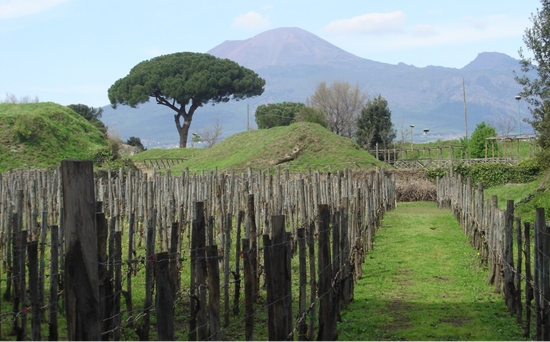
When Vesuvius exploded in 79 CE, its most famous victims were the cities of Pompeii and Herculaneum, but other towns and villas were buried as well, places such as Boscoreale or Oplontis. The one with the oddest story though is Stabiae. Pliny the Elder recorded that the town had been destroyed by Sulla during the Social War in 89 BCE so completely that only a single farmhouse remained. At some point afterwards, the area was turned into luxury villas - that is, until the eruption of Vesuvius, which destroyed it once again.

In the mid-18th century, archaeologists discovered the ruins of both Pompeii and Stabiae. After some initial excavation work, focus was concentrated on Pompeii, and Stabiae was reburied to protect it. Eventually, the site was forgotten - until the 1950s, when a local high school principal decided to rediscover it. Working with the school’s janitor and a mechanic, they found several archaeological sites, and excavation continues today.

2. Dead Cities, Syria

wps3ACD.tmp
Image: Bernard Gagnon/Wikimedia Commons // CC BY-SA 3.0

The Dead Cities are a group of around 40 villages in northern Syria that date to the 1st through 7th centuries CE. According to UNESCO, "the relict cultural landscape of the villages also constitutes an important illustration of the transition from the ancient pagan world of the Roman Empire to Byzantine Christianity." They were abandoned quickly, either due to shifting trade routes, weather changes, or a pattern of invasion between the Byzantines and the Umayyads.

But people are returning to the Dead Cities. In 2013, an NPR report described modern smokestacks on the landscape, as refugees began moving into the area.

3. Chan Chan, Peru

wps181F.tmp
Image: David Holt/Wikimedia Commons // CC BY-SA 3.0

Chan Chan was the capital of the Chimu Kingdom, and is believed to have been the largest city in the Pre-Columbian Americas. The kingdom lasted from circa 900 to 1470, when it was conquered by the Inca. The city began a rapid decline afterwards, to the point that when the Spanish arrived the city had already been effectively abandoned.

4. Hashima Island, Japan

wpsD2E5.tmp
Image: JordyMeow/Pixabay

Also known as Gunkanjima or Battleship Island, this small island off the coast of Japan is thought to have been the most densely populated place on the planet in the 1950s, with over 5000 people crammed onto a 16-acre island (that works out to a population density of 200,000 people per square mile; Manhattan is around a third of that). Made famous as the location of the villainous lair in the 2012 James Bond movie Skyfall, Hashima Island was operated for years by Mitsubishi as a coal mine. But when the mine closed in 1974, the island was abandoned.

5. Bannack, Montana, USA

wps9F8D.tmp

Bannack is generally listed as the first boomtown in Montana: The population rose from a few hundred to thousands of individuals in just a few years after gold was discovered in a nearby creek in 1862. Sadly, by the time it was made Montana’s first territorial capital, the city was already in decline due to crime and other gold deposits being discovered elsewhere in the territory. Less than a year later the territorial capital was moved to Virginia City. In 1954 the state of Montana acquired most of the land, and today it's Bannack State Park.

6. Eastern Settlement, Greenland

wps2558.tmp

Founded by Norse explorers around 986 CE, it's estimated that at its largest, the Eastern Settlement in Greenland had around 5000 people living in the area. By the late 15th century the community had disappeared, leaving only ruins, with the last record of life there being a 1408 marriage between Thorstein Olafsson and Sigrid Björnsdottir. By the time Hans Egede arrived in the 1720s to convert the long-lost colonists to Lutheranism, the Norse Greenlanders had disappeared.

What happened to the settlement has long been debated, but recent archaeology has indicated that Greenland’s exports had ceased being in demand, and as the community became more and more remote, people began migrating back to more centralized communities in Norway, Iceland, and Denmark.

7. Consonno, Italy

wps809.tmp
Image: Spline Splinson/Flickr // CC BY-ND 2.0

Consonno was originally a medieval town that survived for centuries with a small population of around 300. But in 1962, an entrepreneur named Mario Bagno arrived to convert the community into a Las Vegas-style resort town. Years of construction and demolition followed, until 1976, when a landslide isolated Consonno and ended Bagno's dream of a "City of Toys." The area remained abandoned until 2016, when it hosted an Italian hide-and-seek championship.

8. Lost City, Florida, USA
wps2061.tmp
Image: Mike Mahaffie/Flickr // CC BY-NC-ND 2.0

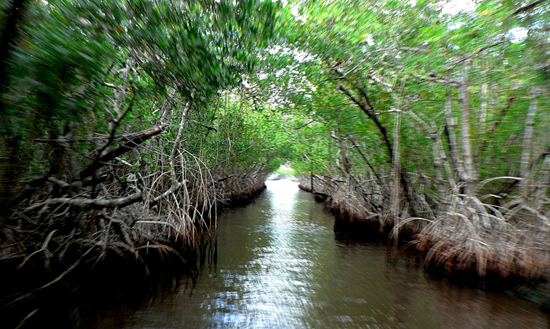
According to South Florida's Sun-Sentinel, deep in the Everglades there was a place called Lost City, and archaeologists have found evidence of human activity, from Seminoles to hiding Confederate soldiers, stretching back hundreds of years. For some reason though, activity spiked in the early 1900s when local legend says that Al Capone had a bootlegging operation there, thanks to the area's high ground and remote location.

9. Fort Mose, Florida, USA
wps7F52.tmp
Image: Waters.Justin/Wikimedia Commons // CC BY-SA 4.0

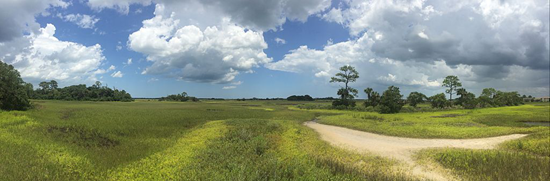
In the late 17th and 18th centuries, Florida was an area of Spanish land next to several English colonies. In order to help protect against English encroachment and weaken the nearby colonies, the Spanish in Florida offered a form of asylum to escaped slaves in exchange for converting to Catholicism and serving Spain. This gave rise to Gracia Real de Santa Teresa de Mose, otherwise known as Fort Mose, on the outskirts of St. Augustine. While it was largely established to protect St. Augustine from British attack, the site is also the earliest known European-sanctioned free black community in the modern United States. The fort was destroyed in 1740 and rebuilt, but lost much of its importance. After the Spanish gave Florida to Britain in 1763, the community moved to Cuba.

10. Kolmanskop, Namibia

wpsF790.tmp
Image: SkyPixels/Wikimedia Commons // CC BY-SA 4.0

In the early 20th century, Kolmanskop played host to European opera companies, an orchestra, and even the southern hemisphere's first X-ray unit. The city was built on an extremely productive diamond field (the BBC estimates that it produced a million carats of diamond in 1912, 12 percent of the world’s production that year). Eventually, World War I and the discovery of larger deposits further south led to the abandonment of the city.

11. Centralia, Pennsylvania, USA
wpsCAA0.tmp
Image: Navy2004/Wikimedia Commons // CC BY 3.0

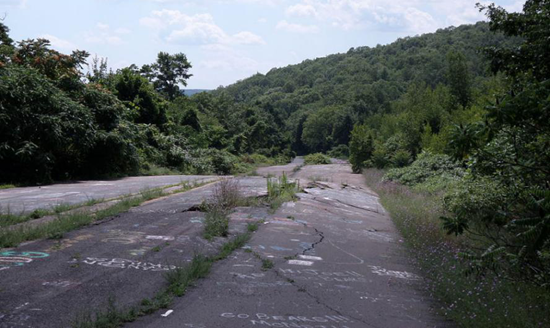
In 1960, the population of Centralia, Pennsylvania was 1435 people. By 2010 it was 10. Although the city was already on the decline, it was a decades-long coal fire that killed the city. Although there are some dissenters, it's generally agreed that in 1962, some trash was set on fire and the fire spread to a coal seam. The fire continued to burn and, among other scary events, in 1981 a 13-year-old boy narrowly escaped falling into a hole that opened up in the ground. The government bought most of the remaining citizens out, but a few residents fought to be able to live out their lives there.

12. Little America, Antarctica

wps53E6.tmp
Image: Eli Duke/Flickr // CC BY-SA 2.0

There were five Little Americas over the course of several decades. One of them even featured an American post office and had a newspaper documenting the goings-on. In fact, the only odd part was that it was in Antarctica. Robert Byrd set up the first Little America in 1928, expanded it in 1933-'35, and started a new Little America further north in 1940; two more would eventually follow.

As part of the 1933 Little America, Charles Anderson was sent to run a post office (the Smithsonian has his safe, labeled "U.S. Post Office, Little America, South Pole"). The purpose of this post office was entirely so that philatelists could get a cancellation mark from Antarctica. To get it they had to pay three cents for the stamp and 50 cents to the Byrd Antarctic Expedition; it was a success - anywhere from 150,000 to 240,000 letters were stamped before the post office was discontinued in 1935.

As for the Little Americas, they've drifted out to sea on icebergs and have disappeared.

13. Trellech, Wales

wps15.tmp
Image: Andy Walker/Flickr // CC BY-ND 2.0

According to ancient tax rolls, the second largest town in 13th century Wales was likely Trellech, which comprised about 400 buildings before being destroyed, most likely due to a combination of attacks, fire, and disease.

In early 2017, newspapers around the world reported the discovery of Trellech. The story is that in 2002 archaeology graduate Stuart Wilson, working at a tollbooth, learned of a farmer who found pottery shards kicked up by moles. Years later, the property came up for sale and Wilson bought it, hoping to find Trellech, which he claims that he did. Meanwhile, other researchers have criticized the results saying that they're overblown and archaeological work was being done in the broad area before. As for Wilson, he hopes to start a campsite at the area and continues digging.

14. Humberstone, Chile

wps71FA.tmp
Image: rewbs.soal/Wikimedia Commons // CC BY-SA 2.0

In the 19th and early 20th centuries, saltpeter was huge business as a fertilizer, and much of it came from the Atacama Desert in South America. One of these mining towns was Humberstone, but the modern UNESCO area contained over 200 saltpeter works and dozens of towns popped up. When synthetic fertilizers began appearing, however, saltpeter lost its importance and the cities faded away.

15. Akrotiri, Greece

wps84B3.tmp
Image: Bruno Vanbesien/Flickr // CC BY-NC 2.0

Today, Santorini is a picturesque tourist spot, but many visitors don't realize it is located on the remnants of one of the largest volcanic eruptions in human history. Called the Thera or Minoan eruption, it was likely around 4 times the size of Krakatoa. One of the settlements on the island at the time of the eruption nearly 3600 years ago was Akrotiri. Like Pompeii, it was buried by the volcano, but unlike that famed excavation site, there's a noticeable lack of bodies at Akrotiri, indicating that the population had enough warning to escape before the eruption occurred.

16. Taxila, Pakistan

wpsCF09.tmp
Image: xitus/Flickr // CC BY-NC-ND 2.0

Taxila is a complex that spans 6th century BCE Achaemenian ruins. The city was conquered by Alexander the Great in the 4th century BCE, and was a major center of Buddhism. In the 5th century CE, the Ephthalites invaded and destroyed much of the city while simultaneously lessening the presence and influence of Buddhism in the region. When the Ephthalites were defeated, the city wasn't restored, and a century later a chronicler noted that the city was still desolate, soon to be abandoned.

17. Pyramiden, Norway

wps4AA3.tmp
Image: Hylgeriak/Wikimedia Commons // CC BY-SA 3.0

Svalbard is an archipelago in the far north Arctic Ocean. Before 1920, it existed as an international Wild West, with no nation having ownership. This changed with the Svalbard Treaty that gave the archipelago to Norway on the condition that Norway not unduly interfere with certain rights of other signatories, such as mining activities, based on nationality.

The Norwegians had already attempted to mine coal in the area, but abandoned it, and the Soviet Union stepped in to work the land. According to Bloomberg, as an effectively Western city, Pyramiden had a very high standard of living, recruited the best minds, and served as a display for Communism to the rest of the world. After the fall of the Soviet Union, Pyramiden stopped being economically viable, and after a 1996 plane crash that killed 141 people and destroyed morale in the community, it was abandoned in 1998.

18. Merv, Turkmenistan

wpsEF02.tmp
Image: David Stanley/Flickr // CC BY 2.0

It's possible that Merv in modern Turkmenistan was the largest city in the world for a few years in the 12th century, with a population around 200,000 people. Merv's wealth came from a strategic position for trade routes and dams that provided the city with water.

In the 13th century, one of Genghis Khan's sons, Tolui, attacked, destroying the city. Although modern historians think it's exaggerated, the chronicler Ibn al-Athir claimed that 700,000 people were killed. The city never recovered, although other towns would be built in the surrounding area.

19. Cahokia, Illinois, USA

wpsB541.tmp
Image: Steve Moses/Flickr // CC BY 2.0

Cahokia, located just outside present day St. Louis, was the largest pre-Columbian settlement in the Americas north of modern Mexico. As the main bed of the Mississippian culture, the city grew quickly - some estimates indicate that between 1050 and 1100 CE the city grew from around 2000 people to 15,000 people, which at the time was the same population as London. For reasons that are still debated, the population soon declined and Cahokia was abandoned circa 1350. It may not have been all bad though - some historians suspect that the population decline is what helped spread the Mississippian culture across much of North America.

20. Nan Madol, Federated States of Micronesia

wps6B63.tmp
Image: NOAA Photo Library/Flickr // CC BY 2.0

Nan Madol, off the shore of Pohnpei, is best known as the only existing ancient city built on top of a coral reef. Comprising 92 artificial islands, the city served as the center of the Saudeleur dynasty who ruled the island. According to the National Park Service, Nan Madol was built around 1200 CE. Four hundred years later, a warrior-hero named Isokelekel helped overthrow the Saudeleur, leading to the abandonment of the site.

21. Mologa, Russia

wpsD42.tmp
Image: Ylliab Photo/Flickr // CC BY 2.0

When the Soviets decided to create the Rybinsk Reservoir on the Volga River in the 1930s, there was only one problem: Mologa and over 600 smaller villages, with a population of around 130,000 people. The residents were forced out, although there is evidence that around 300 people refused to leave and were drowned when the city was flooded in 1940. In 2014, the weather caused the reservoir to drop dramatically, re-exposing parts of the city to the world.

22. Neversink, New York, USA

wpsF17A.tmp
Image: rabbit57i/Flickr // CC BY-NC-ND 2.0

Another set of flooded towns exist in New York, condemned in the 1940s to give New York City more drinking water. Among these towns are Bittersweet and the either ironically or aptly named Neversink, which was relocated.

These cities are not alone. Communities being destroyed by reservoirs are so common there's a genre of fiction called “reservoir noir” that deals with intentionally flooded towns.

23. San Juan Parangaricutiro, Mexico

wps221.tmp
Image: Luis López Franco/Wikimedia Commons // CC BY-SA 4.0

San Juan Parangaricutiro used to be the principal town in its region of Mexico, a thriving city of 4000 people centered by an 18th century church. But on February 20, 1943, around two kilometers away, a volcano started forming on a farmer's land. After a day it was 150 feet high, and by the end of that year it was over a thousand feet.

Ash began covering nearby villages, and everyone was evacuated. There were only three recorded fatalities, all due to lightning from the eruption. Eventually, the lava reached San Juan Parangaricutiro and the church was partially buried. Today, it's a tourist site.

24. Hallsands, United Kingdom
wpsE886.tmp
Image: steve p2008/Flickr // CC BY 2.0

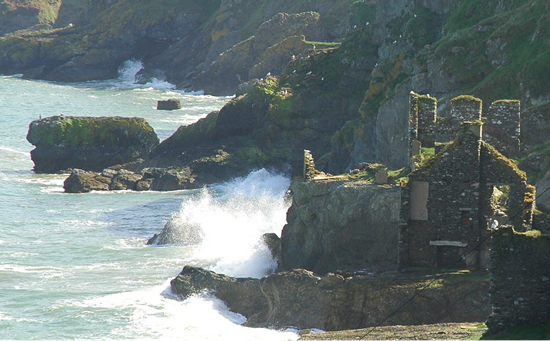
On the night of January 26, 1917, the fishing village of Hallsands in Devon fell into the sea. Amazingly, no one died, but the majority of the town's 128 people were left homeless (only one house survived the storm). And the cause was entirely human.

Twenty years earlier, the British government had decided to expand a nearby naval dockyard, and in 1897 began dredging the area for sand and gravel - the same material that was protecting Hallsands from the rough waters. In 1900, part of the sea wall was destroyed by a storm, and dredging was soon stopped. But in 1917, a combination of gales and high tides destroyed the city. While the government strenuously denied responsibility, recent research has uncovered a report that showed the dredging conclusively caused the collapse.

25. Lukangol, South Sudan

wpsB06A.tmp
Image: Arsenie Coseac/Flickr // CC BY-ND 2.0

Lukangol was a city of 20,000 in South Sudan that was completely destroyed in late 2011 due to ethnic clashes. According to an MSF spokesperson in the area, the town had been reduced to ashes, thought most of the population was able to escape before the attack.

26. Aravichy, Belarus

wps5835.tmp
Image: Ilya Kuzniatsou/Flickr // CC BY 2.0

Much of the discussion of abandoned cities following the Chernobyl disaster is focused on Pripyat in Ukraine, but across the border, 70 percent of the radioactive fallout fell on Belarus, causing an estimated 470 villages and towns to be evacuated. Today, these communities, such as Aravichy and Dronki, exist in the Polessye State Radioecological Reserve, which has turned into a large scale nature preserve.

27. Plymouth, Montserrat

wpsFADE.tmp
Image: Chuck Stanley/Flickr // CC BY-NC-ND 2.0

In 1995, the Soufrière Hills volcano began erupting, and in 1997 a pyroclastic flow destroyed the city of Plymouth, once home to 4000 people, and the surrounding area of Montserrat, a British territory in the Caribbean. Today, around 60 percent of the island is an exclusion zone that can only be visited with special permission, including Plymouth. What makes Montserrat odd is that Plymouth is still technically the capital of the island, although in reality the capital is Brades.

28. Survival Town, Nevada, USA
wps93C4.tmp
Image: Federal Government of the United States/Wikimedia Commons // Public Domain

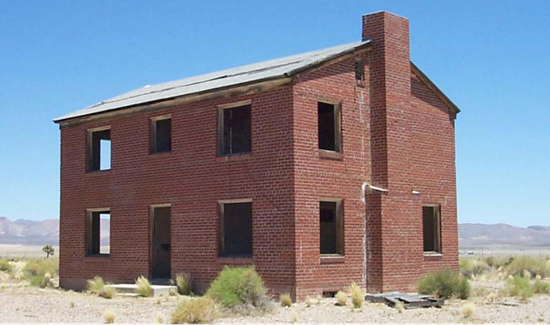
Only a nickname, Survival Town is an odd city because no one ever actually lived there. It was built expressly to test the damage resulting from the Apple-2 nuclear test in 1955. According to Archaeology, the town was fitted with utilities, industrial buildings, cars, fully stocked kitchens, and even a propane tank farm alongside dozens of mannequins. Today, a few buildings survive from the site, but according to Colleen Beck of the Desert Research Institute, something more fashionable may also have survived. She told Archaeology in 2014 "There’s a J.C. Penney page - it must be from this test - that shows mannequins before and after… You have this 'before' picture of the dressed mannequin, and afterwards sometimes an arm's gone, or whatever. But the J.C. Penney clothes survive fine."

29. Akkad, Iraq

wps2F32.tmp
Image: Patrick Gray/Flickr // CC BY-NC 2.0

The Akkadian Empire took its name from the capital city, Akkad (or Agade). And apart from that, very little is known of the city. Legend says that Sargon built the city (or possibly restored it) and created an empire in the 24th century BCE. The Akkadian Empire lasted around two centuries before collapsing over reasons that historians still debate. Today, the location of the capital city of the empire remains unknown, as do many of the details of its rise and fall.

30. Paititi, Peru
wps3374.tmp
Image: icelight/Flickr // CC BY 2.0

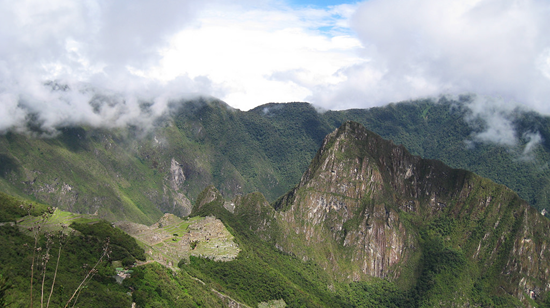
Paititi is a legendary lost city somewhere in the Andes said to be rich with gold. Some scholars dispute its existence, saying that it was a metaphor instead of a city, or that it was created to distract invading Spaniards. Other scholars insist that it's real, and in 2008 officials in a Peruvian town announced that they discovered it along a heavily forested section of the mountains. Soon after, experts denounced their find as a natural formation, meaning the real Paititi remains lost.

Top image: Serjilla, one of the Dead Cities of Syria. Credit: upyernoz/Wikimedia Commons.

[Source: Mental Floss. Some images added.]

5 POPULAR MISCONCEPTIONS THAT STUBBORNLY PERSIST

wpsA4A4.tmp
5 Popular Misconceptions That Stubbornly Persist
By Debra Kelly,
Urban Ghosts Media, 7 December 2017.

Popular misconceptions, both localised and widespread, are a common aspect of modern life. There are some things we simply accept without questioning, taking as read what has been constantly reinforced within our belief system. The fact that hearing something enough times can lead us to no longer question it, turning myth into “fact,” is both fascinating and worrying at the same time. From an immortal pop culture catchphrase and the mundane maintenance of one’s automobile to darker modern myths, here are five popular misconceptions that have persisted over time.

1. “Beam Me Up, Scotty”

wpsA54D.tmp
Image: Video screenshot John Hershman/YouTube

When James Doohan passed away in 2005, his Associated Press obituary read, “James Doohan, 85, the burly chief engineer of the Starship Enterprise in the original ‘Star Trek’ TV series and movies who responded to the command ‘Beam me up, Scotty,’ died July 20 at his home in Redmond, Washington.”

Only, he never actually answered to “Beam me up, Scotty.” It’s a popular misconception so persistent that it even appeared in the poor man’s obituary. So what’s the deal? TV Tropes dug deeper in a bid to find out where this particular phrase, popularly uttered by Captain Kirk, came from. It turns out the exact four-word catchphrase was never uttered either in the original television show or in Star Trek: The Animated Series. They found “Scotty, beam me up,” and even “Beam us up, Scotty,” but never that most famous line. According to the wiki, its first appearance was actually on a bumper sticker, and it wasn’t until 1995 that William Shatner finally recorded the line in an audiobook version of The Ashes of Eden.

There’s another footnote to this popular misconception, too. Since Scotty was the chief engineer, he was rarely the person sitting at the console pushing the buttons, anyway. The most common version of the line was, “Four to beam up,” directed at whoever was sitting there at the time.

2. Fan Death

wpsD5B4.tmp
Image: Infrogmation

Fan death is a real fear in South Korea, where there’s a persistent belief that falling asleep in a closed room with a fan going is potentially deadly. The popular misconception is so widely believed that - according to The Atlantic - many fans have a timer that will automatically shut them off in the middle of the night. The Korean Herald calls it the country’s best-known urban legend. Even though people understand that its a myth, the story persists.

The Korean Consumer Protection Board issued an official advisory in 2006, warning that night-time exposure to a fan can cause hypothermia and death by an “increase of carbon dioxide saturation concentration and decrease of oxygen concentration.” Snopes also looked into the myth of fan death, including claims that fans turn oxygen into carbon dioxide, and that their blades render air unbreathable.

Needless to say, it’s not true. Most night-time deaths attributed to fans have been found to have other tragic causes, like undiagnosed heart conditions. No-one’s entirely sure how this popular misconception took root in the South Korean psyche. One theory posits that it was started by the government in an bid to get people to use less electricity.


3. The Five-Second Rule

wps852E.tmp

It’s unclear where this popular misconception originated, but we’ve all done it - especially when the tasty morsel we’ve just dropped is our favourite cookie or chocolate. The belief is that if you pick something up off the floor within five seconds (or sometimes, three seconds), it’s germ-free and safe to eat. It’s not that easy, of course, so let’s look at what the science says.

In 2016, National Geographic reported on a series of experiments published in the journal Applied and Environmental Microbiology, and to make a long report short, they found a few things. The longer an item of food was in contact with a surface, the more bacteria it accumulated - but there was also plenty of bacteria that transferred instantly. Researchers found that the type of food was important. The more moisture present in the environment, the more bacteria was transferred. So you may want to think twice about picking up that piece of watermelon you’ve just dropped.

On the flip side, you’ll also occasionally read news stories claiming that scientific research supports the five-second rule, like this March 2017 article in the Independent, quoting a germ expert at Aston University. Nevertheless, buried in that story is a caveat that picking up food is never 100 percent safe, so better to err on the side of caution.

4. The 3,000 Mile Myth

wps324F.tmp
Image: Myke Waddy

It’s probably one of the first things you learned about car care when you start driving, especially if you live in the USA. But the idea that you need to get your oil changed every 3,000 miles isn’t just a falsehood, it’s a popular misconception with serious unintended consequences.

In 2008, SF Gate reported that California’s waste management officials were kicking off a campaign to debunk the 3,000 mile myth and hopefully help the environment along the way. The site reported that 73 percent of California drivers were changing their oil far more often than necessary, meaning they were wasting money and damaging the environment also.

Just how often you really need an oil change depends on a range of factors, such as the age of your car and what kind of driving you can do, but a campaign website aimed at debunking the 3,000 mile myth stated that “automakers are regularly recommending oil changes at 5,000, 7,000 or even 10,000 miles based on driving conditions.”

5. Tornado Myths

wpsBE25.tmp

Tornadoes - those vicious, twisting columns of air - are terrifying, but there are many popular misconceptions over the safest thing to do when one strikes. Let’s discuss a couple of them here. It might just save your life.

According to Popular Mechanics, one dangerous myth is that overpasses are safe places to head to if you’re caught out in the open. An overpass is actually highly dangerous in a tornado. The narrow space can create a wind tunnel with even faster winds, and you should never seek shelter there. Equally dangerous is the idea that you should open windows in your house to equalise the pressure. Doing so just isn’t necessary - finding somewhere safe and heading to the basement is more important.

There’s a plethora of non-safety related myths about tornadoes, too. Contrary to popular belief, they’re not just restricted to North America and have been seen on every continent except Antarctica. There’s also no kind of terrain that can prevent or stop a tornado, and twisters don’t gravitate toward sparsely populated or rural areas over urban ones, either. Another popular misconception? They can’t happen in winter. Yes, while it’s true they generally form in warm weather, it’s entirely possible for twisters to strike snow-covered areas during the winter.

[Source: Urban Ghosts Media.]

Friday, 15 December 2017

INFOGRAPHIC: WHY IS THE INTERNET OBSESSED WITH CATS?

wpsB358.tmp
Cat obsession has existed for thousands of years, and it has persisted in today's digital age. Now, cats are the stars of Internet, appearing in videos and memes, inspiring cultural trends and baffling society. It does not take rocket science to figure out that the Internet has brought cat obsession to a new level. This infographic by Pet Life Today brings you its latest findings to the age-old question: why are people so obsessed with cats?

https://petlifetoday.com/wp-content/uploads/2017/12/internet-is-obsessed-with-cats-infographic.png

Infographic Sources:
1.
The boxing cats (Prof. Welton's)
2. This Is The Very First Cat Video Posted To YouTube
3. Pajamas and Nick Drake
4. Puppy vs. Cat
5. Venus the Two-Faced Cat a Mystery
6. Why Cats Rule the Internet Instead of Dogs
7. 15 Reasons Maru Is Better Than Your Cat
8. Video: Meet Maru ‘Mugumogu’ - the cardboard box-loving, record-breaking cat
9. RIP Colonel Meow, World's Furriest Cat, Dead at 2
10. 12 things you didn’t know about Keyboard Cat
11. The Story Behind Keyboard Cat
12. 20 Pets That Make Millions for Their Owners
13. How to make millions from your cat
14. What Is 'Lolcats'?
15. Cat Breading
16. Trump your cat: the most bizarre Instagram trend yet?
17. About CatCon
18. Cat Power: The Life and Times of Lil Bub
19. The Boxing Cats (Prof Welton's) (1894)
20. Keyboard Cat
21. The 20 Most Important Online Videos Of All Time
22. LOLcats
23. Keyboard Cat's Greatest Hits!
24. Colonel Meow
25. mugumogu
26. Nyan Cat / Pop Tart Cat
27. History of Cats
28. Hot New Internet Meme: 'Breading' Cats
29. Even in the 1870s, humans were obsessed with ridiculous photos of cats
30. Meet Venus, the Chimera cat with two faces

[Post Source: Pet Life Today.]

10 OF THE WINDIEST PLACES IN THE WORLD

wpsCCC9.tmp
10 of the windiest places in the world
By Josh Lew,
Mother Nature Network, 13 December 2017.

Where is the windiest place on Earth? It depends on how you choose to quantify wind speed. Some of the places with the highest average speeds rarely experience significant gusts, for example. And those spots where winds with three-figure velocities are a common occurrence are often eclipsed when it comes to annual "highest speed" rankings by places that happen to have had a major storm that year.

Though "windy" is defined in different ways, the following places all have a reputation for strong or never-ending breezes. Let’s take a closer look at why they've earned this gusty image and the type of weather you're likely to experience if you visit.

1. Windiest of all: Wellington, New Zealand

wps509.tmp
Photo: Aidan/Flickr

Wellington has a reputation as the world’s windiest city. The winds known as the Roaring 40s (as in 40-50 degrees south of the equator) rip across the Pacific Ocean and are compressed by the narrow Cook Strait (between the North and South Islands of New Zealand) before hitting Wellington. According to weather data, the city’s breezy reputation is well deserved. The average wind speed is 16.6 mph and the strongest recorded gust topped 150 mph.

Wellington takes full advantage of the often-gale-like conditions. Wind farms provide clean energy to the city, and any emissions from cars or other sources are quickly whipped away, making the air seem unpolluted and fresh. Despite occasional damage to property, people here embrace the blowing weather. There's even a statue, dubbed "Solace in the Wind" [pictured above], on the waterfront. It depicts a human figure leaning into the breeze.

2. Windiest peak in the U.S.: Mt. Washington, New Hampshire

wps81B3.tmp
Photo: Robert Linsdell/Flickr

Mount Washington, a 6,000-foot New Hampshire peak, held the world record for strongest recorded wind gust for most of the 20th century. In 1934, the Mount Washington Observatory clocked the wind at 231 mph. The record was eventually beaten by a typhoon-enhanced gale on Barrow Island, Australia. Nonetheless, Mount Washington remains one of the breeziest places in the world. The average speed of 32 miles per hour makes it, by far, the windiest place in the U.S.

Why is it so windy here? The White Mountains, of which Washington is a member, sit at the intersection of several common storm tracks. The peaks are a barrier for easterly winds and often see a clash between low pressure from the Atlantic and inland high pressure. These factors combine to create hurricane force winds (greater than 75 mph) on the summit of Mount Washington on more than 100 days each year.

3. Weeks-long blizzards: Antarctica

wpsF844.tmp
Photo: Frank Hurley/Wikimedia Commons

Antarctica is home to scientists, penguins and some of the world’s fastest winds. How strong are the gusts at the bottom of the world? It’s hard to tell. Instruments can ice up and stop working, and those that are immune to freezing may blow away in especially harsh polar weather. Blowing snow can trick ultrasonic wind meters as well.

One successful measurement, on Cape Denison, showed that average wind speeds were gale force (greater than 39 miles per hour). That makes this portion of the continent windier than Mount Washington, on average. The weather patterns are affected by cold temperatures and by the topography of Antarctica, which slopes down toward the coastlines. This geography creates strong downslope, or katabatic, winds that can cause blizzard-like conditions for weeks on end.

4. Windiest small town: Dodge City, Kansas, USA

wps8035.tmp
Photo: Joseph Novak/Flickr

Some of America’s windiest places are in the Midwest. Chicago, of course, is known as the Windy City. Despite breezes sometimes blowing off Lake Michigan, most people attribute the nickname to the city’s history of long-winded politicians, not the weather. The data agrees, showing that a number of U.S. towns have stronger drafts. The stiffest can be found in Dodge City.

The average wind speed is just under 14 mph in southwestern Kansas. There are locations in the U.S. with higher averages, but this is the windiest place with a significant population (roughly 27,000 people). That 14 mph is quite consistent. Yes, Kansas is in Tornado Alley, but the winds sweeping down off the Rockies and into the Plains play a bigger role than the occasional twister does in setting that high average. A similar downslope wind pattern affects one of the other windiest towns in America: Amarillo, Texas.

5. Tip of the Americas: Punta Arenas, Rio Gallegos

wps5D25.tmp

Like New Zealand, Patagonia is affected by the Roaring 40s. The cities of Punta Arenas, Chile and Rio Gallegos, Argentina are in the crosshairs of these muscular gusts. Punta Arenas, the largest city in the world below the 46th Parallel, actually has a moderate climate in terms of temperature thanks to its proximity to the ocean. However, it's so windy here that authorities have strung ropes in between some buildings so that people have something to hold onto during extreme gusts. 80 mph winds are not uncommon, especially during the Southern Hemisphere summer.

The average annual wind speed is "only" 16 mph in Rio Gallegos, but that figure nearly doubles during the summertime. The winds help to keep the average summertime highs below 70 degrees. Known for oil and shipping, this city is the gateway to the Falkland Islands, but it's not really a tourist destination.

6. Canada's windiest: Saint John's, Newfoundland

wpsFDCA.tmp
Photo: SingleIntegral/Wikimedia Commons

Saint John's is the capital city of Newfoundland and Labrador, located on the island of Newfoundland. It's famous, among other things, for the superlatives attached to its weather. One of these is "windiest city in Canada." The average annual wind speed here is 13.6 mph. The wind gusts over 30 mph on an average of 47 days each year. The Newfoundland hub also has the most foggy and cloudy days, and the highest amount of precipitation (both rain and snow) of any major city in Canada.

Wind chills can be an issue in wintertime, but Saint John's actually has a relatively mild climate, with the city pointing out on its website that it has the third most temperate climate in Canada after Vancouver and Victoria.

7. City of Winds: Baku, Azerbaijan

wpsE52E.tmp
Photo: Khortan/Wikimedia Commons

Baku, the capital of Azerbaijan, is known as the City of Winds. This name is apt today, but it was first used in ancient times, when the settlement that is now Baku was referred to as "city of pounding wind" in Persian. There are two sources of Baku’s breezes. Cold winds blow in from the Caspian Sea, sometimes reaching gale force (32 mph or more), and warmer winds move overland into the city.

Despite the prevalence of the colder winds, and the wind chills that can come with them during the wintertime, Baku benefits from its breezy weather patterns. The city has a pollution problem, but the consistent blowing clears the air. There's nothing to impede these gusts because Baku is 92 feet below sea level.

8. Windiest in Europe: Scotland

wps6F00.tmp
Photo: Elisa.rolle/Wikimedia Commons

The U.K. is commonly called the windiest country in Europe. Some in Scotland say that their nation alone should hold the distinction because it's windier than the other members of the United Kingdom. Scotland’s top ranking was actually proven by a rather unusual source. A Scottish ice cream company, Mackie’s, ran an ad campaign that said it used wind power to operate its factory, and that plant was located in the windiest place in Europe. The U.K.’s Advertising Standards Authority disputed the "windiest location" claim and asked Mackie’s to prove it or pull the ads. The ice cream maker got the relevant data from British scientists and showed the veracity of its claims.

Scotland has average wind speeds of between 15-17 mph. The gusts are strongest in Western Scotland. Some coastal areas have 25 days worth of gale force winds per year. The strongest winds are in the wintertime and are caused by depressions in the Atlantic.

9. Highest wind ever: Barrow Island, Australia

wps1408.tmp
Photo: Bernard Dupont/Flickr

Barrow Island currently holds the world record for highest recorded wind speed. The speed of 253 miles per hour was clocked by an unmanned weather station during a severe tropical cyclone. Cyclones are hurricane-like storms that form in the Pacific. Barrow, off northwestern Australia, is relatively windy, with an average annual speed of 12 knots or 13.8 mph. That’s far below the mean wind speed of Mount Washington, the previous record holder.

Barrow Island has an interesting dynamic. It's a major center for oil and natural gas operations and has the most productive oil-extraction site in Australia. On the same island is a "Class A" conservation reserve that is home to spectacled hare wallabies, sea turtles, perentie (Australia’s largest lizard, pictured above) and other rare and protected species.

10. Another record: Tornado Alley, Oklahoma, USA

wpsEB50.tmp

Many of the highest wind speeds ever recorded during tornado activity were in Oklahoma. This includes a 1999 tornado in the suburbs of Oklahoma City that reached a speed of 318 miles per hour. This was measured by doppler radar. It took the Doppler-measured wind-speed record from another tornado that took place in Oklahoma.

Yet another twister near Oklahoma City and the small town of El Rey in 2013 was nearly three miles wide and had winds approaching 300 miles per hour. The World Meteorological Organization does not accept Doppler speed readings as official, which is why Barrow Island holds the record. Obviously, it’s difficult for instruments to survive tornados, let alone take accurate readings.

Top image: Makara Wind Farm, Wellington, New Zealand. Credit: mtrappitt/Flickr.

[Source: Mother Nature Network. Some images and links added.]

Thursday, 14 December 2017

INFOGRAPHIC: THE ULTIMATE GRAMMAR CHEAT SHEET FOR WRITERS

wpsB5D4.tmp
Despite being an international language, English isn't the world's easiest. It’s full of grammar oddities, confusing vocabulary and hard-to-master conventions, which are obstacles especially for writers. Any writer will know that mastery of the language is essential to be successful, and one of the many ways to achieve this is to master the English grammar. This infographic by The Expert Editor provides more detailed tips on how writers can improve their English.

https://experteditor.com.au/wp-content/uploads/2017/11/Grammar-cheatsheet-infographic-hr.jpg

[Source: The Expert Editor.]

10 BEST BUILDINGS OF 2017

wps63D8.tmp
From dancing skyscrapers to giant Lego: The best buildings of 2017
By Adam Williams,
New Atlas, 12 December 2017.

Throughout the year, we've chased down the most interesting, innovative and sustainable buildings around the globe. Whether a Lego-shaped visitor's center, a beautiful bamboo sports hall, or a pair of "dancing" skyscrapers that can withstand extreme weather, each one represents architectural excellence. Read on for our selection of the best buildings of 2017.

1. Lego House - BIG

wps2CB4.tmp

The Lego House, also known as Home of the Brick, is the product of a masterful matchup between Danish toymaker Lego and fellow countrymen, the Bjarke Ingels Group (BIG).

Lego's new flagship building is located in its hometown of Billund and comprises 21 massive overlapping concrete blocks covered in brightly colored clay tiles to make them look like oversized Lego bricks. Its whimsical appearance belies the serious graft that went into the Lego House, however, and the 23 m (75 ft)-tall building required huge amounts of steel to enable the construction of an expansive central square without any visible columns.

Inside, the Lego House is packed with Lego exhibitions, memorabilia and history, with highlights including a tree made from over six million Lego bricks. Multiple play zones are installed to teach kids different styles of play. It's an ambitious, assured and playful project and has to rate amongst BIG's very best.

2. Zeitz MOCAA - Heatherwick Studio

wpsF164.tmp

Heatherwick Studio has been in the news for all the wrong reasons lately following the failure of the ill-conceived Garden Bridge, but the high-profile firm has come back with one of its most successful projects to date with Zeitz MOCAA: a museum built from a 1920s-era Cape Town, South Africa grain silo.

The concrete building originally included a grain grading tower and 42 individual concrete tubes inside. Heatherwick Studio set to work carving a large atrium out of these tubes by cutting away sections to create a grand cathedral-like space, as well as smaller areas to serve as galleries. It really is quite unique and impressive inside.

The exterior sports glazing inspired by the bulging glazed texture of a Venetian lamp and, according to the firm, glows like an oversized lantern at night.

3. KAPSARC - Zaha Hadid Architects

wps8122.tmp

Zaha Hadid passed away suddenly over a year ago but her firm hasn't missed a beat and continues to produce striking, unusual buildings. The latest of these is KAPSARC (King Abdullah Petroleum Studies and Research Centre), a non-profit institution tasked with researching more efficient uses of energy in Riyadh, Saudi Arabia.

KAPSARC's sunlight-reflecting bright white facade and hexagonal prismatic honeycomb structure lends it a striking appearance, like an oversized insect in the desert landscape. The project is laid-out so as to shelter the interior from the sun's harshest rays, while remaining open to northern and westerly cooling winds. A large central courtyard is shaded with canopies, though underground passages are still available for the hottest weather.

The prevailing breeze is channeled by "wind catchers" integrated into KAPSARC's roof, while potable water is recycled and reused on-site. A solar power array is installed atop the roof, too.

4. CTF Finance Centre - KPF

wpsA50E.tmp

Fittingly, the country that hosts the Terracotta Army is also home to the world's tallest terracotta-clad tower. Rising to a height of 530 m (1,739 ft) the Kohn Pedersen Fox Associates (KPF)-designed Guangzhou CTF Finance Centre is a stunning skyscraper that's rated the fifth tallest building in the world.

So why use terracotta? KPF acknowledges its historical use, and also says it's more environmentally-friendly than using aluminum, glass, or steel, as it can be more easily produced at multiple local sites rather than shipped-in from afar. It's also more resistant to corrosion and provides better thermal properties than glass. Its unique appearance doesn't hurt, either.

Around 30,000 people navigate the massive 508,000 sq m (5.4 million sq ft) of floor space within the Guangzhou CTF Finance Centre each day using 95 Hitachi elevators, which are among the world's fastest and travel at 72 km/h (44.7 mph).

5. La Seine Musicale - Shigeru Ban

wpsC8CE.tmp

Shigeru Ban is best known for using cheap materials like cardboard to build refugee shelters, but his La Seine Musicale in Paris reminds us that the starchitect is perfectly capable of producing grand, expensive works when the job requires it.

Designed with local architect Jean de Gastines, La Seine Musicale took three years to build and cost €170 m (about US$189 million). It includes a large multipurpose concert hall with exquisite wooden detailing, rehearsal and recording studios, as well as a covered street with retail and restaurant spaces, and more.

While you certainly could argue that the ship shape of the concert hall is a bit overly literal, the glazed egg-shaped auditorium is a really nice piece of design. It's part-covered by a "solar sail" that helps shade the interior from direct sunlight and is clad in solar panels and mounted on rails. Motors move the sail to track the course of the sun each day from east to west and catch the maximum possible rays, reducing the electricity required from the grid.

6. Bamboo Sports Hall - Chiangmai Life Architects

wps139F.tmp

Bamboo is a surprisingly tough building material and can be produced sustainably and inexpensively. In the right hands, it can also be used to make beautiful buildings, such as this Bamboo Sports Hall, at Panyaden International School, in Thailand.

The ornate bamboo structure by Chiangmai Life Architects is inspired by the lotus flower and aims to combat the hot and wet climate with open, natural ventilation. The hall measures 15 m (50 ft) wide and tall, and the choice of building material resulted in a 90 percent reduction in the project's carbon footprint, compared to traditional building techniques.

The space is used for basketball, volleyball and badminton, and incorporates three smaller volleyball and badminton courts for practice. It also boasts a stage that can be lifted automatically for school assemblies, while balconies line the court so that parents and spectators can watch.

7. American Copper Buildings - SHoP Architects

wpsDB8B.tmp

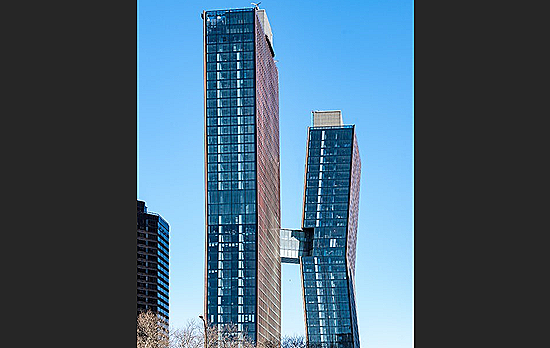
The American Copper Buildings, by SHoP Architects, stand out even in skyscraper-packed Manhattan, NYC. Clad in 4.25 million lb (1.9 m kg) of copper that has already begun to patina and will continue to age over time, the twin luxury residential buildings are connected together with a skybridge and lean in a way likened to dancing by the firm.

The American Copper Buildings were completed following Hurricane Sandy. A space originally intended for a penthouse suite was given over to five gas-powered emergency generators that will give residents enough juice to run their fridges and charge mobile devices, etc - and use the elevators - for at least a week following a power outage.

Heating and ventilation systems are also installed far above street-level to lessen the risk of flood water rendering them inoperable.

8. Apple Park - Foster+Partners

wpsDB1B.tmp

Though currently in use, Apple Park, by Foster+Partners, still has an air of mystery about it as there are some finishing touches to be put in place before it's deemed officially complete and unveiled to the world's press. That said, what we do know already speaks to an impressive engineering achievement.

First unveiled back when Steve Jobs was still at Apple's helm, the new campus cost an estimated US$5 billion and comprises 75 acres (71 hectares) of land, serving as workplace to over 12,000 employees. The circular office building is clad in the world's largest panels of curved glass and hailed as the world's largest naturally ventilated building by Apple. It's also solar-powered and gets its electricity from a huge 17-megawatt solar panel array. At its center is a large courtyard area.

A significant landscaping effort involved the planting of indigenous (and drought-resistant) plants and trees on the site and the main office building is also joined by a large Visitor Center and the Steve Jobs Theater on the Apple Park campus. An existing barn dating back to the early 20th century on the site was preserved, too.

9. Copenhagen International School - C.F. Møller Architects

wps5666.tmp

Solar panels are often considered unattractive additions to a building and hidden away out of sight, but the Copenhagen International School, by C.F. Møller Architects, makes a feature out of them.

The building has an exterior that's almost totally covered in solar panels, producing over half of its required electricity, which is quite an achievement in a Scandinavian country such as Denmark. A total of 12,000 solar panels are affixed to the school's exterior, measuring 6,048 sq m (65,100 sq ft). They're angled individually, and C.F. Møller says they are intended to resemble sequins. They definitely lend the school an attractive and distinctive appearance.

Other sustainable design in the school includes excellent insulation, rainwater harvesting, low-energy windows, and LED lighting.

10. Louvre Abu Dhabi - Jean Nouvel

wps88CE.tmp

One of the high points of Pritzker Prize-winning French architect Jean Nouvel's distinguished career, the Louvre Abu Dhabi took over a decade and hundreds of millions of dollars to build. The complex is made up of 55 detached buildings and is conceived as a man-made archipelago, accessible both by land and the surrounding waters that lap against its white surfaces.

The Louvre's architectural centerpiece is a silver dome that weighs the same as the Eiffel Tower (around 7,500 tonnes) and has a diameter of 180 m (590 ft). The structure rests on just four pillars hidden away inside the museum buildings, lending the effect that it is floating.

The dome is made up of eight layers of stainless steel and aluminum mesh, which combine to form a tapestry of 7,850 geometric holes for the sun to filter through, bringing to mind the light-scattering palm trees of the area.

Check out this gallery to see more photos and information on each of the buildings.

Top image: LEGO House in Billund, Denmark. Credit: The LEGO Group.

[Source: New Atlas. Top image and some links added.]