Pages

Friday, 11 May 2018

10 INCREDIBLE WAYS NATURE BEAT US IN TECHNOLOGY

wpsEE57.tmp
10 More Incredible Ways Nature Beat Us In Technology
By Tiffany Howard,
Listverse, 10 May 2018.

We human beings have managed some amazing accomplishments: skyscrapers, space travel, deep-sea diving, and Dilbert comics, among other things. Yet as clever as we are, we still have much to learn from our fellow earthlings. Plants and animals demonstrate amazing feats of engineering all the time.

Biomimicry is the act of modeling structures, materials, and systems after biological units and processes.[1] We’ve told you before about technologies that mimic features of animals. Here are ten more examples of how nature has schooled us on creating advanced technology.

10. Shark Skin And Air Travel

wpsF4CD.tmp

There’s a reason why sharks have been the subject of so many terrifying stories; they’re some of the most efficient predators found in nature. These hunters have their water-optimized skin to thank for helping them to reach their top speeds. The surface of shark skin is made up of tiny “teeth” called dermal denticles. These dermal denticles (also referred to as placoid scales) have grooves that channel water, therefore reducing drag.

The ideal design of shark skin has been the source of numerous “Aha” moments among inventors. One brilliant application comes from three scientists from the Fraunhofer Society, a German research organization. They developed a special paint after studying sharkskin up close. This paint, when brushed onto a special stencil and applied to the surface of airplanes, achieves the structure of shark skin and reduces drag. The researchers claim that if this paint were applied to every airplane on the planet, it would save up to 4.48 million tons of fuel per year.[2]

9. Schools Of Fish And Wind Farms


It’s quite fascinating to watch a school of fish swim in sync through the sea. They seem to keep up with each other no matter what, even when making sudden turns. One theory behind this behavior is that fish in a school can drift off of the flow patterns of the surrounding fish. Essentially, schooling acts as an energy-saving technique.

A team at Caltech led by Professor John Dabiri designed vertical wind turbines that operate in a similar way. When grouped together, they become more energy-efficient by using the air current generated by neighboring turbines. The result is an array of wind turbines that can outperform conventional windmills.[3] These findings have been backed by similar studies performed by Stanford, Johns Hopkins University, and the University of Delaware.

8. Humpback Whales And Turbine Blades

wpsBE77.tmp

Nature has even more to teach us about wind power efficiency, as demonstrated by the humpback whale. Both the humpback whale and wind turbines benefit by reducing the amount of drag on their surfaces. The gentle giant achieves this thanks to the bumps along its fins, called tubercles. Tubercles allow the whale to maneuver with minimal drag, which is necessary when it’s searching for food.

Of course, the design transfers well to wind turbines. Professor Frank Fish of West Chester University worked with a team to design a turbine blade with tubercles. The resulting design worked so well that it could even gather wind in low wind speed areas. Fish is president of a Canada-based operation called Whalepower, which is dedicated to improved turbine and fan designs based on his team’s findings.[4]

7. Geckos And Power Adhesive

wps51FD.tmp

Admit it: At some point in your life, you’ve been a bit jealous that geckos can effortlessly walk up walls. The mystery of the wall-climbing lizard has puzzled observers for millennia. It was finally solved in 2002, when researchers discovered millions of tiny hairs on the gecko’s feet called setae. The setae help to produce weak, short-range electrostatic forces called van der Waal’s forces.

While there have been many proposed applications for this feat of nature, one in particular has been successful in its own right: a product called Geckskin. Three enterprising graduates from the University of Massachusetts Amherst created this reusable super adhesive inspired by the mechanics of gecko feet. The sticky material can hold up to 317 kilograms (700 lb) on a smooth wall. Since its debut, Geckskin has won accolades from organizations and news outlets including CNN, Bloomberg, and The Guardian (the last of which referred to it as “flypaper for elephants”).[5]

6. Bats And SmartCanes


Bats are famous for their nocturnal prowess, which comes from their unique ability to distinguish objects in the dark using echolocation. They emit high-pitched sonar frequencies that bounce off of objects that the creature could potentially collide with while flying.

A research team at the Indian Institute of Technology in Delhi, India, has taken a cue from bats to revolutionize the standard white cane used by blind people. Through their research, they created the SmartCane. The device emits a similar signal to bats to detect potentially dangerous objects.The device attaches to a standard white cane. When the waves return to the device, it vibrates to let the user know to avoid an object in his or her path.[6]

Though similar technologies already exist, such as the widely available Ultracane, the developers of SmartCane wanted to create a product that is not only useful but affordable for everyone. The SmartCane retails at about US$50, compared to the US$1,000 Ultracane.

5. Beetles And Water Harvesting
wps495.tmp

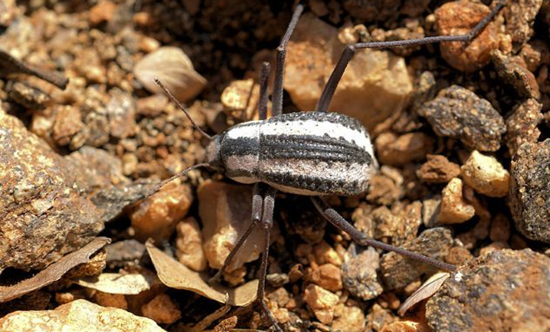
Engineering effective ways to harvest water has been one of the greatest challenges of the modern era. Water is such a precious resource that’s it’s hard to believe that any creature could merely pull it out of thin air. However, the Stenocara gracilipes beetle can do just that.

This beetle is native to the coastal Namib Desert in Southwestern Africa, one of the hottest, most unwelcoming places on Earth. When the wind sweeps fog in from the ocean, water droplets collect along a series of glass-like bumps along the beetle’s back. The drops then run down small channels to the beetle’s mouth. This process is crucial to the insect’s survival, as the fog only rolls in about six times per month.

There have been multiple attempts by researchers to replicate this useful ability. For one, scientists at the British Ministry of Defense conducted research in 2001 on creating tents and roof tiles that can collect water in dry regions. A company called NBD Nano was also inspired by the beetle. Founded by four graduates with degrees in biology, organic chemistry, and mechanical engineering, the company aims is to produce a self-filling water bottle based on the beetle’s shell. As of 2012, they were producing a prototype to go to market.[7]

4. Sea Sponges And Solar Panels

wpsD3D.tmp
Photo credit: Ed Bierman

At first glance, the orange puffball sponge may not look like much. What more could anyone use it for, other than a trendy shower accessory? It turns out that these simple invertebrates have a special ability to harvest silicon from seawater and use it to build up their spongy bodies. This process could potentially provide a way to build cheaper, more eco-friendly solar panels.

Manufacturers typically create solar panels by laying chemicals on an inert surface to create a thin, crystalline layer. The layer acts as a semiconductor that generates an electrical current when sunlight strikes it. This high-temperature, low-pressure process is energy-intensive and therefore expensive.

Researcher Daniel Morse and his team at the University of California Santa Barbara devised a way to imitate the orange puffball sponge’s ability to produce silicon without using high temperatures and low pressure. The sponge performs this feat thanks to an enzyme called silicatein, which helps to convert silicic acid in seawater into silica spikes.

By using liquid zinc nitrate instead of seawater and ammonia instead of silicatein, the team was able to replicate the sea sponge’s process and apply it to solar cells. The process needs further development, but it’s a promising way to make solar energy more accessible for everyone.[8]

3. Wood Wasps And Space Drills

wpsECFF.tmp
Photo credit: xpda

Tools built for use in outer space typically have the same problems: They’re bulky, work slowly, and suck up large amounts of power. The space drill is no exception. Even more problematic, the motion of Earth-style drills can make them float away in a low-gravity environment.

Enter the great wood wasp. Also known as the horntail wasp, the females of this species sport an ovipositor, a pointed tube-like structure used for laying eggs, at the back of their bodies.She lays eggs by finding a suitable tree, driving the ovipositor into the trunk, and depositing the eggs into the trunk. The whole process doesn’t harm her at all, which is impressive, given that this little insect is basically driving her body into solid wood.

In 2006, a team of four scientists at the University of Bath in the United Kingdom released a paper proposing a space drill modeled after the female wood wasp.[9] This drill would be powerful enough to drill through solid rock using the same design as the ovipositor. Julian Vincent, the team’s biomimetics professor, stated that the toughest part was getting space agencies to accept the new design. He says that space engineers don’t usually like to use newer technologies if the current one is still working.

2. Butterflies And Glare-Free Screens

wps255A.tmp
Photo credit: Engadget

Butterflies are very good at inspiring visual technology, so it’s no surprise that the secret to eliminating mobile phone screen glare could also come from these lovely creatures. In 2015, German researchers at the Karlsruhe Institute of Technology made a surprising discovery: The presence of irregularly shaped, nanoscopic structures on the wings of the glasswing butterfly eliminates most reflected light.[10] Their findings were published in the journal Nature Communications.

Research into how to apply this technology to mobile device screens is still underway. If successful, you can kiss struggling to read your phone outdoors goodbye.

1. Termites And Green Buildings

wpsC709.tmp

One amazing feat of nature found throughout Africa is the mighty termite mound. Built entirely of earth, these structures can stand surprisingly tall and house massive colonies of termites. Not only that, but they also have a very effective method for regulating temperature and ventilation. For one, the mounds are usually built with a north-south orientation. This allows the mound to absorb heat to its base when the Sun is low and to avoid too much heat exposure during the hottest part of the day. Termites open and close a series of vents inside the mound to regulate the warm air that comes up through the base of the structure. Awesome, right?

Engineers the world over have taken notice of the termites’ design abilities and adapted them for human use. The Eastgate Centre in Harare, Zimbabwe, the largest shopping and office complex in the country, was built on green architecture principles inspired by termite mounds. This building has no conventional heating or cooling systems but uses a passive system made up of fans and vents to regulate temperatures year-round. It was designed by local architect Mick Pierce, who also designed a similar building in Melbourne, Australia.[11]

Top image: Termite mound. Credit: khym54/Flickr.

[Source: Listverse. Top image added.]

Thursday, 10 May 2018

10 EERIE NATURAL HAZARDS OF PLANET EARTH

wps3082.tmp
10 Eerie Natural Hazards of Planet Earth
By Christopher Stephens,
Toptenz, 10 May 2018.

The Earth is not always your friend, and the planet upon which we developed may not treat us gently despite the effort with which we have colonized so much of its surface. In this account, we move beyond familiar floods, tornados and earthquakes to discover the really weird ways that an active and sometimes badly behaved planet can create a real but strange threat to your safety. Learn, and be safe; looking out not only for wild animals, but approaching the planet itself with care as you walk its surface.

10. Tree Wells


The Earth is defined by interactions between the rocks, the atmosphere and water. And when that interaction involves the accumulation of frozen water in the form of snow in places where there are trees, an extraordinary level of danger may form. It is not only a crevice that may threaten skiers. A much more common and sometimes worse danger comes from tree wells. Tree wells are an ever-present risk on mountainsides that suffocate many unwary snow sports enthusiasts when they fall into a gaping hole in the snow where a tree stands, concealing the snowy well around its trunk.

When a large conifer tree stands on a mountain, snowfall may pile up to a depth of many feet. Yet around the tree trunk and within the curtilage of the tree’s branches, snow is likely to be missing. The result is the presence of a diabolically well concealed hole or “well” around the tree. Upon beginning to pass a tree at too close a range, a skier or snowboarder may pitch forward into a tree well and be stuck, often headfirst. As a result, suffocation may occur from the fine snow material while limbs may be trapped in the snow. Giving trees a wide berth is the best defence against the actual issue of falling in, while skiing with a partner affords a far greater chance of being seen and rescued.

9. Gas Lake


We all know the danger of drowning in a lake, but surprisingly, the most dangerous lakes in the world are not those in which one could drown, but rather, create the effect of oxygen deprivation while the victims are still on land. When seismic activity, organic decomposition and toxic gas combine together in the gas lake phenomenon, the results are both horrifically eerie and costly in human lives. Lake Nyos in Cameroon is the most notorious gas-releasing lake, having killed 1,746 people when stored carbon dioxide was released en masse, annihilating nearby villages. On August 21, 1986, the eerie looking lake, surrounded by dark hills and containing settled areas in its curtilage, released a massive cloud of carbon dioxide totalling 1.2 cubic kilometers in volume.

As a result, the vast majority of those who encountered the cloud suffocated to death, unable to access oxygen as the cloud hugged the ground and spread throughout the village of Nyos and other nearby settled areas including Cha, Kam and Subum. Countless animals were lost along with human lives, while the extinguishment of candles indicated the arrival of the deadly cloud. Those resting close to the ground or first encountering the gas represented many fatalities, while some still standing survived as the gas remained closer to the ground. Now, equipment is in place to release gas to prevent another deadly buildup.

8. Large Hailstone Catastrophes


Frozen rain may sting slightly, but truly monstrous hailstones, sometimes weighing over a pound and measuring several inches in diameter, have been responsible for a disturbing range of fatalities throughout world history. Being struck on the head by falling ice is no laughing matter, particularly when that ice is formed into a rock-hard ball and is falling at maximum velocity. In the United States, a number of deaths, injuries and cases of extreme property damage have resulted from hailstones of substantial size and weight. Giant hail the size of a baseball may fall at speeds at around 100 mph. Hail 2.75 inches in diameter may smash windshields, while larger hail, up to 4.5 inches may punch a hole through a roof. Injuries can be horrific.

In one case, a runner was covered in welts and bruises, while a hail strike on a pizza delivery person in Fort Worth, Texas in 2000 was fatal. Previously, Fort Worth had hosted an ill-fated Mayfest gathering in May 1995 when hail pummeled a crowd of 10,000, injuring 400 people. A total of 60 people had to be sent to hospital. In 1988, 246 individuals in India lost their lives during a tragically fatal hail onslaught. While falling ice from the sky naturally poses extreme dangers, it is worth remembering that certain storms are better met with a riot shield than an umbrella. Better yet, just stay indoors if there is any indication of hail, as you don’t know how big the stones may get.

7. Sinkholes


Wishing the ground might open up and swallow one alive may be a clichéd expression, but in fact sinkholes, sometimes in urban areas, can cause untold devastation and shake our confidence in the Earth to the core. In some cases, sinkholes can kill as they swallow individuals, roads, and even entire buildings at depths of over 250 feet. In places around the world, the ground below the surface may be pockmarked with cavities and also less than solid. In certain cases, a thin layer of the uppermost portions of the Earth’s crust may conceal gaping holes capable of swallowing buildings, buses and pretty much anything else unfortunate enough to be in the way; that is, on top of such a hidden cavity when the inevitable collapse happens.

Sometimes triggered by an earthquake, sometimes by a sudden increase in pressure (as in certain construction projects), or as the result of flash flooding or the accumulation of slow-acting, groundwater-based erosion, sinkholes may result in catastrophic injuries, deaths and property damage. While even moderately sized sinkholes may be fatal, enormous sinkholes that bend the bounds of imagination have included such horrors as the monster sinkhole that opened in Guatamala City in 2010, spurred by tropical storm induced floodwater action. The hole measures around 60 feet wide and is estimated to be in the range of 30 stories in depth as judged by University of Kentucky hydrogeologist James Currens.

6. Geyser Attack


Geysers and hot springs may look fun, but they also present the risk of simply steaming or boiling careless viewers and adventurers alive. After all, erupting magma is obviously extremely dangerous, and most people will stay away from an erupting volcano, but many explorers are less aware of the danger of an encounter with what could turn out to be a killer geyser or a hot spring from hell. When viewing geysers or examining hot springs, don’t get too close, and in an uncharted walk in geyser country, be prepared to run for your life. Geysers in popular places such as Yellowstone National Park have killed a disturbing number of visitors, adding up to more than 20 documented deaths.

The most recent fatality to take place was in 2016, when a young man walked over 200 yards into the Norris Geyser Basin, only to die in a hot spring that boiled him to death. Many people visiting Yellowstone have been burned either by spraying geysers or by breaking through the thin layer of rock into boiling water underneath. In other cases, individuals have died when attempting to navigate over or around chasms or pools of boiling water, only to fall in and get fatally scalded. The moral of the story? Avoid stepping off marked paths and be sure to resist the temptation to pioneer, as the unknown is also the most unsafe when it comes to natural areas full of boiling water.

5. Lava Haze Encounter


It’s not just the liquid magma of volcanoes that presents a threat. Just as a lake filled with carbon dioxide can pose a great risk, volcanic activity can create highly dangerous situations where those in the vicinity of the action may be deprived of oxygen, exposed to toxic fumes and possibly risk loss of life. Unnervingly, grisly deaths have occurred from lava haze, where hot gases have accumulated and subsequently suffocated and burned the lungs of those explorers who engage in geo-tourism or attempt to study volcanoes. The ground may look safe and walkable near a volcanically active zone in certain cases, but accumulating gases may suddenly make such an area uninhabitable, with no air left to breathe.

As volcanic activity occurs, a plethora of chemicals are released, which may accumulate undetected, be suddenly let forth with little warning, or be greatly compounded through chemical reactions with solutions and compounds already present on the Earth. The lava haze capable of causing death can contain extremely dangerous chemicals resulting from the mixing of hot volcanic products with seawater. The deadly vapors can not only limit access to oxygen, but cause nasty, potentially fatal chemical burns and lung damage. The make-up of volcanically produced haze can include hydrochloric acid caused by the reaction of lava with seawater, sulfuric compounds, and carbon compounds. While less visible than lava, lava haze is another reason to keep your distance when the Earth is agitated!

4. Pyroclastic Bomb Drop


More than just air raids present the risk of being smitten from above. Nature does its best to rain down not only frozen hazards in the form of hail, but freshly launched weaponry in the form of pyroclastic bombs hurled forth as the result of intense volcanic activity. Extreme dangers are presented not only by flowing magma when a volcano erupts, but by the presence of flying pyroclastic bombs. These pyroclastic bombs are little less than natural weapons of mass destruction if encountered. The objects are one of the worst ways to get clobbered to death by rocks as angry volcanos not only spew molten magma, but launch the pre-hardened, bomb-shaped stones at incredible velocities to great distances.

Unfortunately, the desire of some amateur volcanologists to collect the bombs may create an even greater risk of being hit. If small, the objects may inflict bullet-like wounds. If large, the impact may cause immediate death through the force of impact. While extremely hot, lava bombs are not molten on the outside. The largest specimens may blast entire sections of a mountainside into the air when they land, and could easily demolish a car, tree, or house. However, the lava bombs present highly useful research opportunities as freshly ejected specimens of volcanic material from deep below the surface. Researchers may forget due caution as they put themselves within a volcanic bomb volley’s striking distance just to gather a specimen.

3. Lava Tube


Volcanic areas do not just present the risk of eruption; a risk comparable to a sinkhole from falling into open lava tubes makes walking near volcanically active areas a recipe for disaster in many cases. While a sinkhole may lead to crushing or falling injuries, a lava tube fall may result in more than just injury from a fall or limb entrapment. Lava tubes that are more open and accessible are sometimes explored by the intrepid who visit volcanos, but the areas are frequently fraught with danger. Further risks are presented by the presence of either hot lava, steam, or toxic gases. The physical structure of areas near to volcanic activity can be unpredictable and hard to clearly define and navigate.

Accidentally falling into a treacherous lava tube poses the greatest threat, as one does not know what may lie at the bottom or how far or hard one may fall. Lava tubes can be incredibly deep, with serious threats facing anyone who explores out of bounds and ends up falling into the tube. In one case, a 15-year-old boy fell a full 25 feet down into a lava tube while carelessly exploring after climbing a fence. Fortunately, the victim was able to be rescued, but the results of a mishap involving a lava tube can have a far more serious end. The presence of lava tubes goes to confirm why volcanically active areas must be treated with great caution, whether or not there appears to be active magma present.

2. Rogue Wave


Not a tsunami, a rogue wave may appear at any point on the ocean, causing death by sweeping people out to sea who are near the coast, even if a little ways inland. Rogue waves at sea present further immediate threats to ships, which may be swamped, hit by debris or capsized. As a result of the risk posed to the public by rogue waves, signs indicating the dangers of standing near the open sea have frequently been posted to discourage careless beach combing. Turning one’s back on the water is especially risky, while even facing the water is not advisable in rocky areas where being caught up in a sudden avalanche of water comes with the added risk of being dashed against the rocks.

Once believed to be mere tall tales told by overly imaginative sailors, rogue waves have been discovered to be real life events backed by physics through exploration of accounts and theoretical analysis. Rogue waves can not only be reported both on the high seas and when the strike near the shore, but statistical and physical analysis shows how certain waves at intervals may gain great power and size. In certain cases, ships have been downed by absolutely enormous waves, exceeding 80 feet in certain cases.

1. Maelstrom


The ocean is a massive water body, and where whirlpools form at sea, the results can be disastrous. Immortalized in Norwegian culture as the Maelstrom and described as a phenomenon in Sicily under the name Charybdis, the oceanic whirlpool is a force to be both feared and avoided, and also difficult to study for obvious reasons. In the Scandinavian regions, the exceedingly powerful Moskstraumen Maelstrom formed where the sea is actually very shallow, between 131 and 197 feet in depth. The resulting tidal movements of the water, exacerbated by the action of the moon led to grand legends forming of enormous whirlpools capable of bringing ships down to the ocean floor. While such a maelstrom indeed would be dangerous in many craft, the reports have certainly been, shall we say, bolstered by popular mythology.

In the case of the Charybdis, one notorious Mediterranean whirlpool was ascribed to the action of a sea monster (if you’ve ever read Homer’s Odyssey you’ll no doubt be familiar). The Strait of Corryvreckan is known to be home to one of the worst whirlpools on the planet. While not the largest or strongest, this whirlpool was “tested” with a dummy wearing a lifejacket, which was sucked out of sight and recovered some distance away, showing signs of scraping the bottom deep below the swirling waves, while the depth indicator read 226 feet.

Top image: Geyser at Yellowstone National Park. Credit: cocoparisienne/Pixabay.

[Source: Toptenz. Top image added.]

Friday, 4 May 2018

10 STRANGE ROADS YOU CAN ACTUALLY DRIVE ON

wpsC2AE.tmp
10 strange roads you can actually drive on
By Josh Lew,
Mother Nature Network, 3 May 2018.

You’ve probably heard people profess their fondness for getting behind the wheel and taking off on an unplanned trip. They see "the road" as an attraction in an abstract sense. At the same time, some streets are so eye-catching or strange that they've become more than a connection between point A and point B; they are attractions in and of themselves.

A few of these offbeat avenues pass through mountains and at least one goes through the middle of a building. Then there's a European highway with a bridge that appears to have been inspired by a Dr. Seuss illustration, and an interchange in Asia that has a roller coaster-like design.

The following roads seem too strange or whimsical to be real, but you can actually drive on them.

1. Guoliang Tunnel

wps535F.tmp
Photo: FANG Chen/Wikimedia Commons

Measuring less than a mile, the Guoliang Tunnel in the Taihang Mountains is modest in length, but it has become one of the most notable roads in China. The tunnel cuts through the rock, but sections run past gaps in the mountainside. Watching traffic from a distance, viewers can see vehicles repeatedly disappear into the tunnel and appear again as they pass each of the gaps, which locals call "windows."


The history of the tunnel is almost as amazing as its "windows." It was constructed in the 1970s so that residents in the remote Guoliang Village, in an interior valley, could access the outside world without having to walk a dangerous footpath hewn into the mountainside. Most of the work on the tunnel was performed by 13 villagers, who used drills, hammers and chisels to dig the route over a five-year period. The resulting tunnel, which is wide enough for a bus, has become a tourist attraction as well as finally providing the village with much needed access to the outside world.

2. Baldwin Street

wps49AC.tmp
Photo: Stine Homann/Flickr

According to the Guinness Book of World Record, New Zealand’s Baldwin Street in the South Island city of Dunedin is the world’s steepest residential street. At its steepest, near the top, the slope is 19 degrees (or a rise:run of 1:2.86 meters). The average rise-run ratio for the entire length of Baldwin Street is 1:3.41. Other streets have made similar "steepest in the world" claims, but Guinness currently recognizes Baldwin as the steepest.


The street has become a tourist attraction, with pictures of people trekking up the slope going viral on social media. Locals like to celebrate the unique roadway as well. The Baldwin Street Gutbuster is a footrace up and down the hill, while the annual Chocolate Festival involves a decidedly more offbeat contest during which competitors roll chocolate-centered hard candies known as Giant Jaffas down the hill.

3. Storseisundet Bridge

wps4FC.tmp
Photo: Ky0n Cheng/Flickr

Norway’s Atlanterhavsveien, or Atlantic Road, seems to collect superlatives. It has been referred to as the "world’s most beautiful drive" and the "Norwegian construction of the century" (not to mention being dubbed one of the "best places to mend a broken heart" by Lonely Planet). There are plenty of highlights for road trippers on this short drive along the Scandinavian coastline, but one of the most thrilling is the "Road to Nowhere."


The Storseisundet Bridge is the longest of eight bridges on the Atlanterhavsveien. It is quite oddly shaped, with a steep upward curve at its top. It appears almost Seussian when seen from a certain angle. Drivers cannot see the abnormal curve when on the road. In fact, they cannot see the road on the other side of the curve at all. The bridge appears to disappear, and it looks like any car that attempts to cross it will simply fall into the water. This is, obviously, an optical illusion. The strange shape is meant to give large ships room to pass under the bridge.

4. Winston Churchill Avenue

wpsD8F4.tmp
Photo: Nathan Harig/Wikimedia Commons

Winston Churchill Avenue provides access to the British Overseas Territory of Gibraltar. The road intersects with the main (and only) runway at Gibraltar International Airport. When commercial and military planes land, traffic is stopped and security barriers are put up to keep vehicles from crossing. Though plans for a tunnel under the runway are in the works, Churchill Avenue is currently the only way to get from Spain to Gibraltar, so there's no way to avoid the runway. Traffic stops for a few minutes at a time whenever a plane lands.


Despite repeated delays, a new under-airport tunnel is slated for completion in late 2018. Luckily, the airport is not overly busy, with several hundred "movements" (takeoffs and landings) each month, peaking during summer vacation season. There's really no way around this unusual intersection. The isthmus that connects the territory to Spain is the only space flat enough for a runway in Gibraltar, and the only place to realistically build a cross-border roadway.

5. Nanpu Bridge Interchange

wpsA6A7.tmp
Photo: Jakob Montrasio/Wikimedia Commons

The Nanpu Bridge helped Shanghai kick off its efforts to become one of the world’s largest cities. The bridge is one of the spans that connects older Shanghai with the newer Pudong area, negating the need for slow and tedious ferry trips. The bridge’s multi-lane interchange is part "spaghetti junction," part dizzying roller coaster. It spirals between the bridge and the ground, requiring vehicles to make two orbits before even reaching the exits for city streets and highways.


The space-age look of this automotive spiral staircase doesn't seem out of place in this city. The bridge was built in the 1990s, which makes it relatively old by Shanghai standards. The historic Bund area is over a century old, but almost all of the modern skyscrapers and major structures for which Shanghai is now known are less than 20 years old.

6. Magnetic Hill

wps7A45.tmp
Photo: AKS.9955/Wikimedia Commons

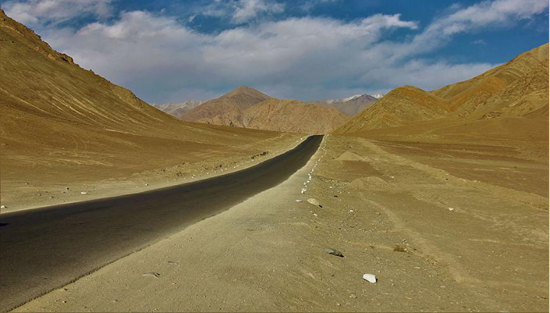
The Magnetic Hill in Ladakh, a region in the Indian state of Jammu and Kashmir, seems to defy the rules of gravity.

The hill is located on the main highway in the region, so anyone driving through this part of India will encounter it. Despite its name, it has no special magnetic (or magical) properties. Rather, the surrounding slopes create a kind of optical illusion that makes it appear like cars are traveling uphill, when, in fact, they are rolling downhill.


The hill has become a tourist attraction. There is even a sign that announces where it begins and tells drivers how to experience the illusion. If they put the car in neutral at the "starting line," they will gently roll forward, seemingly uphill, at a few miles per hour. There are dozens of such magnetic or gravity hills around the world, but Ladakh is among the most notable examples.

7. Trollstigen

wps86E4.tmp
Photo: Karen Blaha/Flickr

Trollstigen, Trolls' Path, is a narrow mountain road in western Norway. It snakes up the mountainside and features a series of hairpin turns. When seen from higher elevations, the road resembles Silly String randomly sprayed on the valley walls. In reality, the road was carefully constructed and supported with stone. Trollstigen is closed during the winter and usually only passable between May and October.


Thanks to the thrilling curves and views of the mountain range and waterfalls, this is a popular road. About 150,000 vehicles travel on Trollstigen each year; the number has steadily increased yearly since the road was built in the 1930s. Will you actually encounter trolls on the Trolls' Path? Businesses and buildings in this area set out remarkably detailed wooden troll statues, and there's even a highway sign that warns of trolls.

8. Umeda Exit of the Hanshin Expressway

wps1AA7.tmp

The Hanshin Expressway circles between Osaka, Kyoto and Kobe in Japan. Osaka, the largest of these cities, is densely populated. It's so crowded, in fact, that at one point, an exit from the expressway runs right through a building. Three floors of the 16-story Gate Tower Building are taken up by the exit ramp. The highway is separated from the building by a barrier that reduces noise and vibrations, but because the building completely encircles the exit ramp, it appears like the two structures are connected.


The exit ramp was the result of a compromise between landowners and a highway company. The government granted a private highway firm the rights to build the road, but the landowners, who had controlled the land for generations, refused to give up. It took years to reach a compromise, but finally they did: The highway would pass through the building.

9. Civic Musical Road

wpsE655.tmp
Photo: Trevor Cox/Flickr

Rumble strips are usually placed on the shoulder to warn drivers who might have nodded off or to signal an upcoming intersection. In Lancaster, California, carmaker Honda used rumble strips with different depth and spacing to create a musical tune. Drivers will hear pitches that, together, resemble part of the finale of Rossini’s "William Tell Overture."


The Lancaster Musical Road was dubbed the Civic Musical Road after Honda’s popular compact model. The quarter-mile stretch was first built on a different street, but local residents complained about noise and an increase in traffic, so Honda moved it to its current location, away from any homes.

10. Nordschleife at the Nürburgring

wps4FAF.tmp
Photo: White Lightning/Wikimedia Commons

The Nürburgring is a racetrack in Germany. It has a Grand Prix course that's used for major car races, including a Formula One event. The motor sports complex has been around for more than 90 years, and different circuits have been built over its history. One of these, the Nordschleife (North Loop in English) is still used for car testing and for automakers to promote new models.


In addition to these events, the track also holds public days. On public days, anyone with a car or motorcycle can show up and drive on the track. Basically, the Nordschleife operates like a toll road (meaning drivers who cause accidents are liable just as if they were on a public road). Such public access has been offered since the track opened in the 1920s, but it has became much more popular. The Nürburgring also offers "track days" for more serious drivers who want more-race-like conditions instead of a public free-for-all.

Top image: Nanpu Bridge in Shanghai, China. Credit: Alva Chien/Flickr // CC BY-NC-ND 2.0.

[Source: Mother Nature Network. Some images added.]

TOP 10 BIZARRE ROBOTS WE HAVE MADE

wps4A13.tmp
Top 10 Bizarre Robots We Have Made
By Oliver Taylor,
Listverse, 30 April 2018.

Robotics and artificial intelligence are the “in thing” these days. We are seeing so much advancement in both fields that it is becoming difficult to keep up.

It is already obvious that we will develop robots to do practically anything, regardless of how weird that thing could be. There are already robots out there with bizarre or controversial characteristics and uses. Here are 10 of the weirdest robots we have made so far.

10. Robots That Eat Plants And Maybe Humans

wps470E.tmp
Photo credit: trucktrend.com

The Energetically Autonomous Tactical Robot (EATR) was created by Cyclone Power Technologies and Robotic Technology Inc. for the United States Defense Advanced Research Projects Agency (DARPA). The idea was to create a robot that could go on long-term missions without requiring refueling or recharging.

The result was a robot that fed on vegetation to create its own fuel. It also had a built-in chainsaw...you know, in case it needed to cut trees into chunks that could be swallowed.

People started asking questions about the chainsaw, particularly whether it had other undisclosed uses like chopping dead enemy soldiers for fuel. Another question concerned what the robot would do if there were no dead humans around. Would it decide to create its own dead humans? That obviously wouldn’t be difficult since it already had a chainsaw.[1]

Cyclone Power Technologies, Robotic Technology Inc., and DARPA responded to these allegations and clarified that the robot was a strict vegetarian. It did not eat humans, living or dead, and there were no plans to make it do so.

9. Robots That Ride Camels


Camel racing is a popular sport in several Middle Eastern countries. However, there is one condition that has to be met before a camel can be allowed to race: It needs to be controlled by a jockey.

In the 1970s, children were kidnapped from Bangladesh, India, and Pakistan to be used as jockeys. This changed in 2005 when UNICEF pressured the UAE to ban child jockeys. Other countries followed suit, and the result was the introduction of small robot jockeys.

Each robot is controlled with a walkie-talkie held by an operator watching from the sidelines. Depending on the configuration of the jockey, the walkie-talkie can be used to issue voice commands or predetermined commands with the press of specific buttons. The commands include whipping the camels. Yes, human operators press buttons to make robots whip their camels.

Some jockeys even deliver electric shocks to urge the camels to increase their pace. This is illegal and carries a punishment of three months imprisonment, but it still happens. Besides receiving orders, the jockey sends back information about the health and location of the camel to the operator.[2]

8. A Robot That Feeds Its Wearer Tomatoes


The Tomatan is one weird robot that feeds its wearer tomatoes as he runs. At this point, some of us must be wondering why anyone would even think of creating a robot that feeds a runner tomatoes. What else do we expect when a company that prides itself on being Japan’s largest producer of tomato juice and ketchup delves into the field of robotics?

Tomatan was a creation of the Japanese company Kagome. It has a tomato head (because how else will people know it’s a tomato-dispensing robot?) and releases tomatoes from its mouth straight into two circular arms that move toward the runner’s mouth. The Tomatan is carried on the runner’s shoulder.

Kagome did not stop at the Tomatan, however. It created a smaller version called the Petit-Tomatan. This one is worn on the back, just like a backpack.

Kagome says that people need to eat tomatoes while running because they contain nutritive agents that help to fight fatigue. Speaking of fatigue, the Tomatan weighs 8 kilograms (18 lbs) while the Petit-Tomatan weighs 3 kilograms (7 lb). Considering that marathon runners always need to be as light as possible, we are wondering whether the weight of the robot will be the thing causing fatigue in wearers.[3]

7. Robot Armed With A Pistol


Dogo is the name of a small, tracked robot built by General Robotics of Israel. The robot is nimble and lightweight. It can go under cars, maneuver around small corners, and even climb stairs. It is fitted with eight cameras, which makes it suitable for reconnaissance and rescue operations. It is also armed with a Glock 26 pistol, which makes it suitable for some other duties.

The pistol is inserted sideways into the robot and is controlled by an operator. It can fire five rounds in two seconds and holds ups to 14 rounds. The weapon is stable and very accurate with little recoil.[4]

6. Robot That Hikes

wpsE061.tmp
Photo credit: The Guardian

As its name hints, the hitchBOT hitchhikes through cities and across states alone. Two of the robots were created. In 2014, the first robot hitchhiked over 10,000 kilometers (6,200 mi) from Halifax to Victoria in Canada. The journey took 26 days, during which the robot hitched 19 rides. The following year, it hitchhiked across several cities in Germany and the Netherlands.

The same year, a second robot was launched to hitchhike across the US. The robot started its journey in Salem, Massachusetts, and was supposed to end up in San Francisco. It never got to its destination as it was “murdered” in Philadelphia. Its head was stolen, and the rest of its body was completely destroyed. It was written off as irreparable.[5]

It became evident that something had happened to the robot when it suddenly disappeared from an online map that allowed people to monitor its location. The robot took pictures at 20-minute intervals and could have taken pictures of its assailant. But it seems that whoever destroyed it did so within the 20-minute delay. Another unsolved murder here, people.

5. Robots That Smoke Cigarettes

wps829D.tmp
Photo credit: science20.com

We have two robots that smoke cigarettes here. The first is Elektro, a 213-centimeter-tall (7’0″) robot that was unveiled at the 1939 World’s Fair. Alongside Elektro was his English terrier robot dog, Sparko.

Sparko could sit up and bark like a normal dog, while Elektro could walk, count, and smoke. Today, Elektro remains at the Mansfield Memorial Museum in Ohio, while Sparko has been missing since 1957.

The second smoker robot is the aptly named cigarette-smoking bot. It was created by researchers at Harvard University. The cigarette-smoking bot is a chain smoker capable of smoking up to 12 cigarettes at a go. It puffs its cigarette like a human would, and researchers can even adjust its smoking speed. The cigarette-smoking bot was created to observe how smoking affects humans.[6]

4. Robots That Comfort Dying People

wpsEF52.tmp
Photo credit: theweek.com

Dying people usually need to be around their loved ones. For those whose loved ones won’t be there, Dan Chen, an artist and designer at the Rhode Island School of Design, can take care of them with his Last Moment Robot. Once around a dying person, the Last Moment Robot holds the person’s forearm and quickly introduces itself and explains what it does. It says:
Hello [person’s name]. I am the Last Moment Robot. I am here to help you and guide you through your last moment on Earth. I am sorry that your family and friends can’t be with you right now, but don’t be afraid. I am here to comfort you.
Whether it is ethical to have a robot comforting a dying person in lieu of a human is one question that will be up for debate. But we don’t know anyone’s reaction yet because the robot has not been used with a dying person. There are no plans to release the robot into the market, either.[7]

3. Robots That Duel

wps8644.tmp
Photo credit: cnbc.com

With the increased interest in robotics, it was only a matter of time before we started using robots to duel, right? Sure! In fact, it has already happened. While smaller robots have been pitted against each other since at least 1994, 2017 became the year when two big robots dueled for the first time.

The contestants were Eagle Prime by MegaBots of the United States and Kurata by Suidobashi Heavy Industries of Japan. The ground for the battle was laid in 2015 when MegaBots challenged Suidobashi to a giant robot fight. Suidobashi accepted, and both started building and improving their robots for the event.

MegaBots presented two robots for the fight. The first was the smaller and older MK.II that was swiftly defeated in the first round of combat. The other was the US$2.5 million, 12-ton, 5-meter-tall (16 ft) Eagle Prime that used a chainsaw to defeat the 6.5-ton, 4-meter-tall (13 ft) Kurata in the second round of combat.[8]

2. The Robot That Always Wins Rock-Paper-Scissors


The Janken robot will always win a rock-paper-scissors game against a human. No human can defeat it because it cheats. It is capable of recognizing the gesture that the human opponent is about to make and quickly delivers a winning gesture.

The Janken’s recognition capability is so fast that it delivers the winning gesture at the same time as its opponent. The robot is actually an improvement on an earlier version released in June 2012. The first version also cheated but was slower, delivering its gesture about 20 milliseconds after its human opponent. Both were made by researchers at the University of Tokyo.[9]

1. Robot That Pretends To Have The Swine Flu

wps683A.tmp
Photo credit: lolwot.com

Created by an unnamed Japanese company, the swine flu robot exhibits the symptoms of swine flu (also called the H1N1 virus) and will even die if not properly treated. The human-sized robot was built to train healthcare workers to treat swine flu victims. It looks like a human and is even covered in a material that replicates the features of human skin.[10]

The robot will sweat, moan, cry, and convulse, just like someone who has swine flu. Its condition can improve or worsen depending on the quality of treatment. When treated improperly, it will die. While simulator robots mimicking human sicknesses are not new, the swine flu robot is believed to be the first specifically made to imitate the symptoms of just one ailment.

Top image: DOGO Robot. Credit: Armada International.

[Source: Listverse.]