Pages

Thursday, 30 January 2014

10 FAILED UTOPIAN CITIES THAT INFLUENCED THE FUTURE


New Picture 238
10 Failed Utopian Cities That Influenced the Future
By Annalee Newitz and Emily Stamm,
io9, 29 January 2014.

Some of the most famous cities in history were never built. These 10 Utopian cities may have been failures, but they expressed our ideas about what the future of human civilization could look like. And many ideas contained in them continue to influence us today.

1. Octagon City, the Vegetarian Utopia

New Picture 239

In 1856, the Vegetarian Kansas Emigration Company founded Octagon City near Humboldt, Kansas. They intended it to be a settlement made up entirely of vegetarians, but had to open it up to others when interest wasn't what they hoped. The city's design was inspired by a "scientific" idea, suggested by famous phrenologist Orson Squire Fowler, that octagons were the most practical design for homes because they permitted the most amount of light to enter. (Above you can see a design of Fowler's from his magazine about phrenology.) City designer Henry Clubb, a vegetarian activist, imagined that eight roads would lead away from a central octagonal town square. From there, the city would be made up of four octagon villages, complete with octagon farmhouses, town squares, and public buildings.

Ultimately about sixty families came from all over the country to live in Octagon City, but were sorely disappointed when they found that the only building was a 16 x 16 windowless log cabin. The settlers who stayed faced a multitude of problems, including lack of water when the local spring dried up, mosquitoes and disease. Nothing remains of the town today, but Clubb's legacy lives on in the handful of octagon houses that remain in the US and Canada.

2. Ville Radieuse, the Machine City

New Picture 240

French-Swiss architect Le Corbusier had big plans for the ideal city. In the early twentieth century, he hit upon an idea he called "Purism." Architecture, he believed, should be as efficient and simple as the industrial machines that had ushered in the modern age. Inspired by this notion, he planned two modern utopias modelled on this idea of the city as machine: the Ville Radieuse and the Ville Contemporaine. Both would have massive skyscrapers housing millions of people - rich and poor. Parks and green areas would divide these massive cities into zones of productivity and leisure.

The Ville Radieuse, dubbed the "vertical garden city," also included a social plan. His buildings, like Fowler's octagons, would let in lots of natural sunlight and air. The buildings would also be the centre of social life, with rooftop gardens and beaches, as well as catering in the basement and professional childcare for each family. He imagined that each building would contain 2,700 people, all working 5-hour days, using public transit that delivered them right to their homes.

Neither city was ever built, but his Ville Radieuse did inspire one building (video below).


Le Corbusier used the principles behind his machine cities when designing Unité d'Habitation in Marseilles. The building still stands today, and some residents even open their apartments up for tours of the uniquely designed living space.

3. Garden City, the Green Metropolis

New Picture 241

"A group of smokeless, slumless cities!" What could be better? In 1902, social reformer Ebenezer Howard published his treatise Garden Cities of To-morrow, where he outlined his idea of a planned Social City where people would live in harmony with nature. He describes a city that occupies of 6,000 acres of land, with buildings for 32,000 people taking up only 1000 acres. The rest would be public parks, farms, and green spaces with very wide roads.

As you can see in this drawing from his book, Howard envisioned many satellite garden cities around a central city, like London. They would all be linked by roads and railways. Howard did manage to get two garden cities built: Welwyn Garden City and Letchworth Garden City, both in Hertfordshire England. His ideas also inspired the garden city movement - which laid the foundation for the idea of suburbs, or low-density satellite cities like Howard's garden cities might have been.

4. Broadacre City, Where Everything is Locally Made

New Picture 242

In 1932 Frank Lloyd Wright saw plans for Ville Radieuse. He hated it, and quickly began developing his own ideal city based on his love of the open, rural prairies of the midwest. Broadacre City became his obsession for the rest of his life. Wright wanted to get rid of industrial cities entirely, replacing them with urban spaces that were a mix of developed and rural areas. In Broadacre City, each family would be given an acre of land, and the largest "villages" would have no more than 10,000 people. Public needs like water and power would never be privately owned.

He describes his dream in The Disappearing City (later republished as The Living City):
Imagine spacious landscaped highways…giant roads, themselves great architecture, pass public service stations, no longer eyesores, expanded to include all kinds of service and comfort. They unite and separate - separate and unite the series of diversified units, the farm units, the factory units, the roadside markets, the garden schools, the dwelling places (each on its acre of individually adorned and cultivated ground), the places for pleasure and leisure. All of these units so arranged and so integrated that each citizen of the future will have all forms of production, distribution, self improvement, enjoyment, within a radius of a hundred and fifty miles of his home now easily and speedily available by means of his car or plane. This integral whole composes the great city that I see embracing all of this country - the Broadacre City of tomorrow.
Broadacre City was never built, but the idea of a city with locally-produced food, power and other goods continues to inspire land use planners to this day.

5. Germania, the Nazis' Modernist Dream

New Picture 243

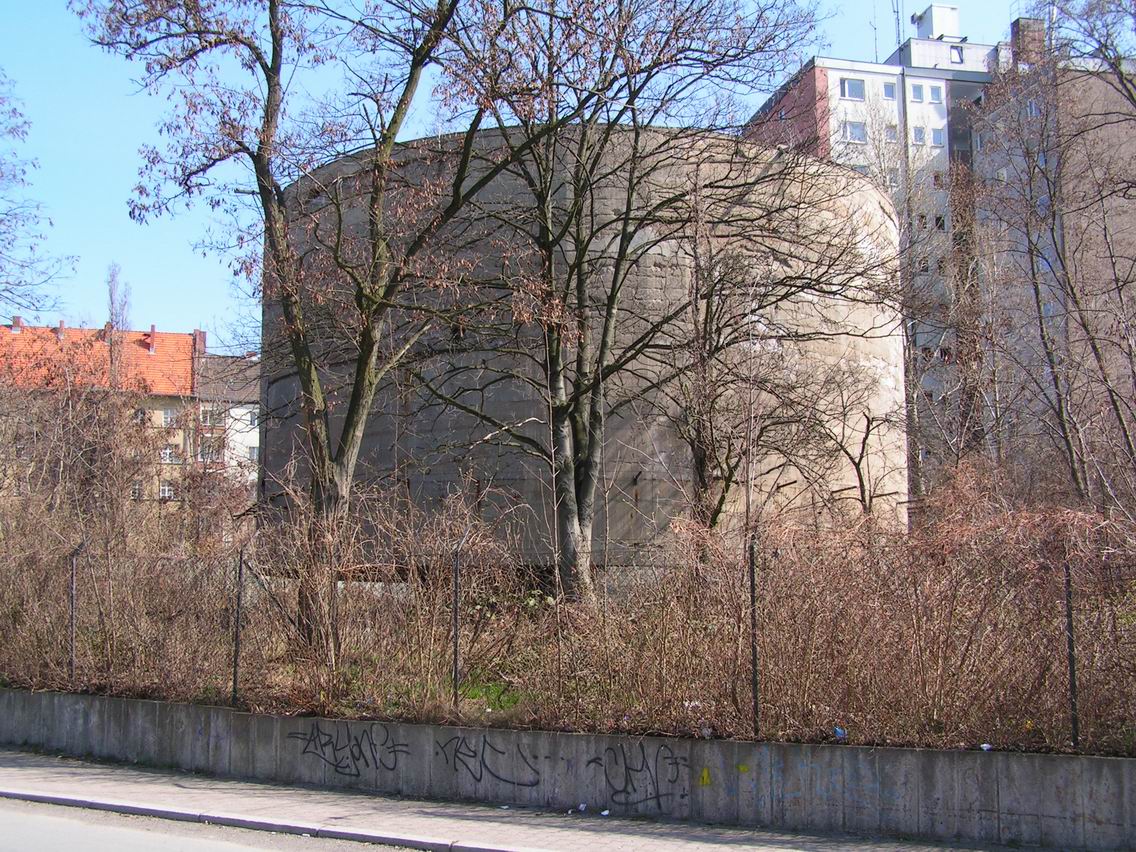
Architect Albert Speer was put in charge of bringing Hitler's plan to transform Berlin into a futuristic capital of the Nazi's to reality. Clearly influenced by Le Corbusier's idea of skyscraper homes, Speer wanted to build massive buildings, turning Berlin into a "world capital." Among the plans were a huge stadium that could hold 400,000 people, and a Chancellery that would be twice as long as the Hall of Mirrors in France. All the buildings would be arranged along the Prachtallee ("Avenue of Splendours"). The war halted many of the plans, but so did geology. Berlin is built on marshy land, so Speer built a test building, the Schwerbelastungskorper, to see how far it would sink into the ground. Within three years it had sunk 18 cm, an unacceptable amount. The building remains a crumbling mess, behind chain link fences, in Berlin. The failed monumental city of Germania may have been the final death knell for Le Corbusier's dream.

6. Fordlandia, the Unfortunate American Transplant

New Picture 244
Photo via The Henry Ford

In the 1930s, Henry Ford tried to bring a slice of America to the Brazilian jungle, and it didn't go all that well. Fordlandia was to be a large rubber plantation and city in the middle of the Amazon. Ford relocated American employees there as well as hiring local workers. The city included a power plant, a hospital, a library, a golf course, and housing for employees. Ford insisted on a "healthy" American lifestyle, including hamburgers, and rules against alcohol and premarital sex. Workers complained about having to work "proper 9 to 5 days" in the heat of the sunlight, instead of their local custom of early-morning and late-evening shifts, and eventually conditions got so bad that there were worker riots. Below, you can see a time clock destroyed in the riots.

New Picture 245
Photo via The Henry Ford

Adding to the cultural problems of Fordlania was Ford's utter lack of knowledge about how to farm rubber trees. His engineers guessed at how to do it, and planted the trees too close together. Eventually the land was found "unsuitable" for rubber trees, and in the mid-1930s Ford abandoned the city. The ruins of Fordlandia are still crumbling away in the jungle. Nevertheless, Americans have continued to try to export their ideas about city planning and work shifts throughout the world, often meeting with about as much success as Henry Ford.

7. Cloud Nine, the Floating City

New Picture 246

Science - and science fiction - often influenced city designers. But nobody took futuristic ideas more seriously than mid-twentieth century inventor Buckminster Fuller, who responded to news about overcrowding in Tokyo by imagining cities in the sky. The Spherical Tensegrity Atmospheric Research Station, called STARS or Cloud 9s, would be composed of giant geodesic spheres. When filled with air, the sphere would weigh one-thousandth of the weight of the air inside it. Fuller planned on heating that air with solar power or human activity, causing the sphere to float. He would anchor his floating cities to mountains, or let them drift around the world. They were never built, but Fuller's idea for a pre-fab, geodesic dome dwelling called Dymaxion House eventually influenced the pre-fab house movement which is still going strong.

8. Atomurbia, the Nuke-Proof National Land Use Plan

New Picture 247

Most of these Utopian cities were designed to respond to the problems of contemporary urban life like overcrowding, unhealthy living conditions, and the need for expensive imports of goods. But during the Cold War, people had other threats in mind. In 1947 LIFE Magazine published an article touting a new urban design idea to save Americans from nuclear attack. The men behind the plan envisioned an America where people were spread out across the country instead of gathered in urban centres. They would redistribute the population, laying out new towns like a chessboard.

The ribbon cities they planned wouldn't have to be laid along straight lines; some of them would flow with the landscape. In total, they wanted to build 20,000,000 new homes and "recreate the very fabric of social and economic life in America." All industry would be moved underground, protecting it from the bombs. Though this idea never came to fruition, it certainly presaged the obsession with building underground bomb shelters in cities.

9. Seward's Success, the Completely Indoor City

New Picture 248

In 1968, oil was found at Prudhoe Bay in Alaska. Naturally, plans to build an insanely complex, futuristic city followed. Tandy Industries of Tulsa planned to build Seward's Success (a play on Seward's Folly), the first completely enclosed, climate-controlled city. The 40,000 residents of Seward's Success would have moved around on monorails, sky trams (pictured above), and moving sidewalks, all at a balmy 68 degrees. Plans also included office space, retail space, and a sports arena. After the building of the Trans-Alaska Pipeline was held up in court, the subcontractor couldn't pay the lease on the land and plans for the city were halted. Though we have yet to build a completely enclosed city, many parts of downtown Las Vegas might qualify - and of course, the idea of a domed, climate-controlled city is still something that people dream of building on other worlds.

10. Songdo, the Smart City


Songdo, in South Korea, has been touted by both Korean city planners and IT corporation Cisco as the perfect example of a "smart city," where every aspect of life is controlled by networked computers - from climate control, to communications. The city is also designed to have a minimal carbon footprint. Its inspirations come from both Le Corbusier's Purist machine city and Howard's Garden City. The Songdo master plan includes everything from schools, shopping and offices, to parks, museums and a hospital - which sounds a lot like what Le Corbusier's skyscrapers promised. But its commitment to sustainability feels like a Garden City idea, except that this sustainability is all made possible by the machinery in the city's high tech infrastructure. Also called an instant "city in a box," we can even see Buckminster Fuller's ideal of a pre-fab city at work.

The smart city has become an enormously popular idea among city planners today, and many similar kinds of developments are in the works. Songdo is supposed to be complete by 2015, but there have already been problems attracting businesses to the area. It may be destined to meet the fate of other Utopian cities: a failure in reality, but launching an idea that transforms how we think about metropolitan life.

Bonus: BoozeTown, the Crazy-Ass Town of Drunks

New Picture 249

In 1952 Mel Johnson presented investors with his idea of a perfect city - one built on booze. Every street would be a reference to alcohol, and they would even have their own currency called BoozeBucks. There would be a local police system, the Party Police. They wouldn't arrest people - they would be more like roaming caretakers, giving drunks aspirin and kindly escorting them home when they got lost. Most importantly, no children would be allowed in BoozeTown. Visitors with kids could leave them at the day-care/summer camp area outside the city. When completed, the city would have had moving sidewalks, breweries, distilleries, permanent housing, and even suburbs.

Johnson gave potential investors matchbooks and cocktail napkins, telling them:
Just imagine...a resort entirely centred on the culture of alcohol. A boozer's paradise built expressly to facilitate drinking and the good times that naturally follow. Where the bars, clubs and liquor stores never close. Where the police force is there to help drunks, not hassle them. Where even the street names salute sweet mother booze: Gin Lane, Bourbon Boulevard and Scotch Street. An adult playground like no other. Just imagine.
Perhaps unsurprisingly, Johnson could never get funding for BoozeTown and gave up on the idea in 1960. Still, it sounds like BoozeTown may have inadvertently inspired many virtual game worlds that have their own currencies, like WoW Gold, and (let's face it) exist only to get people wasted.

Top image: Illustration from Destiny

[Source: io9. Edited.]


EXTREME PHOTOS OF THE WEEK XIII


New Picture 92
Extreme Photo of the Week
By
National Geographic, 30 January 2014.

See new extreme adventure photos each week featuring tips from your favourite athletes and photographers. And get the stories behind the shots.

1. Snowboarding Near Zermatt, Switzerland

New Picture 93

Getting the Shot

“I really love moments when nothing is planned and then moments later you have captured something great,” says photographer Tero Repo. Repo has been photographing in Zermatt, Switzerland, frequently over the past few years, working with local guide and skier Samuel Anthamatten and pioneering snowboarder Xavier De Le Rue. “I think every time we shoot near Zermatt with Xavier and Samuel, we get good results,” Repo says.

"This was one of those lines that just happened without a reason. The boys thought that it was good idea to hit that couloir. A few minutes after, I was shooting it. The next step was to shoot from a heli,” where Repo captured this photograph.

“My first thought was, Really? But knowing Xavier, I was comfortable to watch him through my camera,” recalls Repo. The terrain was Repo’s biggest challenge, and he managed balancing the line’s exposure, which was variable due to seracs overhanging the couloir. “It is hard to fight against Mother Nature, and you know you will lose that battle if you are not careful.”

Repo photographed from a helicopter with a Canon 5D Mark III and a 28-70mm, f/2.8 lens.

2. Ice Climbing Fearful Symmetry, Canadian Rockies, Alberta, Canada

New Picture 94

Getting the Shot

"When we arrived at the base of the pillar, there was another group with us who took one look and decided, 'No thanks, that's above our pay grade,' " recalls photographer Forest Woodward, who took this shot of ice climber Graham Zimmerman in the Canadian Rockies of Alberta. "I actually wasn't aware of the ephemeral nature of the Fearful Symmetry route until we arrived in Canmore. Everyone spoke of it with a sort of reverence," says Woodward.

The group tackled a rough drive in Ghost Valley to make it to an area called Recital Hall, where this rare, icy route had formed. “I understood immediately why the route commands such respect," Woodward recalls.

The team faced a tough climb in, and Woodward fought snow devils coating his gear in fine, frozen snowy dust. “The added challenge of managing gear in inhospitable elements is part of what makes ice climbing such a niche sport,” says Woodward.

After his initial awe, Woodward was ready to photograph. “Once the actual climbing began, I brought all my focus to bear, trying to capture Graham's experience in a single image that would tap into the emotions he experiences as a climber on a pitch like this,” says Woodward.

Woodward photographed with a Canon 5D Mark III and Canon f/2.8 70-200mm lens.

3. Free Climbing the Totem Pole, Tasmania, Australia

New Picture 95

Australian climbers Doug McConnell (leading) and Dean Rollins (belaying) are seen on the Totem Pole, a slender 215-foot-high dolerite column that has long fascinated rock climbers. Located at Cape Hauy on the Tasman Peninsula, it is tucked between the Candlestick, a 361-foot-high island (to the left) and the mainland.

“We initially went out because it was the 40th anniversary of the first ascent in 1968 by the legendary John Ewbank and thought it would be fun to repeat his aid route,” recalls Rollins. “It is an amazing piece of rock, and the climbing is of a high quality and quite committing in nature. No one had free climbed the Totem Pole by this route before - when we realized we could do it, despite our injuries, it gave us even more motivation.”

The pair spent 15 days working on the route over several months. Just getting to the spire involved a hilly, two-hour hike and nearly 200-foot rappel to the base of the spire. Once there, the Southern Ocean dished out some pretty challenging weather.

“One of the reasons it took us so long was that conditions were often not ideal. Some days were very, very windy. And on others the rock was damp and seeping, so we wouldn't make much progress,” recall Rollins. “And if the swell is up and you're close to the water level, every now and then a wave will smack you.”

Getting the Shot

The slender Totem Pole has been part of photographer Simon Carter’s life since 1994. “I’ve spent more than 20 days photographing climbers on the Totem Pole. I was keen to photograph Doug and Dean because their ascent of the original Ewbank Route was the first really new thing to be achieved on the Totem Pole in many years,” says Carter.

To get his shot, Carter rappelled 30 meters from the cliff opposite the climbers. “I had in mind to try some different compositions and came up with this,” he recalls. In addition to standard climbing gear, Carter uses a chest harness. “I can lean right out on the rappel rope and still hold the camera steady.”

Though Totem Pole offers an ideal location for incredible images, photographers battle lighting in the area. “It still surprises me how small the window of light is on the Totem Pole," says Carter. "No sooner than the shadow from the Candlestick is gone, then the shadow from the mainland (see on the right) starts to creep across the Totem Pole. Climbers can only move so fast, and there can easily be delays, so it always feels like a bit of luck when it all comes together."

Carter photographed with a Nikon D3 and a f/2.8, 14-24mm f2.8 lens.

4. Kayaking the Mekong River, Laos

New Picture 96

Getting the Shot

“The moment that I savour most in kayaking in extreme places is the one that is captured here. We're well beyond the point of no return, where the anticipation, excitement, and anxiety of the outcome meld into a singular focus and you become totally absorbed in the moment,” says kayaker and photographer Ben Stookesberry. Stookesberry, one of our previous Adventurers of the Year, was part of the expedition with Chris Korbulic (pictured) and Pedro Oliva to explore the Mekong River in Laos.

Stookesberry set up the framing for the photo and ran a one-second time-lapse while positioning himself at the base of the falls to support Korbulic in case anything went wrong. “Pedro and I followed Chris into this maelstrom soon after the camera captured this photo," he recalls. "Then the scariest hour of our 12 days on the Mekong began as we paddled eight kilometres to the nearest village of Hang Khon, Laos.”

The trio battled fishing lines strewn throughout the river that often harm native local wildlife. “The river here is infested with countless fishing lines and nets that could have easily ensnared and drowned us that night. Luckily, we made it through this gauntlet, but the freshwater Irrawaddy dolphin has not been so lucky,” says Stookesberry.

Stookesberry photographed with a Panasonic Luminex DMC-GH3 and a f/4.0, 14-140mm lens.

5. Deepwater Soloing the Musandam Peninsula, Oman

New Picture 97

Getting the Shot

“In some ways, shooting some place new is great because you see everything fresh and with new eyes,” says photographer Jimmy Chin. Chin, on assignment for National Geographic magazine, photographed climbers Alex Honnold (pictured) and Hazel Findlay as they put up new deep-water soloing routes on the knife-edge seaside cliffs along the Musandam Peninsula, Oman. See the story, "Impossible Rock," in the January 2014 issue.

Chin had photographed Honnold climbing in Yosemite for a previous assignment for National Geographic, but this story was on a much tighter time line. “I had a lot more time to shoot the Yosemite story, and I was also much more familiar with the area," Chin recalls. "I had less than three weeks to shoot the Oman story, which isn't a lot of time to shoot a feature story, especially when I'm going to a completely new and remote area. It's great to shoot a place you know well, but I also love the challenge of showing up to a place I've never been and diving straight in."

To get this photo of Honnold, Chin positioned himself on a ledge to the side of where Honnald was climbing. “I knew the light was amazing and that I better nail the shot. I wasn't sure if Alex was going to be able to get out to the same point again,” he says. “I had imagined a shot like this, but got really lucky to get the perfect light and cool body position. Alex contorted and strained every muscle in his body to keep himself on the route.”

Chin photographed with a Canon 5D Mark III and Canon f/2.8, 24-70mm lens.

6. Stand-up Paddleboarding Jaws, Hawaii

New Picture 98

Getting the Shot

“Things at Jaws happen so fast, I wasn't sure it was even Kai taking off on the wave until my Skidoo driver pointed and said, ‘Kai Lenny,’” recalls surf photographer Richard Hallman. “I focused my attention on the wave because I knew he was riding stand-up and even though the wave was small for Jaws, it was big for stand-up. He had a spectacular air drop.”

Lenny dropped into the wave, and Hallman continued to photograph the 20-foot ride until Lenny fell. “I knew right away with the few last frames in my camera that it was a particularly bad fall. My biggest concern at this point was his safety.”

Rescue Jet Skis rushed to help when Lenny resurfaced, and Hallman noticed Lenny’s foot was bleeding. “I immediately took a photo with my 70-200mm zoom camera - the zoom allowed me to see the severity of the cut. My experience as a former trauma nurse told me that this was a particularly bad cut,” he says.

“Nothing about big waves is routine. I think that is the why big-waving surfing is such a draw for me," Hallman continues. "It is daunting and challenging as a surfer and as a photographer. It truly is otherworldly to be pressed against the edge of so much energy and to watch these modern-day gladiators drop down these mountains of water.”

7. Climbing Superfortress, Near Vail, Colorado, USA

New Picture 99

"I was completely engaged in the climbing, not thinking, not doing, just being," says climber Will Mayo of his second ascent of Superfortress, a very difficult mixed ice and rock climbing route near Vail, Colorado. "Yet when the partially formed icicle of the Fang collapsed beneath my feet, the whoosh of air and the corresponding cacophony of about ten tons of icicle shattering a hundred feet below instantly snapped my mind back to the situation beyond the climb." Worried about the people below, Mayo recalls yelling, "Are you OK?" There was no immediate response so he yelled again. "My girlfriend yelled up that she and everyone else were okay. I realized afterward that because the amphitheatre overhangs by about 50 feet, the ice had fallen well out and downhill from where they all were belaying and watching.

"One of the other routes I have established in Vail I named as a tribute to my late Great-Uncle Tom, who was a co-pilot of a Flying Fortress, the nickname for the B-17, with the U.S. Army Air Corps in World War II. He was shot down in occupied France and survived," says Mayo. "The double entendre is that the amphitheatre seems fortress-like and the widely spaced bolts provide opportunity for flying-like falls. Superfortress, which is the nickname for the B-29, seemed like a logical next route as it crossed my first route. I named it before the Fang collapsed, yet it seems very appropriate considering that the amount of ice that fell like a bomb likely weighed about as much as the plane's bomb load capacity."

Getting the Shot

“I turned around to see the entire pillar fracture about eight inches below Will's feet,” says photographer Celin Serbo. “I guess it's the classic case of when to put the camera away. Will had just pulled through the final ice section, and I could only see his feet. I started packing away my camera and preparing to rappel down when I heard a deep crack. Everything was in slow motion as I watched the entire pillar come down - it was like something out of a movie.”

The dramatic end to Mayo’s climb on the Fang occurred after Serbo photographed Mayo climbing the difficult route. “This climb is way above my climbing limits. On Will's 'warm up' lap he trailed a static line, which he fixed at the top anchor for me,” recalls Serbo. “I wanted to be close enough to Will at the routes crux while still giving a sense of place. It is a pretty aesthetic amphitheatre.”

Serbo photographed with a Nikon D800 and a 16-35mm, f/4 lens.

8. Snowboarding the Pemberton Ice Cap, British Columbia, Canada

New Picture 100

“Being in the backcountry is where I belong and am the most happy,” says snowboarder Joel Loverin, seen here on the Pemberton Ice Cap in British Columbia, Canada, during a three-day backcountry camping and riding excursion.

“Compared to the other lines I rode on the trip, this one was a lot more relaxed, but the end result for the photograph came out a lot better than the others,” recalls Loverin, who is based in Whistler. “I’m drawn to the freedom and isolation of being way out in the mountains and being submersed in terrain that is always changing. I love the adventure and endless exploration possibilities and the quiet serenity of it all.”

Getting the Shot

“The cold nights would turn the snow into a sheet of ice, then we would have to wait until the afternoon for the snow to soften up to ride anything,” recalls photographer Mark Gribbon, who was on assignment for Snowboard Canada magazine when he got this shot.

Gribbon faced tough weather conditions - for both snowboarding and photographing. Toward the end of the session, Gribbon captured this image. “At the end of the season, the sun is pretty high in the sky, which makes for less dramatic photos. It is a balance trying to find decent snow with a feature that is rideable this time of year,” he says. “The ice and shade kept the surrounding snow rideable at such a late hour in the day.”

Gribbon photographed with a Canon Mark IV and a 70-200mm, f/2.8 lens.

9. Climbing Hallucinogen Wall, Black Canyon, Colorado, USA

New Picture 101

Getting the Shot

“I had never even seen the Black Canyon before this climb. Turns out the Black is infamous for a reason,” says photographer John Dickey, who joined climber Josh Wharton on Hallucinogen Wall in Colorado's Black Canyon. “I've been shooting on big walls for over a decade and when I first stepped over the edge, it took me a minute to get my head right before continuing.

“I knew the Black had some pretty difficult lighting, so I went prepared with gradient filters and a strobe. Once I rappelled in and saw the lighting situation, I put away the filters and milked the contrast for all I could. I toyed with balancing the light using filters and in the end stuck with the high contrast,” he recalls.

In order to get the shots he wanted of Wharton, Dickey started climbing at 4 a.m. His goal was to get a head start on Wharton and then begin the long rappel at around 6:45 a.m. to intersect on the wall a few hundred feet off the ground. Dickey had his lighting and climbing thoroughly planned, but serious routes can give pause even to the most prepared. “The biggest challenge of the day was at the start - those first minutes stepping over the edge of the wall. Whenever I get intimidated like that I focus on the task at hand: Check the harness, make sure the carabiner on my belay device is locked, double check camera batteries, and move on.”

Dickey photographed with a Canon 6D and carried a lens.

10. Mountain Biking Book Cliffs Near Green River, Utah, USA

New Picture 102

"I was grinning ear to ear from the amount of fun I was having and just starting to plan where I would need to get on the brakes before hitting the steep trench left by run-off at the bottom of this line," recalls pro skier Carston Oliver of this moment at sunset in Book Cliffs, Utah, an increasingly popular mountain biking destination.

"The terrain at Book Cliffs is very complex, with lots of folds, spines, and rolls to explore and play on. This area has the full spectrum of riding options, from supermellow to outright death-defying and everything in between," says Oliver, who left Salt Lake City at 4 a.m. to drive three hours with photographer Jay Beyer to Green River. They took a dirt road to Book Cliffs, where they earned each descent by either pedalling or hiking up with the bikes on their backs. "In essence, it looks and feels like backcountry skiing, but without the risk of avalanches."

Getting the Shot

“The terrain is what I would think the moon would look like, if you were to ever bike on the moon,” recalls photographer Jay Beyer, who was photographing in Book Cliffs for the first time.

“It was getting toward sunset and Carston was showing me some lines that he thought looked cool from the last time he was there," says Beyer. "I saw these lines getting last light in the background. We lined them up and he rode four different lines, all at last light. It worked out perfectly!” The two work together often, mostly on skiing shoots. “Biking is so much easier to shoot than skiing. You don't have to worry constantly about avalanches, and that is pretty awesome. The temps are nice too!”

Beyer photographed with a Canon 1D X and a Canon 70-200mm, f/2.8 lens.

Top image: Ice Climbing in Zirknitzgrotte, Austria. Photograph by Martin Lugger/National Geographic.

[Source: National Geographic. Edited. Top image added.]


10 CONTROVERSIAL CASES OF VIGILANTISM


New Picture 194
10 Controversial Cases Of Vigilantism
By Robin Warder,
Listverse, 30 January 2014.

Some of the most popular characters in fiction are individuals who take the law into their own hands. When the legal system isn’t working, it’s easy to identify with a heroic vigilante who decides to fight crime on their own and seek justice on those who have done wrong. However, in real life, the issue of vigilantism is a lot more complex. While some vigilantes are sympathetic figures, others go too far in their desire for revenge. In some cases, completely innocent people wind up losing their lives. Whatever the circumstances, whenever vigilantism takes place, it’s sure to be surrounded by controversy.

10. Bernhard Goetz

New Picture 195

One of the most popular vigilante films of all time is Death Wish. Charles Bronson plays an ordinary New Yorker who responds to his city’s escalating crime rate by shooting every mugger he encounters. On December 22, 1984, New York City was treated to a real-life Death Wish story after Bernhard Goetz, a 37-year-old electronics specialist, was accosted by four young African-American men on a Manhattan subway train. After the four allegedly tried mugging him, Goetz pulled out a .38-calibre Smith & Wesson revolver and fired five shots into them.

Even though they all survived their wounds, one of the men, Darrell Cabey, was paralyzed. Goetz reportedly shot Cabey once, and then said, “You don’t look so bad, here’s another,” before firing a second bullet.

Goetz fled the state for several days before he decided to turn himself in. He claimed he’d shot the men not just to defend himself but because he’d been denied proper justice when three other youths mugged and assaulted him three years earlier.

Charged with four counts of attempted murder and assault, Goetz was dubbed “The Subway Vigilante” by the New York media. Since Goetz was white and his victims were black, the case generated much controversy. Goetz was eventually acquitted on all the attempted murder and assault charges and only wound up serving eight months in jail for one count of carrying an unlicensed firearm. Years later, however, Cabey filed a civil suit against Goetz, and a jury awarded him US$43 million.

9. Leo Frank

New Picture 196

When 13-year-old Mary Phagan was discovered strangled in an Atlanta pencil factory on April 27, 1913, factory owner Leo Frank became the primary suspect. Frank had recently laid Phagan off from her job, and the public theorized that he’d killed her for resisting his romantic advances. Frank was charged with the murder and sentenced to death via hanging, but he maintained his innocence and appealed the verdict.

Frank was scheduled to hang in June 1915, but one day before his execution, the Governor of Georgia decided to commute his sentence to life imprisonment. On the evening of August 16, 25 men formed a lynch mob, calling themselves the “Knights of Mary Phagan.” They stormed Milledgeville State Penitentiary, kidnapped Frank and took him near Phagan’s home in Marietta. The next morning, they hanged him from a tree.

Several decades later, a witness confirmed Frank’s innocence by claiming he’d seen Jim Conley, a janitor who testified against Frank, carrying Phagan’s body into the basement. Leo Frank finally had his name cleared in 1986 when the Georgia State Board of Pardons and Paroles granted him a posthumous pardon.

8. Gary Sellers & Robert Bell

New Picture 197

In August 2007, 53-year-old Timothy Chandler from Helenwood, Tennessee was arrested and charged with possession of child pornography. He received five years’ probation and had to register as a sex offender but was then released on bond. Two of his neighbours, Gary Sellers and Robert Bell, decided they didn’t want a paedophile in their town. So they decided to scare him away - by setting his home on fire.

Another neighbour rushed in to drag Chandler out of the burning house, but his wife, Peggy, stayed trapped inside. Chandler ran back in to rescue her, but she died in the blaze. In the end, Sellers and Bell had inadvertently killed a completely innocent woman.

Bell pleaded guilty to second-degree murder and aggravated assault and was sentenced to 25 years in prison. Sellers entered guilty pleas for the facilitation of second-degree murder and facilitation of arson, receiving two concurrent 12-year sentences.

7. Santos Ramos


Though lynch mobs are no longer a common sight in North America, they still dispense vigilante justice regularly in, say, the more isolated areas of Bolivia. In fact, because many of these areas do not have much police presence, the Bolivian government passed a bill in 2009 giving indigenous groups the legal right to administer their own justice systems.

In June 2013, when a rural Quechua village learned 17-year-old Santos Ramos had raped one of its residents, the locals decided to get their own form of revenge. A mob of approximately 200 villagers captured Ramos, bound him, and took him to the victim’s funeral. The woman, Leandra Arias Janco, was about to be laid to rest when the mob threw Ramos right into the open grave.

Police tried to intervene, but residents blocked the way and prevented authorities from reaching the burial site in time. In the end, Santos Ramos wound up buried alive, dying a horrible death beneath his victim.

6. Thomas Thurmond & John Holmes


Brooke Hart was the 22-year-old son of Alexander Hart, the wealthy owner of a prominent department store in San Jose, California. On November 9, 1933, two amateur criminals kidnapped him and demanded US$40,000 from the Hart family for his return. Police arrested one of the kidnappers, Thomas Harold Thurmond, at the ransom drop, and the man soon gave up his accomplice, John M. Holmes. He also revealed that the two of them had bound Brooke with wire and tossed him off the San Mateo Bridge.

Holmes was soon arrested and also confessed to the crime, and both he and Thurmond were held at the Santa Clara County Jail in San Jose.

Brooke Hart’s body was discovered in San Francisco Bay on November 26. By this time, rumours had spread that Thurmond and Holmes would plead not guilty by reason of insanity, and an angry mob formed outside the Santa Clara County Jail. Throughout the day, the media announced that a lynching was going to take place in nearby St. James Park, and thousands of people gathered there by nightfall. Governor James Rolph even stated that he would not call in the National Guard and would pardon anyone who participated in the lynching.

By midnight, the huge crowd overwhelming police and dragged Thurmond and Holmes out of their cells. The mob took them to St. James Park and hanged them as advertised. The lynching was even broadcast live on one Los Angeles radio station. It remains one of the largest public displays of vigilantism in history.

5. Michael Mullen

New Picture 198

In 2005, three registered sex offenders - Hank Eisses, Victor Vazquez, and James Russell - were living together as roommates at a house in Bellington, Washington. All three of them had served time in prison for sexually abusing children. On the evening of August 26, they were surprised to see a man wearing an FBI baseball cap knocking on their door. He claimed to be an FBI agent and told them that he was investigating vigilante threats against registered sex offenders. After they let the agent into the house, Russell left to go work, but when he returned later that night, he was shocked to discover that Eisses and Vazquez had both been shot to death, execution-style.

The killer soon sent letters to the police and media. He said he planned to kill more sex offenders who had abused children and that he’d only spared Russell’s life so he could spread the word about his actions. However, on September 5, this killer phoned police and made arrangements to turn himself in.

The culprit was a 35-year-old ex-con named Michael Mullen, who had previously served time for such petty crimes as theft and check fraud. Mullen had been molested by a neighbour when he was in elementary school and had lived a very troubled life. He claimed his vigilantism was inspired by the horrific crimes of one specific sex offender, Joseph Edward Duncan III. Duncan had recently murdered an Idaho family and kidnapped the two youngest children as sex slaves. This particular offender, as it turned out, needed no vigilante justice. He was sentenced to 44 years at the Stafford Creek Corrections Centre and committed suicide in his cell in 2007.

4. Prell Gilton & Lupe Mercado

New Picture 199
Photo credit: San Francisco Magazine

In 2012, a Los Angeles couple named Barry Laprell “Prell” Gilton and Lupe Mercado were horrified to discover a photograph of their 17-year-old daughter, Alicia, in some escort ads. Alicia had left home the previous year and was romantically involved with a 22-year-old Compton gang member named Calvin Sneed. Calvin, the couple would learn, had pushed their daughter into a life of prostitution and was functioning as her pimp.

The couple reached out to the authorities and added Alicia to several missing and exploited children’s registries, but they received very little help. However, Calvin Sneed’s control over Alicia ended in the early morning hours of June 4 when he was shot to death inside his vehicle with a .40-calibre weapon.

Police suspected Prell and Lupe. Prell had allegedly previously tried and failed to shoot Calvin just the previous month. Police soon arrested both him and Lupe, along with two others - Prell’s cousin Antonio and another man, Alfonso Williams, for providing the murder weapon and participating in the shooting. People still debate whether the couple is innocent or if their vigilantism was justified, but all four suspects have been indicted on federal charges of murder and racketeering and are currently awaiting trial.

3. Mack Charles Parker

New Picture 200

By the 1950s, lynch mob violence had sharply declined in the United States, but there some racially-motivated acts of vigilante justice continued.

On February 23, 1959, a pregnant white woman named June Walters was waiting in her car with her four-year-old daughter on a dirt logging road in Pearl River County, Mississippi. The car had broken down and Walters’s husband had gone to get help when a 23-year-old African-American man named Mack Charles Parker allegedly arrived at the scene. He proceeded to abduct the two at gunpoint before raping Walters. The next day, the father of one of Parker’s friends phoned the police, and Parker was arrested.

Walters identified him as the perpetrator. However, no other evidence connected him to the crime, and Parker took a series of lie detector tests which provided no other support. Parker pleaded not guilty to one count of rape and two counts of kidnapping and was held at the Pearl River County Courthouse to await trial.

Shortly after midnight on April 25, a mob of eight to ten people came to the prison. They didn’t need to storm the facility - a deputy sheriff let them enter and approach Parker’s cell. They proceeded to abduct Parker and drive him to the Pearl River Bridge. He was shot twice in the chest and weighed down with chains before being tossed off the bridge into the river.

An FBI investigation would uncover the names of all the participants in the lynching, but the local authorities refused to indict them. Debate still rages on about whether Parker was actually an innocent man. In 2009, the FBI decided to re-open the investigation.

2. Ken McElroy

New Picture 201
Photo credit: Kansas City Star

In the small town of Skidmore, Missouri, no citizen was more feared and hated than local bully Ken McElroy. Over the course of several years, McElroy was suspected of numerous crimes and had charges brought against him 21 times. However, on nearly every occasion, McElroy would intimidate witnesses scheduled to testify against him and managed to avoid conviction.

In 1973, a 14-year-old girl named Trena McCloud gave birth to McElroy’s child. She went to live with him, and when she later fled to her mother’s home, McElroy shot their family dog and burned down the house. McElroy was indicted for assault, arson, and statutory rape, but then something happened that forced authorities to drop the charges: Trena agreed to marry McElroy. She did so because he threatened to burn down her mother’s new home as he had the old one.

In 1980, McElroy was charged with attempted murder when he shot an elderly grocer in the neck. He was finally convicted at trial but was freed on bail pending an appeal. After McElroy threatened to go after the victim, the citizens of Skidmore decided to band together and finally put the man down.

On July 10, 1981, McElroy left a local bar and climbed into his pickup truck when he was shot several times and killed. Even though Trena was sitting in the truck and a crowd of approximately 46 witnessed the shooting, no one called for an ambulance. While Trena did identify a gunman, no other witnesses admitted to seeing anything. And even though the local sheriff had advised the residents not to take any action against McElroy, he conveniently drove out of town shortly before the murder took place.

To this day, no charges have ever been filed and Skidmore continues to remain silent about Ken McElroy’s murder.

1. Andre Bamberski


14-year-old Kalinka Bamberski originally hailed from France, but she spent the summer of 1982 in Lindau, Germany with her mother and with her stepfather, Dr. Dieter Krombach. On the evening of July 9, Krombach injected Kalinka with a drug called Kobalt-Ferrlecit, which he claimed treated anaemia. According to Krombach, he found Kalinka dead in her bed the next morning.

When an autopsy could not determine the cause of death, Kalinka’s father Andre became suspicious and decided to investigate further. He eventually concluded that Krombach had injected Kalinka in order to rape her, but she died after a negative reaction to the drug. Andre pressed for an indictment against Krombach, but the German courts determined there was insufficient evidence.

In 1995, Andre successfully lobbied to have Krombach tried in absentia in France, where he was convicted of involuntary manslaughter and given a 15-year sentence. Two years later, at a separate trial in Germany, Krombach confessed to drugging and raping a 16-year-old patient. He received a two-year suspended sentence and lost his medical license. In 2001, Krombach’s manslaughter verdict was annulled by the European Court of Human Rights and all attempts to get him extradited to France for another trial were denied.

The case was officially closed, but in 2009, Andre hired three men to abduct Krombach from his hometown in Germany. They took Krombach to Mulhouse, France and left him chained to a fence near a police station. In spite of Germany’s demands to return Krombach, he finally stood trial for involuntary manslaughter. After other victims testified that Krombach had injected them with drugs to rape them, he was sentenced to 15 years in prison.

[Source: Listverse. Edited.]