Pages

Friday, 29 April 2016

VIDEO: HOW HUMANS CAN SORT OF SEE THE INVISIBLE


How Humans Can Sort of See the Invisible
By Casey Chan,
Sploid, 28 April 2016.

What superpower would you want to have? The ability to fly? Teleport? Turn invisible? Time travel? Heal? What about to ability to see the invisible? Not exactly the flashiest power you can have especially because we can kind of, sort of do that right now. This lovely animation explainer from AmaĆ«l Isnard shows how though we can’t see magnetic forces in action, we at least get to see the auroras in the north and south poles, which reveals the invisible magnetic field of Earth.


[Source: Sploid.]

Thursday, 28 April 2016

10 BIZARRE (AND WONDERFUL) FACTS ABOUT MICROBES


wpsD616.tmp
10 Bizarre (and Wonderful) Facts About Microbes
By Dawn Field,
Toptenz, 28 April 2016.

Much is being written about the human microbiome, the trillions of invisible microbes that live in and on our bodies. We now have 3D microbial maps of humans, and there are intense efforts underway to associate everything under the sun with the activities of the microbiome, but beware the hype.

Increasingly, we’re beginning to understand how beneficial microbes are. Only a few of the millions of types of bacteria on earth cause disease in humans. The rest don’t harm us, and some help us, like those in our guts that digest our food for us.

The idea of needing to tend our microbial gardens to maintain our health and wellbeing is spreading. For example, it appears that eating lots of onion, garlic, and leeks raises levels of beneficial microbes called actinobacteria. The idea that we should take active steps to keep our microbiome healthy, recover from damages to it, and need advice in doing so, has led to the proposal that “Personal Microbiome Steward” will eventually be a top ranking job in the field of medicine and biology. Here are some of just a few of the truly amazing facts about the human microbiome that might make you think differently, and more positively, about ‘bugs.’ Your life may depend on it.

10. Waterless Microbial Showers

wpsA0CA.tmp

How often do you shower? For many of us, it’s extremely often. Have you ever heard that showering can actually damage your skin? For example, by drying it out with harsh chemicals? There is now a microbial alternative. It’s not just a microbial product you use in the shower: it’s a shower-replacement.

What if you never had to take a shower again in your life, and yet you could still smell fresh, have younger, spotless looking skin, and a wonderfully healthy skin microbiome that would protect you from bad bacteria? Would you try it?

Enter a spray of billions of bacteria that you use twice daily bearing the fancy name AO+. If you’re wondering what it’s doing, it’s simple. It’s putting back into our skin a special kind of bacteria, Nitrosomonas eutropha, we seem to have washed away with our shower-mad habits of modern days. This bug, often found in soils, eats ammonia and works to keep human skin and scalps clean. No more soap. No more shampoo. The creator of AO+, David Whitlock, a graduate of M.I.T, took his last shower over a decade ago.

9. Your Microbiome Can Make You Drunk

wpsE7C4.tmp

What if you were pulled over for drunk driving and failed a breathalyzer test, even when you hadn’t had a single ounce of alcohol that day? What if you acted drunk during the day, slurring words, forgetting things, and having a hard time not falling asleep?

Acting drunk is the fate of the few people afflicted with a rare condition called Auto-Brewery Disease. And it’s because they actually are drunk - just not due to any fault of their own. They simply have overactive yeast in their guts.

Yeasts are what turn sugars into alcohol when beer, wine, or hard alcohols are produced. They make ethanol as a by-product of just living. In some people, they are just doing the same in the gut. So far, only about 50 people have come forward with the condition in the US but there is growing medical evidence it’s a real disease.

8. Breast Milk Feeds Babies’ Microbes

wps973.tmp

Breast is best. Turns out this saying holds true for babies’ guts as well. The makeup of breast milk is a long held medical mystery. No one could explain the high content of complex sugars that human babies couldn’t digest. Why would mothers’ bodies expend so much energy to make milk that babies couldn’t use to grow? Up to 20% of breast milk is built out of these mystery sugars.

It turns out to be an excellent strategy, after all. The food is not for the baby, per se, but for the good bacteria in the baby’s gut.

As it happens, these milk sugars are the perfect food for the beneficial bacteria called Bifidobacterium. This calorie-rich fare makes sure these bacteria grow to high enough numbers that they form a protective lining of cells that prevents invasion by unhealthy bacteria.

7. There’s Not Just Cocaine on Your Money

wps9B06.tmp

Past studies have shown that up to 90% of bills in the USA bear traces of cocaine. As shocking as this is, there is something else that 100% of them bear - microbes.

Microbes are everywhere. All over us, and all over every surface we touch. They also fill the air around us. It is no surprise, then, that they cover our money. Money is constantly circulated, never cleaned, and therefore has the maximum chance to be covered in a diverse community.

The Dirty Money Project aims to characterize these microbes and the flow through human communities on the back of perhaps the most mobile items in society - bills.

Early results suggest there are up to 3,000 types of microbes found on each bill in circulation. This might eventually help us understand the spread of bad bacteria, the pathogens that make us sick. Some of the most common bacteria found cause acne, and many are skin bacteria.

Still, the main message of the study is that we all touch bugs, all the time, all day long, and most of them never harm us.

6. We All Have a Microbial Fingerprint

wps7DA7.tmp

We all know we have unique fingerprints. Fingerprints serve as a lynchpin for human identification, and evidence at crime scenes. Increasingly, we are getting used to the idea that DNA is an even better fingerprint. It’s more often present, since we shed DNA all the time in the form of lost hair, skin, and fluids, and it’s more stable for long periods of time.

It makes sense, then, that we all have microbial fingerprints as well. Our skin, including our fingertips, is crawling with microbes, and we leave microbial traces on everything we touch. Just like the Peanuts character Pig-Pen, who is surrounded by a cloud of dirt, we are all surrounded by a cloud of microbes.

Scientists are now studying this ‘cloud’ for purposes of identification. It is possible to match you to your computer keyboard, for example, by your microbial fingerprints, a type of evidence that has already appeared on CSI.

5. Your Dog’s Microbiome is Closer to Yours Than Your Neighbor’s

wpsF9BF.tmp

Dogs are a human’s best friends. Dogs bring love, happiness, protection, loyalty, and fun into the house. Now, it seems they also bring microbes. Not the bad kind, either.

Dogs are contributing more to the home that ever suspected. Petting a dog can lower your blood pressure, but it turns out it can also increase your microbial diversity, which is a good thing.

All animals have microbiomes in their guts, and dogs are no exception. It turns out microbes transfer from dogs to humans, and pet owners will share more microbes with their own dog than a random dog. Researchers have now also launched the Kittybiome project to study the pet cat microbiome.

4. Are Your Moods Down to Your Microbes?

wpsA726.tmp

Are you anxious by nature? Would you like to be able to take a pill to rid yourself of anxiety?

In a now-classic study of the power of the microbiome and faecal transplants, mice were tested for anxiousness. In the mouse world, this means putting a mouse on a platform and seeing if it explores its surroundings or not.

After mice were classified as anxious or not, they were given doses of another mouse’s microbiome. Mice adopted the behavior of the donor. Scared mice transplanted with brave mouse microbes became braver. Brave mice transplanted with scared mouse gut microbes grew more timid.

This is only one of a range of studies in mice that shows the microbiome can have a profound effect on our health, and even our behaviors. In so many ways, we are our microbes.

3. Antibiotics Can Wreck Your Gut

wps1D13.tmp

Antibiotics, drugs that kill bacteria, are lifesavers. They make surgery possible, as they are used to fight infections afterward, and save millions of people a year from life threatening bacterial infections.

But too much of any good thing can be bad.

The overuse of antibiotics is causing a global health threat as it causes some bacteria to evolve resistance. Antibiotic resistance has been named one of the biggest global threats to humanity in the 21st century. Worst of all, antibiotic resistant super-bugs of deadly bacteria, such as MRSA (methicillin-resistant Staphylococcus aureus) are most common right in the places sick people go: hospitals.

Now, we are also learning that antibiotics can be too good at their job. Since they are indiscriminate in the bacteria they target, they kill the good bugs, along with the bad ones. This can spell disaster.

In general the microbiomes of any two people can differ significantly, but remain relatively stable over time unless disrupted by illness or an external influence (like a bout of food poisoning). There is growing evidence that antibiotics can not only disrupt a normal gut by killing off too many good bacteria, but that the results can last for up to a year.

2. You Can Earn Cash with Your Microbiome

wps8D04.tmp

Many people have heard of selling blood to make cash, but now it is also possible to sell stool. That’s right. The last thing we thought might be valuable is highly sought after for medical treatment that can save lives.

Some people endure untold suffering from the overgrowth of bad bacteria in their guts. The common culprit is C. difficile, and faecal transplants are a valid treatment for this horrific condition - the only challenge, just like in getting organ donors, is getting healthy transplant material.

Enter OpenBiome, the world’s first faecal transplant bank. Inspired to help the community, the founders of this non-profit say they were driven to establish the service after experiencing the suffering of a friend who contracted C. difficile following surgery. OpenBiome opened its doors in 2014 and now collects and distribute samples to a wide range of hospitals. OpenBiome rewards regular donors. If one donated weekly, all year long, it would be worth US$13,000 a year.

1. The FDA Classifies the Human Microbiome as a Drug

wps719A.tmp[4]

When we think of a drug we might think of illegal drugs like cocaine, or legal, widely prescribed drugs like the painkiller oxycontin. In all likelihood, you don’t think of stool.

Yet, the Food and Drug Administration now classifies stool material as a drug, awaiting more precise regulation, with the growing possibility of people taking faecal transplants into their own hands. The FDA classified human excrement as an “investigational new drug (IND)” in 2013, along with general general guidelines on its usage.

This move reflects growing interest in understanding and potentially changing the human gut for health reasons. There are even DIY instructions appearing on the internet for home-remedies.

Anyone curious about their inner microbes can now find out through self-testing. By submitting a sample on a swab, you can find out which microbes are most common in your gut, mouth, or skin. A growing number of individuals are doing this in an effort to self-track their microbiomes as part of the Quantified Self movement.

Faecal transplants go beyond curing specific bacterial infections. One of the founders of the American Gut project recently gave himself a faecal transplant from a tribe of African hunter-gatherers to increase the diversity of his gut.

Top image credit: Serendigity/Flickr, CC BY-SA 2.0.

[Source: Toptenz. Edited. Top image and some links added.]
VIDEO: THE HILARIOUS BUT SCIENTIFIC EXPLANATION FOR WHY WE FAIL


The Hilarious But Scientific Explanation for Why We Fail
By Casey Chan,
Sploid, 25 April 2016.

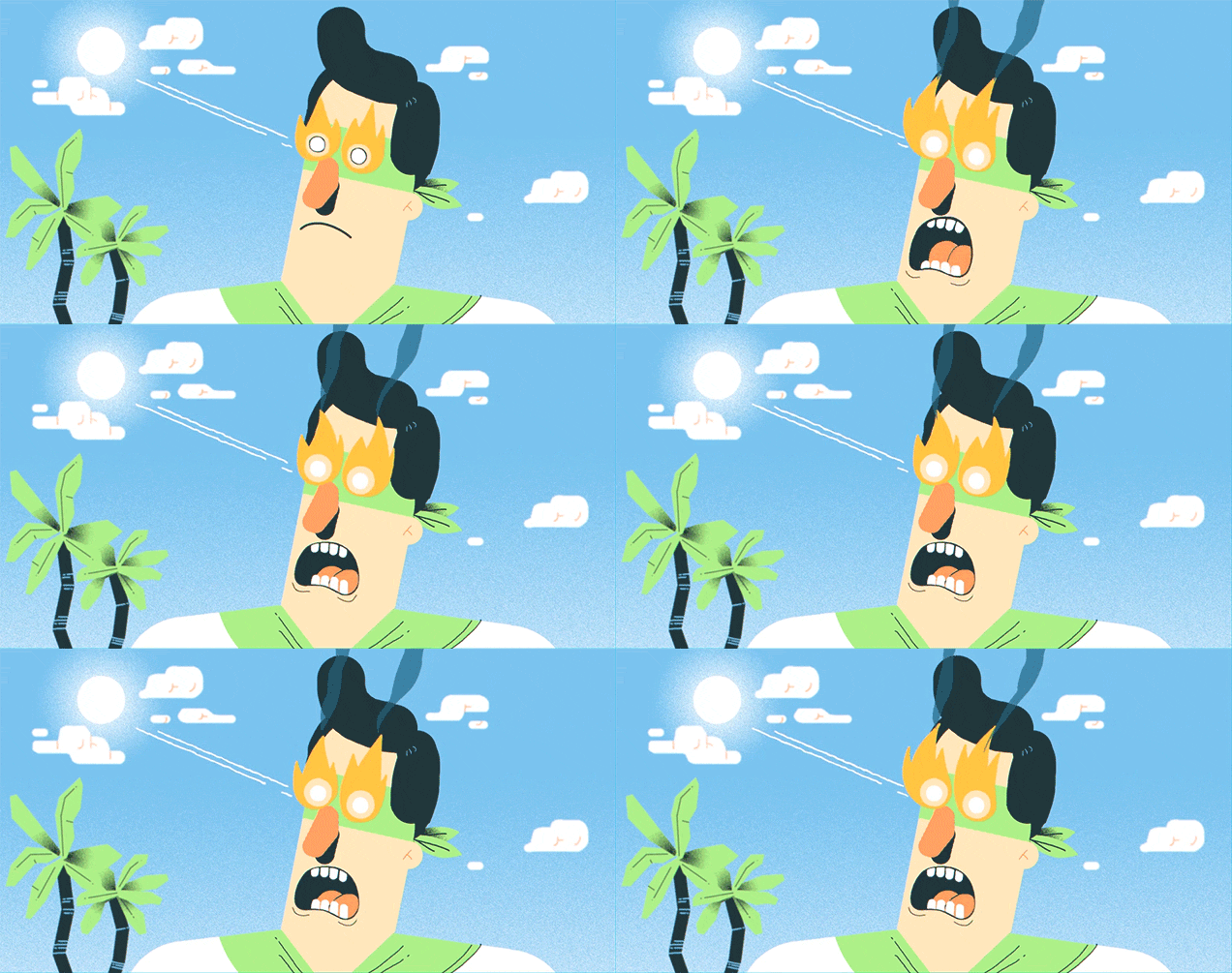
People are capable of doing amazing things. When we work together we can go to the moon! We can have all of the world’s information searchable from this thing in our pocket! We can change the world! But inevitably, we’re bound to screw it up somehow. Why? It’s called the Peter Principle.

The Peter Principle is actually very simple. People who are good at their current jobs will keep getting promoted up until the point where they reach their level of incompetence at a future position, which means they start being bad at their jobs. Eventually, companies or any organization ordered in a hierarchy will have multiple people flailing around in positions they’re simply not good at, turning everything the company does into shit.

So if you’re ever wondering how the hell something awful can happen, just think about the incompetence at the top. The culture of promotions and the embarrassment of demotions encourages this set up for failure. Here is Adam Westbrook explaining the famous Peter Principle as the scientific reason why everything is just a bit shit.


[Source: Sploid.]

Wednesday, 27 April 2016

11 AMAZING ANTICS OF ANTS


wps6DF1.tmp
11 amazing antics of ants
By Russell McLendon,
Mother Nature Network, 25 April 2016.

Ants have been around since the Cretaceous Period, thriving for 100 million years before ruining a single picnic. They not only survived the asteroid that killed the dinosaurs; they spread out of tropical forests to pretty much conquer the world.

Today, up to 10 quadrillion ants are alive on Earth at any given time. Their total biomass weighs about the same as all 7.4 billion humans put together, and they exist almost everywhere, except - ironically - Antarctica.

"Ants are everywhere, but only occasionally noticed," biologist E.O. Wilson wrote in "The Ants," his Pulitzer-winning 1991 book about the insects. "They run much of the terrestrial world as the premier soil turners, channelers of energy, dominatrices of the insect fauna - yet receive only passing mention in textbooks on ecology."

Even after all this time, we're still digging up new secrets about ants. For a glimpse into their antics, here are a few of the most amazing things we know...so far.

1. Ant colonies act as 'superorganisms'

wpsE6EB.tmp
Photo: Matt MacGillivray/Flickr

"Individual ants are the equivalent to the neurons in your brain - each one doesn't have a lot to say, but in combination they can get a lot of things done," entomologist Mark Moffett told Live Science in 2014. Ant colonies are considered "superorganisms," rallying hordes of individual workers to act as parts of a larger, more powerful entity.

In a 2015 study, researchers tested this idea by watching how ant colonies reacted to the abduction of scouts and workers. The ants were displeased in both cases, but their differing responses spoke volumes. "When scouts were removed from the periphery, the foraging 'arms' of the colony retracted back into the nest," the study's authors explain in a statement. "However, when ants were removed from within the center of the nest itself, the whole colony fled, seeking asylum in a new location."

What does this mean? If a colony is a superorganism, the first scenario is like recoiling your hand after burning it on a stove, the researchers say, while the second is akin to fleeing a house fire. "This suggests that colonies react differentially, but in a coordinated fashion, to these differing types of predation," they write. "Our findings lend support to the superorganism concept, as the whole society reacts much like a single organism would in response to attacks on different parts of its body."

2. Ants can form living bridges


On top of being expert builders, some ants are also excellent building materials. In the video above, army ants show off their uncanny ability to make a living bridge by clasping onto each other's limbs as they stretch across a chasm. They even monitor the flow of ant traffic across their backs, according to a 2015 study, adjusting the bridge's size and shape in real time to maximize efficiency. If too many ants join the bridge, for example, too few may be left to carry food across it.

"These ants are performing a collective computation. At the level of the entire colony, they're saying they can afford this many ants locked up in this bridge, but no more than that," says co-author Matthew Lutz, a graduate student in ecology and evolutionary biology at Princeton University, in a statement. "There's no single ant overseeing the decision; they're making that calculation as a colony."

3. Ants can also form living boats


Since fire ants live underground, floods are a nightmare scenario. But instead of scattering in a panic, they handle floods by turning the entire colony into a living raft.

One layer of ants forms the base, locking together tightly enough to form a water-tight seal that's surprisingly hard to sink, as the video above illustrates. Fire ants can assemble themselves like this in as little as 100 seconds, and if necessary, they can remain in raft formation for weeks until floodwaters subside.

4. Ants swarm like T-1000's liquid metal in 'Terminator 2'


What makes congregations of ants so sturdy yet flexible? According to a 2015 study, their secret is partly due to an ability to behave as either a solid or a liquid.

Researchers at Georgia Tech dropped thousands of fire ants into a rheometer, a machine that tests the solid- or liquid-like response of materials such as food, lotion or melted plastic. The ants showed "viscoelastic behavior," from springy resistance when pushed lightly to fluid-like flow as pressure grows. The weight of a penny, for example, prompts ants in the video above to briefly detach, sort of like water molecules. Once the penny passes through, however, they rejoin as a solid.

"If you cut a dinner roll with a knife, you're going to end up with two pieces of bread," says co-author David Hu, an engineering professor at Georgia Tech. "But if you cut through a pile of ants, they'll simply let the knife go through, then reform on the other side. They're like liquid metal - just like that scene in the 'Terminator' movie."

5. Ants talk by smell

wps1897.tmp
Photo: Dzipi/Flickr

A colony can include many millions of ants, yet queens have no intercom system to address their troops, and ants can't vocalize, anyway. So how do they coordinate all their complex collective behavior? Social media? (Antstagram, maybe?)

Ants do have language, albeit not like we do. While humans rely heavily on voices and gestures, ants make sense by making scents. Pheromones are their main mode of communication, each containing a scent message that other ants in the colony can read with their antennae. They convey a wide range of information this way, and can even combine scents or use varying amounts of pheromone to add detail.

A scout who discovers food lays down a "scent trail" to help her nestmates, for example, and as they carry pieces home, they can add more scent to reinforce the signal. As the food source dwindles, they can modify the message again by releasing less and less scent on return trips, saving other ants a fruitless hike by posting real-time updates on how much food is left. Pheromones are used for countless other purposes, too, from identifying rank and health status to sniffing out intruders.

6. Ants talk by sound, too


Ants may not have vocal chords, but that doesn't mean they're silent. Like crickets and grasshoppers, some ants are capable of "stridulation," or making noise by rubbing specialized body parts together. Ants in the genus Myrmica, for example, have a spike on their abdomen that emits sound when they pluck it with a leg.

This seems to be a call for help, according to a 2013 study, which found that other ants respond to the sound with "benevolent behaviors." Ants lack ears, but can still "hear" by sensing vibrations in the ground with their legs and antennae. (The audio clip above is an example of ant stridulation recorded by a contact microphone, which - like ants - senses vibrations through contact with solid objects.)

7. Ants' antennae can send or receive data

wps7F9B.tmp
Photo: skeeze/Pixabay

Antennae communication is well-known, but we still have a lot to learn about it. In March 2016, for instance, researchers from the University of Melbourne discovered that ants not only receive information through their antennae, but can use them to send outgoing signals, too. This is reportedly the first evidence of antennae serving as two-way communication devices, rather than just as receivers.

"An ant's antennae are their chief sensory organs, but until now we never knew that they could also be used to send out information," study author and Ph.D. student Qike Wang says in a press release. "Like everyone else, we assumed that antennae were just receptors, but nature can still surprise us."

8. Ants began farming before humans existed

wps748C.tmp
Photo: Barbusse/Wikimedia Commons

Ants are among very few animals known to cultivate crops and livestock, skills they mastered more than 50 million years ago. (Homo sapiens, by comparison, evolved about 200,000 years ago and only began farming in the last 12,000 years.)

At least 210 ant species are fungus farmers, chewing up organic matter to fertilize crops. Most, known as lower attines, use a variety of materials like dead insects or grass, and form smallish colonies in a single "garden." Higher attines, including leafcutter ants, only use plants as fertilizer and can build massive colonies with millions of ants. Some even protect their crops with pesticides, growing bacteria that produce specialized antibiotics to suppress fungal garden parasites.

Lots of ant species tend livestock, too. Aphids are a famous example, prized by ants for the honeydew they secrete after eating sap. Chemicals on ants' feet keep aphids subdued - and can sabotage aphid wing growth to prevent escapes - but ants also reward their livestock. They herd and haul aphids to new plants, protect them from predators and precipitation, and even care for their eggs. When queen ants leave to start a new colony, they're known to carry aphid eggs with them.

9. One 'megacolony' of ants spans three continents

wpsA445.tmp
Photo: Sam Fraser-Smith/Flickr

Every ant colony is a wonder of nature, but Argentine ants have upped the ante. The species is "unicolonial" - which means individuals can freely mix among physically separate nests - and after humans accidentally introduced it to five new continents, it set up an empire. This intercontinental "megacolony" consists of multiple regional "supercolonies," each of which is a network of allied but unconnected nests.

The largest-known supercolony, the European Main, stretches about 6,000 km (3,700 miles) from Italy to Portugal. Another, the California Large, spans more than 900 km (560 miles) in the U.S. West. Despite the vast distance between them, both are part of the same empire, scientists say, along with a third supercolony in Japan.

How do we know? Ants are territorial, and tend to fight members of their own species if they come from another colony. Yet while supercolonies include many distinct nests, ants within a supercolony treat each other like family - even if their homes are far apart. Scientists can test the size of a supercolony (or megacolony) by introducing ants of the same species from farther and farther away until they fight.

"[T]he enormous extent of this population," marvels a 2009 study on the Argentine ant megacolony, "is paralleled only by that of the human society. That's high praise, but the study also points out these ants relied on human transportation to establish their empire. And like humans, Argentine ants are notorious for wreaking havoc when they arrive in a new ecosystem: The invasive species often obliterates native ants, and without taking over the ecological services its predecessors performed.

10. Ants can lift up to 5,000 times their body weight

wpsCE0D.tmp
Photo: Scott Bauer/Wikimedia Commons

You may have heard that ants can carry 10, 50 or 100 times their own body weight. Any of those would be impressive, even if much of their strength is due to their small bodies. But according to a 2014 study, ants can actually lift much more than we thought: a staggering 3,400 to 5,000 times their own body weight.

"Ants are impressive mechanical systems - astounding, really," co-author and Ohio State University engineering professor Carlos Castro said in a statement. "Before we started, we made a somewhat conservative estimate that they might withstand 1,000 times their weight, and it turned out to be much more."

To assess ants' strength, researchers imaged the insects' necks with a micro-CT machine and placed them in a specially designed centrifuge. (They used Allegheny mound ants, a common U.S. species not particularly known for its strength.) While the centrifuge simulated the pressure of carrying a heavy load, the micro-CT scans revealed how the ants carry so much weight: Each part of the head-neck-chest joint has a different texture, with tiny structures that resemble bumps and hairs.

These micro-scale structures "might regulate the way the soft tissue and hard exoskeleton come together, to minimize stress and optimize mechanical function," Castro said. "They might create friction, or brace one moving part against the other."

11. Ants can help human farmers make money

wpsE625.tmp
Photo: Rushen/Flickr

People often see ants as pests. But according to a 2015 research review, certain kinds of ants can control agricultural pests as efficiently as synthetic pesticides - with the bonus of being more cost-effective and generally safer.

The review covered more than 70 studies on dozens of crop pests, mostly focusing on the effects of a tropical, tree-dwelling genus known as weaver ants. Since they live in the canopy of their host trees, near the fruit and flowers that need protection, weaver ants have a natural tendency to control pest populations in orchards.

One study found 49 percent higher yields in cashew trees guarded by weaver ants than in pesticide-treated trees. Farmers also got higher-quality cashews from trees with ants, resulting in a 71 percent higher net income. Not all crops saw such dramatic results, but studies on more than 50 pests suggested ants can protect crops including cocoa, citrus and palm oil at least as effectively as pesticides.

And horticultural help isn't limited to weaver ants. Many ants species can benefit farmers, gardeners and homeowners, despite their penchant for protecting sap-sucking aphids. Ants create and aerate soil, for instance, and healthy populations of native ants can regulate various pests like flies, fleas and roaches.

***

The pros and cons of ants vary widely by species and setting - Argentine ants are invasive pests in many places, for example, but an important native species in some South American forests. Most ants at least indirectly benefit humans in their natural habitats, with hard-to-see jobs like churning soil and spreading plant seeds. They can also help us boost our technology with biomimicry, from collective behavior that informs swarm robotics to neck joints that inspire stronger spacecraft.

Whatever the context, though, one thing is certain: It's a mistake to overlook ants.

Top image credit: nilelilly/Flickr, CC BY-NC-ND 2.0.

[Source: Mother Nature Network. Edited. Some images and links added]

INFOGRAPHIC: THE SCIENCE OF BAKING


wps6E15.tmp
The Science of Baking
By
Shari's Berries, 2 April 2016.

Ever wondered how your oven can transform a pale blob of dough into a crisp, brown sugar cookie? Or a pan full of gooey batter into a fluffy cake? It's not magic. Well...maybe it's a little magical, because all cooking is one part art, especially when it comes to inventing new recipes and baked treats (like cake pops). The other part, of course, is science. That's the part that does all the browning, crisping and batter fluffing. It's all explained in our fun and informative infographic.

The Science of Baking
Infographic by Shari's Berries


[Post Source: Shari's Berries.]

Tuesday, 26 April 2016

10 DARK ANCIENT ORIGINS OF EVERYDAY PHRASES


wpsB89D.tmp
10 Dark Ancient Origins Of Everyday Phrases
By Elizabeth S. Anderson,
Listverse, 26 April 2016.

Some of the seemingly innocent phrases that we utter today have disturbing historical backstories. A cakewalk was a dance performed by slaves for their masters, blockbusters were big bombs created during World War II, and deadlines were literal lines drawn during the US Civil War to discourage prisoners from escaping.

10. ‘Sold Down The River’

wpsA9D6.tmp

Today, a person who is “sold down the river” is someone who has been cheated or betrayed. The phrase has its roots in slave trade-era Mississippi. Back then, slaves in the northern part of the United States were treated fairly better than those in the South. If any group of slaves in the North proved difficult to handle, they were rounded up and put up for sale in Louisville, Kentucky. From there, they were transported via the Mississippi River to the South and sold to plantations to meet the rising demand for slaves needed to work in the blooming cotton industry.

Slaves sold down the river were consequently separated from their families and subjected to hard labor in harsher conditions. Slaves viewed it as a death sentence and preferred suicide to being sold. According to an eyewitness account, a slave sold down the river committed suicide by drowning after his earlier attempts to do so by cutting his legs and throat were unsuccessful.

9. ‘Smart Aleck’

wps7C5A.tmp

A “smart aleck” (or “smart alec”) is a person who, to the irritation of everyone around, acts like they know everything. The phrase was inspired by a 19th-century man named Alec Hoag. Hoag and his wife, Melinda, were robbers in New York City. They developed a con that involved Melinda posing as a prostitute and luring innocent customers into a dark alley. While making out with the unsuspecting victims, she’d slyly steal valuables from their pockets and hand them to Hoag, who was hiding nearby. The duo, knowing that some of their victims would report to the authorities, struck a deal with several police officers to split the valuables with them.

Hoag stopped giving the police officers their share after he ran into some financial troubles. To avoid suspicion, he came up with the “panel game.” In this new scheme, Melinda would instead lead the victims to their apartment, where she would have them take off their clothes and give a subtle signal. Alec would emerge and secretly take the valuables from the clothes before leaving through an exit. Then, to the horror of the victim, Hoag would knock on the door. Melinda would tell the victim that it was her husband, who’d returned from a trip earlier than expected. The victim would quickly pick up their clothes and escape through the window.

The police soon discovered the couple’s new scheme and subsequently arrested and jailed them. The nickname “Smart Alec” was given to him by police officers mocking him for trying to outsmart them, and it soon became widely used in the decades that followed.

8. ‘Meet A Deadline’

wpsF42B.tmp
Photo credit: Library of Congress

The phrase “meet a deadline” dates back to US Civil War. One of the first recorded uses of the phrase was at the Confederate prison at Andersonville. To keep the prisoners from escaping, a line was drawn 6 meters (20 ft) from the heavily fortified walls of the prison. An order given to the prison guards stating that any prisoner who came near the line or attempted to cross it should be immediately shot dead, hence the nickname “dead-line.”

Unfortunately, the guards used the order as an excuse to execute prisoners at will. An eyewitness confirmed that prisoners were killed on a daily basis by the guards, who claimed that their victims tried to cross the line even though they were well within it. According to etymologists, many other war prisons at that time had their own dead-line.

By the 20th century, various meanings for the word began to appear. At one point, it was a printing terminology. Later, it was used to define the age limit of church ministers, who were expected to retire at age 50. Over time, its meaning changed to imply a stipulated time by which a deed must be performed.

7. ‘Blue Blood’

wps6B21.tmp

To be a “blue blood” is to be of noble birth. The phrase is also used to describe anyone born into a wealthy or influential family. “Blue blood,” which is the literal translation of the Spanish phrase sangre azul, has its dark origin in medieval Spain. During the rule of Ferdinand of Aragon and Isabella of Castile, the Moorish and Jewish people in Spain were given an ultimatum to convert to Christianity or leave. All who stayed had to convert to Christianity to be accepted as citizens of the country.

By they early 19th century, members of oldest and most powerful royal family, which had refused to interbreed with these other races, began to claim that their blood was pure and blue. The ostensible reason for their prejudiced logic was that since they were fairer than the Moors and Jews, who were mostly peasants who worked under the sun, their visible veins had a hue of blue. The phrase soon spread to Britain, where it became popular.

6. ‘Blockbusters’


Today, a “blockbuster” is a movie, book, or piece of music that is widely accepted and commercially successful. The origin of the phrase dates back to 1942, during World War II. A blockbuster was a huge aerial bomb. It weighed up to 1,800 kilograms (4,000 lb) and could destroy a city block. One of the first written references of the word was in the September 29, 1942, issue of Time, narrated the testing of several blockbusters.

After the war, the phrase became a real estate term. It was used to refer to a real estate agent who sold a house to a minority family in an all-white community. Once he sold the house to the minority family, usually blacks, the city block had been “busted.” Consequently, most of the white neighbors would put up their houses for sale at a very low price. These houses were eventually sold to other minority families. Over time, the meaning of the phrase evolved to its current meaning.

5. ‘Call A Spade A Spade’

wps1936.tmp

To “call a spade a spade” means to tell something as it is. The phrase has a surprisingly innocent origin: It once meant to give an honest opinion about a situation. The phrase originated in ancient Greece and has been credited to various historical figures, such as Aristophanes and Menander. Although the phrase was widely used throughout history in various forms by different writers, there was no racist tone to its meaning.

The meaning of the phrase took a dark turn in the late 1920s. This was attributed to a novel called Home to Harlem, written by Claude McKay in 1928. The book featured a line in which a black character was referred to as a “fool spade.” Subsequently, fellow writer Wallace Thurman followed Mckay’s example by naming the black characters in his novel “spades.” The phrase “black as a spade” also helped to further the racist use of the term. Over the years, black activists have tried to reclaim the phrase by applying it instead as a compliment to help erase its ugly past.

4. ‘Loophole’

wps7486.tmp

“Loopholes” are gaps in a set of rules or laws that can be exploited to avoid consequences. The phrase originated in medieval Europe. Back then, castles were prone to attacks by enemies. To keep themselves safe, the powerful owners had their castles built with vertical arrow slits known as loopholes. These loopholes enabled guards in the castle to strike down enemies with little exposure to danger. Although loopholes were narrow on the outside, they were much wider on the inside, enabling archers to strike from different angles. Their length varied from 1 to 3 meters (3–9 ft). A loophole also served as a source for letting light into the castle.

With the invention of the crossbow in the 12th century, horizontal slits were added to the loopholes to enable accuracy and efficiency. The loopholes were built in the form of crosses and were known as crosslets. Over time, the literal meaning of the word was eventually replaced with its metaphoric definition.

3. ‘Pleased As Punch’


Punch and Judy, a puppet show, began to appear in Britain around the 17th century. The show, which was inspired by an Italian character called Polichinello, starred the sadistic hunchback Mr. Punch and his wife, Judy. The revolving plot of the show centered on how Punch kills his infant child and his wife before he is arrested and thrown in jail. With the use of a golden key, he escapes from jail and murders a host of others, including Death and the Devil. The show was very popular in Britain and drew large crowd of adults and children.

While engaging in his spree, Punch was known to delightfully utter his catchphrase, “That’s the way to do it!” The disturbing pleasure that Punch derived from the killing was what lead to use of the phrase “pleased as Punch” to describe anyone who is very delighted about something. The phrase, as used today, became popular at the beginning of the 19th century.

2. ‘Diehard’

wps18B6.tmp

Anyone whose commitment to a belief is difficult to change is referred to as a “diehard.” William Inglis, commander of the British 57th Regiment of Foot, is often credited as the first man to use the phrase. He reportedly ordered his men to die hard during a battle in the Peninsula War in 1811. This earned his regiment the nickname the “Die-hards.” Although Inglis made the phrase popular, the first documented use of it use was in a 1703 publication that discussed condemned men approaching toward death.

The text was written in Tyburn in London, where frequent public hangings took place until 1783. Back then, the drop method of hanging was not in use, so some men paid people to pull their legs to hasten their death. Men who would rather go through the lengthy and slow death process were referred to as the die-hards. In the 20th century, the meaning of the phrase evolved into it current definition after some members of the Conservative Party in Britain named themselves the “die-hards.”

1. ‘Cakewalk’

wps8B18.tmp

When you’re told that some task is no “cakewalk,” you’ve been warned of the huge difficulty or obstacle that you might face engaging in it. The origin of this phrase is not as cheerful as it sounds. A cakewalk was a dance performed by slaves on plantations in the southern United States. The dance was done in mockery of their white owners. The owners, who knew nothing about the dance’s backstory, took delight in it and had slaves perform it for them during weekend contests while they served as the judges. The winner is rewarded with a piece of cake, and the phrase “piece of cake” also comes from the dance.

After slavery came to an end, cakewalks became popular for another wrong reason. It was performed by white actors who painted their faces black and portrayed the slaves as people attempting to sincerely emulate white culture but failing hilariously. It eventually became the foundation of famous ragtime songs. Over time, the phrase remained while the gruesome story behind it faded. If any phrase origin takes the cake for being disturbing, this one does.

Top image credit: geralt/Pixabay.

[Source: Listverse. Edited. Top image added.]