Pages

Friday, 26 January 2018

10 THEORIES AND FACTS YOU DIDN’T KNOW ABOUT GRAVITY

wpsE480.tmp
10 Theories And Facts You Didn’t Know About Gravity
By S. Ekrebs,
Listverse, 23 January 2018.

Our relationship with gravity takes each of us back to about first grade, when we initially learned about this amazing force. However, gravity is so much more than the force that holds us on Earth.

In school, we learn some basic ideas about gravity. But these give rise to many misconceptions and gaps in our understanding of this important physical force. Here are 10 mind-bending theories and facts that you probably didn’t learn about gravity.

10. Gravity Is A Theory, Not A Law

wps9FAB.tmp
Photo credit: NASA/JPL

It is a myth that gravity is a scientific law. If you were to do an online search about gravity, you would probably see many articles popping up about the law of gravity. However, in the scientific world, laws and theories are very different. A scientific law is a fact that is based on data and relationships that describe exactly what is happening. In contrast, a theory is an idea that is used to explain why certain phenomena occur.

When we think about gravity using the definitions of scientific laws and theories, it becomes clear why gravity is a theory and not a law. Scientists have not been able to measure gravity for every star, moon, planet, asteroid, or atom in the universe.

Voyager 1 (a man-made space probe) has traveled approximately 21 billion kilometers (13 billion mi) from Earth. This craft has left our solar system but not by much. Just by looking at Voyager 1’s decades-long journey alone, it is obvious why scientists have not been able to study the gravity of every star, moon, planet, asteroid, and atom. Our universe is just so big!

9. There Are Gaps In The Theory of Gravity

wps3D92.tmp

After learning that gravity is just a theory, another curveball is thrown at some of us. Some gaps in the theory of gravity suggest that it is not as believable as we once thought in the first grade. A lot of these gaps have to do with what we can see in our solar system, but some can be seen here on Earth.

For example, according to the theory of gravity, the Sun’s gravitational force would be much greater on the Moon than the Earth’s gravitational force. Thus, the Moon would revolve around the Sun instead of the Earth. Scientists have proven that the Moon revolves around the Earth, which we can see just by looking at the night sky.

In school, we also learned about Isaac Newton, the “discoverer” of gravity who acknowledged a potential gap in the theory. Newton created a new branch of mathematics called fluxions, which he used to develop the theory of gravity. Fluxions may not sound familiar to us, but what it eventually turned into will.

Today, we call it calculus. Although many of us study calculus at some point in our lives, this area of mathematics has also proven to have flaws in it. Thus, there may be flaws in how Newton “proved” his theory of gravity.

8. Gravitational Waves

wpsE349.tmp

Albert Einstein’s general theory of relativity (aka Einstein’s theory of gravity) was proposed in 1915. Around the same time, a phenomenon called gravitational waves was also hypothesized. It was not until 1974 that this theory was proven.

Gravitational waves are ripples in the space-time continuum caused by violent happenings in the universe. These happenings can be anything from the collision of black holes to the wobbly rotation of neutron stars to a supernova. When one of these events occurs, gravitational waves ripple from the scene like waves moving away from a rock thrown into water. The waves travel at the speed of light through the universe.

As we do not see these catastrophic events happening all the time in our universe, it takes many years to observe gravitational waves. That is why it took almost 60 years to prove that gravitational waves exist.

For over 40 years, scientists have been monitoring their first find of gravitational waves, the one that proved they existed. These waves were caused by two dense, heavy stars orbiting each other because of gravitational pull. Over time, it was observed that the stars were orbiting closer and closer to one another at the rate predicted by Einstein’s theory. Thus, it was proven that gravitational waves do exist.

7. Black Holes And Gravity

wps4F42.tmp

Black holes are one of the greatest mysteries of the universe. They are formed when a star collapses in upon itself, which creates a supernova. This supernova will blast parts of the star out into space and can create a region in space where gravity is so strong that light is not able escape from it - the black hole. Gravity does not form black holes, but it does play a key role in helping us understand and learn about them.

The gravity of black holes helps scientists find them in the universe. Since the pull of gravity is so strong, scientists see the gravitational pull on other stars or gases that are around them. The black hole can even pull these gases to illuminate a disc around itself. Without the extreme gravity of black holes, we may never have known that they existed.

6. The Theory of Dark Matter And Dark Energy

wpsCA9E.tmp
Photo credit: NASA

About 68 percent of the universe is made up of dark energy, and about 27 percent is made up of dark matter. Even though there is so much dark matter and dark energy in our universe, we do not know much about them.

However, we do know that dark energy has many properties. Einstein’s theory of gravity also played a big part in helping scientists to see that dark energy is able to expand and make more space. When using Einstein’s theory, scientists initially thought that gravity had to eventually slow the expansion of the universe as time went on.

Then, in 1998, the Hubble Space Telescope showed that the universe was expanding faster and faster. Thus, scientists knew that the theory of gravity was not able to explain what was happening in our universe. They hypothesized the existence of dark matter and dark energy to account for the way in which the universe was expanding at an increasing rate over time.

5. Gravitons

wpsF15C.tmp
Photo credit: pbs.org

When we learn about gravity in school, we learn that it is a force. But it may be even more than that. Gravity might actually be a particle called a graviton.

Gravitons would be the basic unit of gravity and emit a gravitational force. Physicists have not detected any gravitons, but they have many theories about why they should exist. One of these theories is that gravity is the only force (of the four fundamental forces of nature) in which a basic unit has not been detected.

Although gravitons may exist, it would be extremely hard to identify them. Physicists theorize that gravitational waves are made of gravitons. To search for gravitational waves, we could do a simple experiment in which we bounce light off mirrors to see shifts in their separation.

Unfortunately, this would not work for detecting the minute distance changes caused by gravitons. Physicists would need to use mirrors that are so heavy that they would collapse and form black holes.

So that is not going to happen in the near future. For now, physicists are looking toward the universe (the largest thing they can) to help them detect the effects of gravitons.

4. Potential Creation Of Wormholes

wpsFE88.tmp
Photo credit: space.com

Wormholes are a great mystery in our universe. How cool would it be to go through a space tunnel at the speed of light to travel to another galaxy? Well, if wormholes do exist somewhere in our universe, that might be possible. Right now, there is no proof that they exist, but physicists think one way to create them would be with gravity.

By using Einstein’s general theory of relativity, physicist Ludwig Flamm described how gravity is able to bend space-time, which could theoretically cause wormholes to form. Of course, other theories about the formation of wormholes also exist.

3. Planets Exert A Gravitational Force On The Sun

wpsB537.tmp

We know that the Sun exerts a gravitational force on all the planets in our solar system so that they orbit around the Sun. In the same way, the Earth exerts a gravitational force on the Moon, which is why it orbits the Earth as well.

However, each planet or other object with mass in our solar system also exerts a gravitational force on the Sun, other planets, and any other object that has mass. The degree of force exerted depends on the mass of the objects and the distance between them.

In our solar system, that is why every object with mass revolves around the Sun. It has the greatest gravitational pull. In fact, every object with mass in the universe exerts its own gravitational force on every other object that has mass even if they are light-years apart!

2. Microgravity

wps434F.tmp
Photo credit: NASA

We all have seen pictures or heard stories about astronauts floating around in space because there is no gravity. Even though this is a common portrayal in movies, there actually is gravity in space.

It is called microgravity because it is such a small amount. This microgravity creates the effect that astronauts appear to be weightless in space. Without gravity in space, the planets would not orbit the Sun and the Moon would not orbit the Earth.

Gravity breaks down and gets weaker with distance. In space, there is microgravity because everything is much farther apart than it is here on Earth, where gravity is stronger.

Gravity also gets weaker at the very small level. Think about the atom. It is so small that it will have a very weak gravitational force associated with it. As atoms combine, their force gets stronger.

1. Time Travel

wpsAA85.tmp

Time travel is mystery that has fascinated us for years. Many theories, including the theory of gravity, could explain why time travel may actually exist. Gravity produces a bend in space-time, which causes objects to move in a curved path. As a result, objects in space move slightly faster relative to those on the ground on Earth. To be exact, the clocks on space satellites gain 38 microseconds a day.

Since gravity in space is causing objects to move faster in space than on Earth, astronauts are considered to be time travelers when they come back to Earth. The effect on astronauts is so small that you would not notice it. But it does raise the question: Could gravity eventually cause the kinds of time travel that we see in the movies?

Top image: Gravity. Credit: Maryam Abdulghaffar/Flickr.

[Source: Listverse. Top image added.]

Monday, 22 January 2018

INFOGRAPHIC: THE WORLD'S 17 MOST DANGEROUS FOODS

wps7A69.tmp
Food is one of our most basic needs. It's for our survival as well as pleasure. At the opposite end, however, are foods that pose great danger to our health and even our lives. The following infographic by Mr Gamez presents a list of the world’s most dangerous foods.

http://www.mrgamez.com/dangerous-foods/img/infographic.png

Infographic Sources:
1.
Dangerous Dining: The World’s 10 Deadliest Delicacies
2. The world’s most dangerous food
3. The Most Dangerous Foods in the World
4. The World’s 10 Most Dangerous Foods People Actually Eat
5. 14 deadliest delicacies around the world
6. Dangerous Delicacies: 12 Foods That Could Kill You, But Probably Won't
7. 12 Dangerous Delicacies From Around the World
8. The 10 Most Deadly Foods on the Planet
9. World's Most Dangerous Foods
10. Every year, Egyptians risk their lives eating this dangerous delicacy
11. Fugu
12. Eating unopened ackees can be fatal
13. Dangerous Dining
14. Shanghai getting tougher on blood clam ban
15. Toxic Pufferfish Invade Eastern Mediterranean, Killing People and Irking Fisherman
16. 27 children die after eating cassava at Philippine school
17. 10 Makanan Paling Berbahaya di Dunia
18. 4 exotic dishes in South Korea for the brave & good traveler
19. The Fishmarket India
20. Nordic Food Lab
21. Bloody Clams
22. The Gates Notes
23. Absinthe
24. Drinks Planet
25. Fuel Station
26. I Am Foodgeek
27. Serving Joy

[Source: Mr Gamez.]

Sunday, 21 January 2018

INFOGRAPHIC: THE RAW MATERIALS THAT FUEL THE GREEN REVOLUTION

wps172C.tmp
Even though green energy comes from renewable sources like the sun and the wind, it still requires massive amounts of finite resources to make it all work. To get off fossil fuel, we need massive amounts of other metals and minerals, as highlighted in the following infographic from Visual Capitalist.

[View a high resolution version of this graphic]

The Raw Materials That Fuel the Green Revolution

Top image credit: PIRO4D/Pixabay.

Saturday, 20 January 2018

9 OF THE SNOWIEST PLACES ON THE PLANET

wps55E6.tmp
9 of the snowiest places on the planet
By Mary Jo DiLonardo,
Mother Nature Network, 18 January 2018.

When winter hits and snow threatens, we can fear having to shovel the occasional sidewalk or scrape off a windshield. But while most of us only have to worry about snow for a few months and maybe only a few inches, there are places in the world where residents know they'll be dealing with massive amounts of icy precipitation that can seem like its endless.

For example, Shirakawa-go in Japan [top image] gets an average of about 400 inches (1,000 cm) each winter. Doesn't make your driveway look so bad now, does it?

From Japan to Canada, Alaska to France, here's a look at some of the snowiest places on Earth.

1. Mount Washington, New Hampshire, USA

wps281F.tmp
Photo: Michael Davidson/Wikimedia Commons

Proudly calling itself the "Home of the World's Worst Weather," the Mount Washington Observatory in New Hampshire [pictured above] averages a total of 282.1 inches (716.7 cm) of snow each year, according to the Weather Channel.

Mount Washington is located in "a perfect trifecta of three weather fronts," says Onboard. "Atlantic weather fronts meet with Gulf winds and Pacific Northwest fronts, before they’re rocketed skywards by the sheer vertical rise of the range."

And it's not just the snow. Hurricane winds whip through Mount Washington's peaks for an impressive 110 days a year. Because of the winds, the snow doesn't stay around, usually getting blown into nearby ravines.

2. Aomori City, Japan

wpsA848.tmp
Photo: Ari Helminen/Flickr

Nestled between Aomori Bay, Mutsu Bay and the Hakkōda Mountains, Aomori City gets walloped with an average 300 average inches (762 cm) of snow a year, due to its location in relation to the ocean and its high elevation in the mountains, says Conde Nast Traveler.

The city's name translates to mean "blue forest," because of the oceans and lakes that surround the lush greenery - when it isn't covered in snow, that is.

3. St. John's, Newfoundland and Labrador, Canada

wps7C3E.tmp[6]
Photo: ALAN SCHMIERER/Wikimedia Commons

St. John's is the capital and largest city in Newfoundland and Labrador, Canada. According to Conde Nast, the city gets an average of 132 inches (335 cm) of snow every year, which lasts until late April.

The oldest and most eastern city in North America also has a reputation as the windiest, foggiest and cloudiest of main Canadian cities.

4. Valdez, Alaska

wps1D0.tmp
Photo: Joseph/Flickr

The snowiest city in the United States according to the Weather Channel, Valdez gets about 314 inches (798 cm) of snow per year. Surrounded by the Chugach Mountains, the snow and terrain make this wintry city a favorite for outdoor sports fans. Enthusiasts head here for heli-skiing, snowboarding, snowmobiling, ice climbing, fat biking riding and cross-country skiing.

5. Mount Rainier National Park, Washington, USA

wps3596.tmp
Photo: brewbooks/Flickr

The Paradise area at Mount Rainier National Park (elevation of 5,400 feet) in Washington state is known for its snowfall. According to the National Park Service, the area once had the world record for measured snowfall in a single year. In the 1971 to 1972 season, an impressive 1,122 inches of snow (28.5 meters) fell in Paradise.

As Onboard explains it, the Pacific Northwest has a "golden equation" when it comes to snow systems. "The Gulf of Alaska, farther to the west, creates huge storms that are added to by a system called Cyclogenesis, which intensifies them. These huge low-pressure systems are then carried along by the jet stream that then carries them eastward. As it’s carried eastward, it hits the warm air of the lower mountains which then means the mother of all weather systems then hits the higher peaks in Washington and Oregon."

The result is lots and lots of snow.

6. Shirakawa-go, Japan

wpsFAED.tmp
Photo: fullfen666/Wikimedia Commons

The historic village of Shirakawa-go is a mountain town known for its steep forests and traditional farmhouse building style known as gasshō-zukuri, with thatched roofs built to withstand heaps of snow. With a name that translates into "White River Village," according to Smithsonian, the town gets a remarkable 415 inches (10.5 meters) of snow each year.

A UNESCO World Heritage Site, Shirakawa-go celebrates the snowy landscape in winter by organizing illumination events in January and February that attract tourists to see the traditional homes lit up in the snow.

7. Saguenay, Quebec, Canada

wps6CE8.tmp
Photo: Khayman/Wikimedia Commons

Called a snowmobiler's paradise, Saguenay is of one Canada's snowiest cities, receiving an average of 132 inches (336 cm) each year. Saguenay is located 200 miles west of the capital of Quebec City and is a relative newcomer, only established in 2002 as a merger between municipalities and cities, including Chicoutimi, Jonquière and La Baie.

8. Sapporo, Hokkaido, Japan

wpsE770.tmp
Photo: Haseyu-/Wikimedia Commons

Famous for producing the well-known Japanese beer, Sapporo is also known for being one of the Earth's snowiest cities. With an annual snowfall of about 191 inches (485 cm), the city is home to nearly 2 million residents and a yearly snow festival each February. The festival, which is famous for its massive snow-sculpture building contest, attracts 2 million tourists and features more than 200 snow and ice sculptures during the event.

Attending the festival? Organizers warn that it will be cold and the ice and snow will be very slippery. "You should wear at least three layers of clothes to keep you warm outside. Typically this means: thermal underwear, a sweater and a thick overcoat or a proper winter garment such as ski jacket. A knitted hat or ear-warmers and gloves are also recommended."

9. Chamonix, France

wps1639.tmp
Photo: AntonyB/Wikimedia Commons

Although it's hard to find a true "winner" because of record-keeping issues, this French town in the Alps gets the most snow in Europe, at least according to Live Science. In 2016, for example, Chamonix received an impressive 312 inches (792 cm) of snow. The town, which sits in the shadow of Mont Blanc, was the site of the first Winter Olympics in 1924 and is now a popular destination for skiing and other winter sports.

Top image: The historic village of Shirakawa-go, Japan. Credit: ESU/Wikimedia Commons.

[Source: Mother Nature Network. Images added.]

Friday, 19 January 2018

10 INFECTIOUS DISEASES THAT CHANGED HISTORY

wps9EF3.tmp
10 Infectious Diseases That Changed History
By Evan Beck,
Listverse, 19 January 2018.

Along with natural disasters, infectious diseases are among the top unintentional causes of human death and suffering the world over. Some diseases have left their mark on the human race, warping the course of human history in their wake.

In certain cases, like that of the bubonic plague, population levels were drastically reduced for centuries afterward. In other cases, such as polio, the infection of a renowned individual led to the further recognition of a disease and the need for a cure.

10. Bubonic Plague

wps5D53.tmp
Photo credit: National Geographic

The bubonic plague (aka the “Black Death“) spread across Europe from east to west during the 14th century. The Yersinia pestis bacterium was responsible for the epidemic and used Oriental rat fleas as its intermediary in reaching the human population. Rats, which carried infected fleas, traveled west on the Silk Road and on ships across the Mediterranean.

The bubonic plague demonstrated early on how human advancements in commerce and trade could fatally spread a pathogen. The plague’s name comes from the Latin word bubo, referring to a pustule or abscess.

The symptoms were gruesome. They started with fever and sweating but progressed to blackish-blue boils across the groin. If the boils weren’t lanced, they grew and people would die from the toxic buildup. Likewise, lancing the buboes was often just as deadly and could lead to the pathogen becoming airborne.

The mortality rate with this disease was upward of 70 percent, killing up to 200 million across Europe and cutting the continent’s population in half. Historians believe that the spread of the bubonic plague contributed to the fall of the feudal economic system and caused irreparable damage to the church.

Many priests were infected after performing last rites and funeral services. Still more withdrew from their parishes, afraid of contracting the plague. To this day, the bubonic plague ranks among history’s most gruesome diseases even as the development of antibiotics has limited the Black Death’s contemporary occurrences.

9. Smallpox

wps4FE.tmp
Photo credit: americanhistory.si.edu

When Europeans first arrived in the New World during the late 15th and early 16th centuries, they used advanced military techniques to conquer North and South America with haste. But they also brought smallpox, which played an instrumental role in killing Native Americans.

Europeans from the Old World had a long history of living in close quarters with domesticated animals as well as eating and drinking from similar sources. This led to the spread of many diseases. But those who survived developed an impressive immunity to otherwise deadly pathogens. These individuals were among America’s first settlers, who brought smallpox to the continents as early as 1520.

In conjunction with other Old World diseases like the flu and measles, smallpox went on to kill almost 90 percent of the Native American population, far outpacing the damage done by late medieval warfare. Smallpox was also a vicious deforming agent, leaving those infected with noticeable sores across their bodies.

Fast-forward several centuries, and smallpox is one of just two diseases (the other is rinderpest) to be fully eradicated from the human population due to vaccination efforts. Today, smallpox can only be found in exceedingly guarded laboratory settings.

8. Spanish Influenza

wps7AAC.tmp
Photo credit: US Army

The 1918 flu pandemic was caused by one of the deadliest 20th-century pathogens, infecting 500 million individuals worldwide. Outbreaks in the United States and Europe soon spread around the world.

Although this deadly strain of the flu ravaged population centers indiscriminately, it quickly gained the moniker “Spanish influenza” as Spain was hit particularly hard by the bug. Even Spain’s King Alfonso XIII contracted it.

Spanish influenza had a noticeable effect on World War I’s battlefields as it infected many young, otherwise healthy individuals. Records from the time suggest that more Americans were killed by the 1918 flu than from fighting on the front lines.

Forty percent of servicemen in the US Navy contracted the flu. Almost as many in the US Army were afflicted as well. The flu’s effects were noted across the economy and military, with many believing that the outbreak influenced the direction of World War I by infecting militias and destroying medical infrastructure.

Flu vaccines were first developed in the 1940s.

7. Polio

wps1789.tmp
Photo credit: NBC News

Today, polio is exceedingly rare, with relatively few cases in the industrialized world since Jonas Salk developed a polio vaccine. Prior to the creation of a vaccine, polio was easily transmitted in an infected individual’s stool or via droplets when he sneezed.

Polio is commonly asymptomatic. Yet when symptoms do present themselves, they can be debilitating. The disease is notorious for paralyzing its victims, requiring them to live the rest of their lives in iron lungs. Paralysis caused by polio can’t be reversed. Although mobile generators can aid some of the afflicted, others still rely on the iron lungs made famous in the 1940s.

The best-known individual to suffer polio paralysis was former US President Franklin D. Roosevelt. His efforts to combat the stigma of the disease touched every aspect of the presidency in the years leading up to and through World War II. Ultimately, this changed how a man - and a nation - viewed paralysis-inducing disease and subsequent disability.

6. Syphilis

wps84BB.tmp

There are four stages of syphilis, a sexually transmitted disease that first appears with a benign chancre at the spot of infection. Secondary syphilis presents with a widespread rash and swollen lymph nodes. The bacteria then enters a latent stage before surfacing as tertiary syphilis, which leads to neuromuscular degeneration, blindness, and dementia.

Historians are unsure as to how syphilis got a footing in European populations, but the leading hypothesis says that it was an import from New World colonization. Syphilis has marred many famous individuals, including several members of the medieval papacy. In 1508, Julius II was unable to have his foot kissed by fellow Christians because it was covered in syphilitic sores.

Syphilis also had a long history of inspiring worthless medical remedies such as the use of mercury, which often left the infected worse off. Today, syphilis is still widespread, though it can often be cured with penicillin.

5. HIV/AIDS

wpsEC21.tmp

Few diseases have carried the stigma of human immunodeficiency virus (HIV), which transforms into acquired immunodeficiency syndrome (AIDS). Scientists believe that the virus crossed over from primates to humans in Africa during the early 20th century. Yet the disease didn’t gain traction in popular culture until the early 1980s when several gay men in New York and California exhibited strange cases of pneumonia and cancer.

Its initial association with gay men led to the early name “gay-related immune deficiency” (GRID). Paranoia swept Europe and the United States as individuals were unsure what modes were responsible for spreading the disease. HIV’s association with the gay community led to the development of activist groups like ACT UP, helping to propel early LGBT advocacy and solidify eventual rights for sexual minorities decades later.

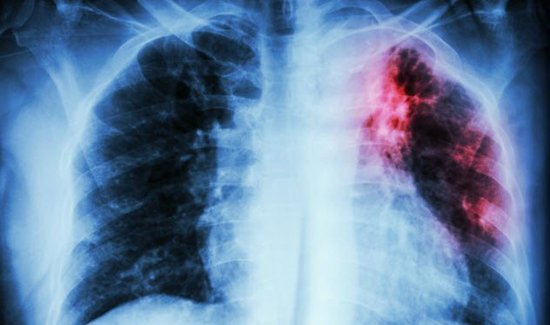
4. Tuberculosis

wps5AE9.tmp

Tuberculosis (TB) is a deadly respiratory infection that can take two forms: latent TB and active TB. Latent TB isn’t contagious, and one’s immune system can often fight it off. In fact, one-third of the world’s population has latent TB.

In weakened immune systems, active TB can take hold. Symptoms include bouts of coughing, severe chest pain, night sweats, and loss of appetite. The rise of HIV/AIDS is linked to a rise in TB cases as weakened immune systems have a nearly impossible time fighting off the otherwise latent bacteria.

Tuberculosis left its mark on science in more than one way. In the 19th century, TB was often spread through milk. This led to the development of batch pasteurization, a low-temperature method of pasteurization which has its roots in eradicating tuberculosis in dairy products.

3. Malaria

wps1050.tmp

Malaria is a mosquito-borne disease caused by parasites that leave those infected with flu-like symptoms. Malaria remains one of the world’s most serious killers, infecting more than 200 million in 2016 and killing almost 500,000.

Malaria’s common claim to fame is its possible role in killing Alexander the Great. But did you know that malaria - and resistance to it - lent a hand in the brutal transatlantic slave trade? There is no evidence of malaria in precolonial America, and thus its introduction ravaged native populations.

This led early European populations to look to the people of Africa, who were resistant to malaria if they survived the disease as children, to work on America’s Southern plantations. As malaria spread like wildfire across the American South, killing off Native Americans, Africans were forced into the slave trade.

On the medical side, malaria provided scientists with a fundamental understanding of transmission vectors, including how disease-carrying animals can infect human populations and what can be done to stop them.

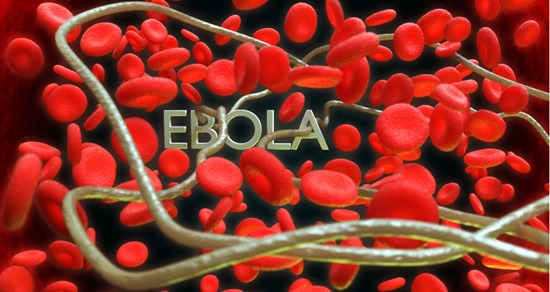
2. Ebola

wps9B4B.tmp

Few diseases have fueled hysteria quite like Ebola, which was only discovered in Africa in the late 1970s. Ebola, short for Ebola hemorrhagic fever (EHF), is a virus that leads to extreme bleeding in humans and other primates. Symptoms can take several days to weeks to develop. They include sore throat, muscular pain, vomiting, diarrhea, and eventual internal and external bleeding.

Depending on the strain, Ebola comes with a high mortality rate, killing almost half of those it infects. However, mortality rates can run as high as 90 percent. The deadliest Ebola outbreak spread out of West Africa in March 2014. It killed five times more individuals than all previous outbreaks combined.

Cases were reported in the United States and Europe (including the United Kingdom, France, Germany, and Spain). Full containment of the virus didn’t occur until 2016. Its spread and aftermath dramatically tested the World Health Organization’s ability to respond to a modern pandemic.

1. Cholera

wps11A.tmp

At its worst, cholera can go from asymptomatic to fatal in just under three hours. Cholera is a diarrheal disease caused by a bacterium that is usually spread through water or food systems that lack proper sanitation. Although the roots of the disease were in the Ganges Delta in India, cholera has since spread across the planet. There have been pandemics in South Asia (1961), Africa (1971), and the Americas (1991).

Every year, there are as many as four million cases of cholera with more than 100,000 dying as a result. As of July 28, 2010, the United Nations resolved to explicitly recognize clean drinking water as a human right, a development inherently tied to the spread of water-borne bacteria.

Top image: Ebola virus in 3D. Credit: Brandon Farley/Wikimedia Commons.

[Source: Listverse. Top image added.]